
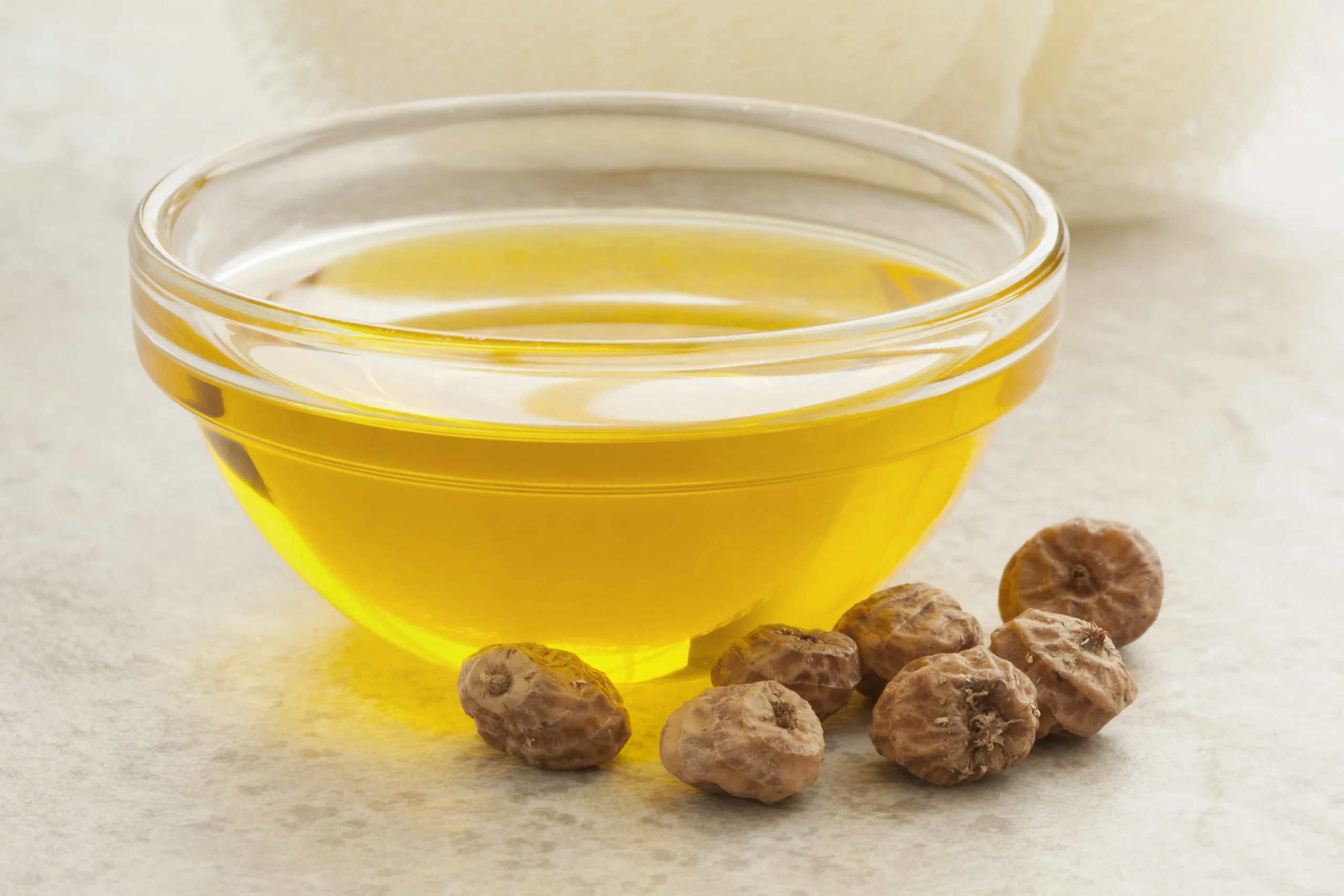
Tiger Nut Oil: Benefits, Nutrition and Everyday Uses
Quick answer: Tiger nut oil is pressed from tiger nuts, small tubers, and has a fat profile similar to olive oil: mostly oleic acid, a monounsaturated fat, with natural vitamin E. Its real benefits are as a heart-healthier swap for saturated fats in cooking, a mild, nutty oil for dressings and baking, and a light moisturizer for skin and hair. Claims that it cures IBS, lowers blood sugar or works as an aphrodisiac aren’t supported by human research.
Tiger nuts (*Cyperus esculentus*) are not nuts. They’re tubers with an unusually high fat content for a root vegetable, about a quarter of their dry weight (Sánchez-Zapata et al., 2012). When cold-pressed, they give a golden oil with a sweet, nutty smell.
The old version of this article listed “10 surprising health benefits,” many with no evidence. Below we explain what tiger nut oil contains, which benefits are reasonable, which claims are unproven, and how to use it.
Tiger nut oil nutrition
Like all oils, tiger nut oil is almost 100% fat. One tablespoon (about 14 g) has roughly 120 calories. It has no protein, carbohydrate or fiber, and no meaningful calcium or magnesium.
| Fatty acid type | Approximate share in tiger nut oil | Olive oil (for comparison) |
|---|---|---|
| Oleic acid (monounsaturated) | about 65–75% | about 70–75% |
| Linoleic acid (polyunsaturated, omega-6) | about 8–12% | about 10% |
| Saturated fats (palmitic, stearic) | about 15–20% | about 14–16% |
Ranges are from published analyses of tiger nut oil (Sánchez-Zapata et al., 2012) and vary with variety and processing. Tiger nut oil also contains natural tocopherols (vitamin E) and plant sterols.
Tiger nut oil benefits: what’s reasonable
1. A source of monounsaturated fat
Replacing saturated fats like butter or lard with unsaturated fats is a core heart-healthy eating tip (American Heart Association). Tiger nut oil is mostly monounsaturated, so it can be one of those swaps. It hasn’t been tested in large human trials on its own, so we don’t claim it lowers cholesterol.
2. Natural vitamin E
Vitamin E is an antioxidant nutrient that protects cells and is found mostly in plant oils, nuts and seeds (NIH ODS). Tiger nut oil contributes some vitamin E, which also helps the oil itself resist going rancid.
3. A nut-free alternative to nut oils
Because tiger nuts are tubers, tiger nut oil isn’t a tree nut or peanut oil. That makes it a useful option for nut-free kitchens. Check how the oil is made if you have a severe allergy (FDA food allergies).
4. Fits paleo and many AIP plans
Seed oils are removed during AIP elimination, but tiger nut oil comes from a tuber, so many AIP followers use it alongside olive, avocado and coconut oil.
5. Flavor in dressings and baking
Its mild, slightly sweet, nutty taste works in vinaigrettes, drizzled on roasted vegetables, and in baking where you’d use a light oil.
6. Skin moisturizer
Plant oils rich in oleic acid are used as emollients to soften dry skin. Many people use a few drops of tiger nut oil on dry areas. If you have sensitive or acne-prone skin, patch-test first. Research on tiger nut oil for skin specifically is limited.
7. Hair and scalp oil
A small amount warmed between your palms can smooth dry ends and reduce frizz. That’s a cosmetic effect; there’s no evidence it treats dandruff or hair loss.
Claims that aren’t supported
| Claim in old article | What the evidence says |
|---|---|
| Lowers LDL and raises HDL | No human trials on tiger nut oil alone |
| Soothes IBS, laxative effect | Not shown; oil has no fiber |
| Boosts immunity | Not shown |
| Regulates blood sugar in diabetes | Not shown; see NIDDK for proven strategies |
| Prevents osteoporosis | Oil has no meaningful calcium or magnesium |
| Aphrodisiac | Traditional belief only, no clinical proof |
The whole tiger nut, not the oil, is where the fiber is. If gut health is your goal, see our whole tiger nuts guide or tiger nut flour.
How to use tiger nut oil
In the kitchen
- Salad dressing: 3 tbsp tiger nut oil, 1 tbsp lemon juice or apple cider vinegar, 1 tsp honey, salt and herbs.
- Drizzle: over roasted squash, sweet potatoes or fish after cooking.
- Baking: use in place of other liquid oils in muffins and cakes, one to one.
- Low to medium heat sautéing: cold-pressed oils have more delicate flavor compounds, so save very high heat for refined oils.
For more on cooking, see tiger nut oil for cooking and our tiger nut oil vs olive oil comparison.
For skin and hair
- Face and body: 2–3 drops on damp skin after a shower.
- Cuticles and elbows: rub in a drop at night.
- Hair ends: 1–2 drops smoothed through dry ends.
- Patch test: apply a drop to the inner arm and wait 24 hours before using on your face.

How to choose and store tiger nut oil
- Look for 100% cold-pressed tiger nut oil with a single ingredient.
- Buy dark glass bottles that block light.
- Store in a cool, dark cupboard with the cap tight; refrigerate after opening if you use it slowly.
- If it smells like crayons or paint, it’s rancid. Throw it out.
Paleo Tiger 100% Cold-Pressed Tiger Nut Oil is pressed from tiger nuts with nothing added.
How much tiger nut oil per day?
There’s no special dose. Treat it like any other cooking oil: 1–2 tablespoons a day as part of a balanced diet fits the Dietary Guidelines’ advice to choose oils over solid fats (Dietary Guidelines). Oils are energy-dense, so measure if you’re watching calories.
Pair it with other Paleo Tiger products
- Drizzle over a bowl with Tiger Nut Granola and fruit? No, keep it for savory foods; use Original Tiger Nut Butter for sweet bowls.
- Use oil plus tiger nut flour for grain-free muffins: see our tiger nut flour recipes.
FAQ
What is tiger nut oil good for?
Cooking, dressings and baking as a mostly monounsaturated oil, and as a light moisturizer for skin and hair.
Is tiger nut oil healthier than olive oil?
Their fat profiles are similar. Olive oil has far more human research, so tiger nut oil is best seen as a tasty alternative, not a superior one.
Does tiger nut oil lower cholesterol?
There aren’t human trials showing that. Swapping saturated fats for unsaturated oils is generally recommended for heart health.
Can I use tiger nut oil on my face?
Many people do. Patch-test first, and avoid it if you’re prone to clogged pores.
Is tiger nut oil AIP?
It’s pressed from a tuber, not a seed, so many AIP followers use it.
Is tiger nut oil safe for nut allergies?
Tiger nuts aren’t tree nuts or peanuts, but check facility information and ask your allergist if your allergy is severe.
How should I store tiger nut oil?
In a dark bottle, in a cool cupboard, tightly capped; refrigerate if you use it slowly.