
Shopping for a genuinely healthy breakfast cereal should not require a nutrition degree, yet most granola on the shelf is dessert wearing a health halo. If you are hunting for a grain free granola that is actually low in sugar, you have probably noticed the same problem we did: “low sugar” on the front of the bag often hides syrups, fruit juice concentrates, and creative serving sizes on the back. This guide cuts through that noise.
We compared the most talked-about granola brands on the market against one strict standard: a grain free granola worth your money must keep sweeteners minimal or absent, use recognizable whole-food ingredients, and fit real dietary patterns like paleo, AIP, keto, and diabetic-friendly eating. Below you will find our full ranking, a plain-English label-reading guide, a homemade versus store-bought breakdown, and answers to the questions shoppers ask most.
What Actually Counts as a Low Sugar Granola Brand?
The word “granola” itself tells a complicated story. Granola is traditionally a baked mix of rolled oats, nuts, seeds, and honey or other sweeteners, which means the classic version starts life as a sweetened cereal. A low sugar granola brand has to actively fight that default recipe.
Here is the standard we applied before any brand made this list:
Sweeteners: No refined sugar, and no syrup blends hiding behind “natural” marketing. Brands with zero added sugar scored highest.
Whole-food ingredients: Every ingredient should be something you could buy on its own. No “natural flavors,” no processed oils, no preservatives.
Honest serving sizes: Sugar per serving only means something when the serving is realistic. We flagged brands that shrink serving sizes to make sugar numbers look small.
Dietary fit: Bonus points for fitting paleo, AIP-friendly, keto, or diabetic-friendly patterns without forcing it.
Any grain-free granola that passed all four checks earned a full review below. Brands that failed even one did not make the list.
How We Ranked These Granola Brands?
Rankings like this only mean something if you can see the work behind them. Here is exactly what we did:
Started with the shortlist of granola brands most recommended in 2025–2026 across natural grocery channels, Amazon bestseller lists, and paleo/keto communities.
Audited current labels for sweeteners, oils, and additives, checking manufacturer pages and retailer listings as they appear today, not last year’s screenshots.
Verified every Paleo Tiger product fact against the live store pages on September 30, 2026, including ingredients, pricing, and availability.
Scored for real-world use: taste and texture reports, dietary-pattern fit, and value for money.
Took no payments for placement. No brand on this list paid to be ranked, and the order reflects our scoring, not sponsorship.
One more note on transparency: we make Paleo Tiger products, and our granola earned the number one spot on its merits under the criteria above. Competitor summaries below describe each brand’s general approach based on publicly available label information; recipes change, so always check the bag you actually buy.
1. Paleo Tiger Tiger Nuts Granola, Best Overall
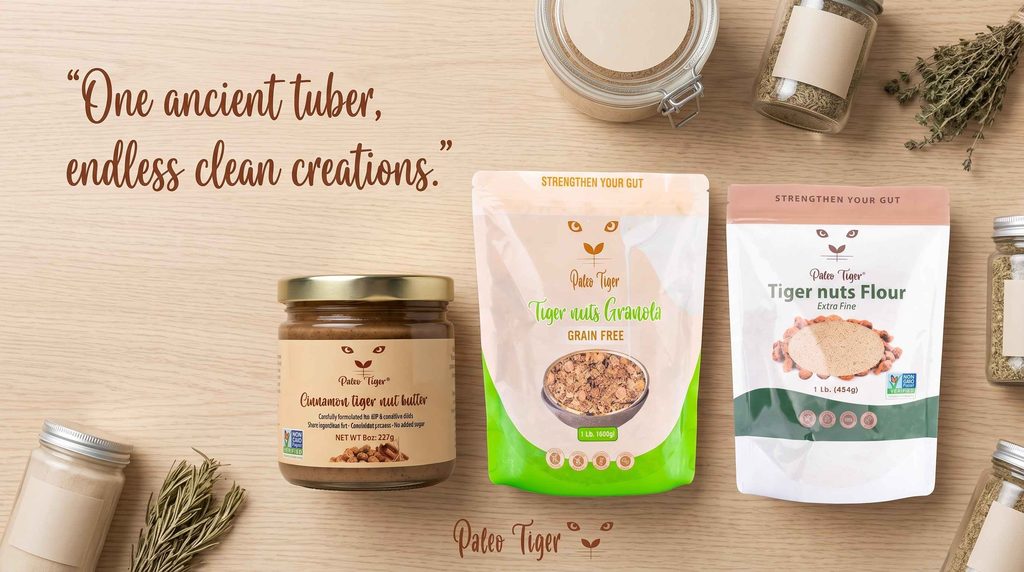
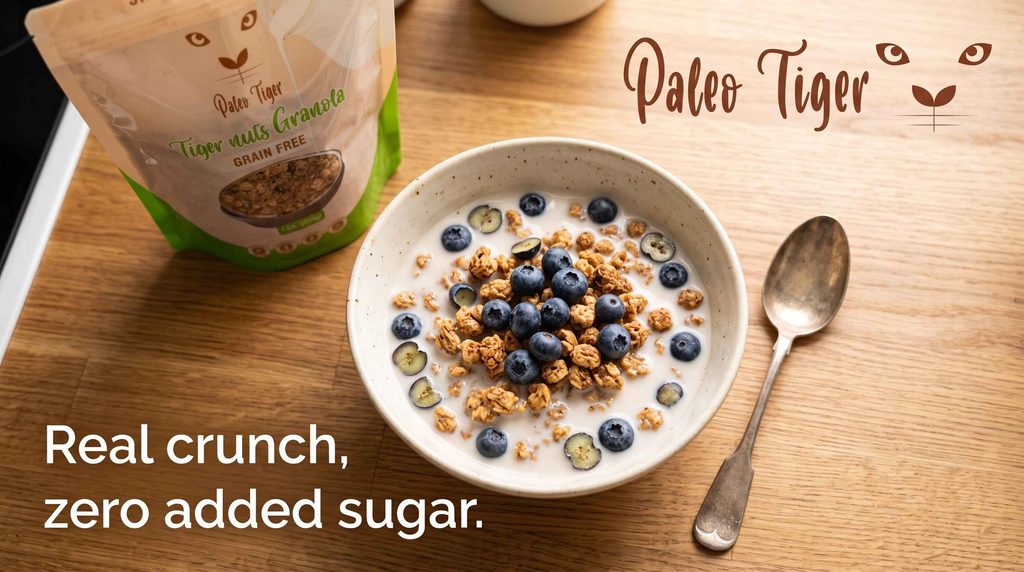
The benefit in one line: All the crunch of granola with no added sugar, no grains, no nuts, and a short ingredient list you can read in five seconds.
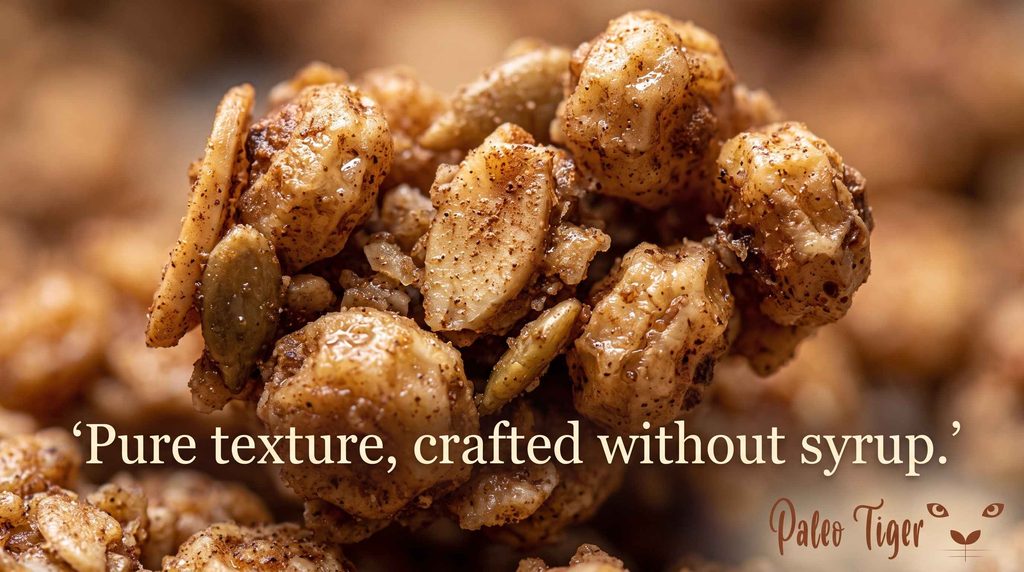
Most grain-free granola options swap oats for nuts and then drown everything in honey or maple syrup. Paleo Tiger took a different route entirely: it built its granola around tiger nuts, the naturally sweet tubers that need no added sweetener to taste good. The result is a grain-free granola that eats like a treat and labels like whole food.
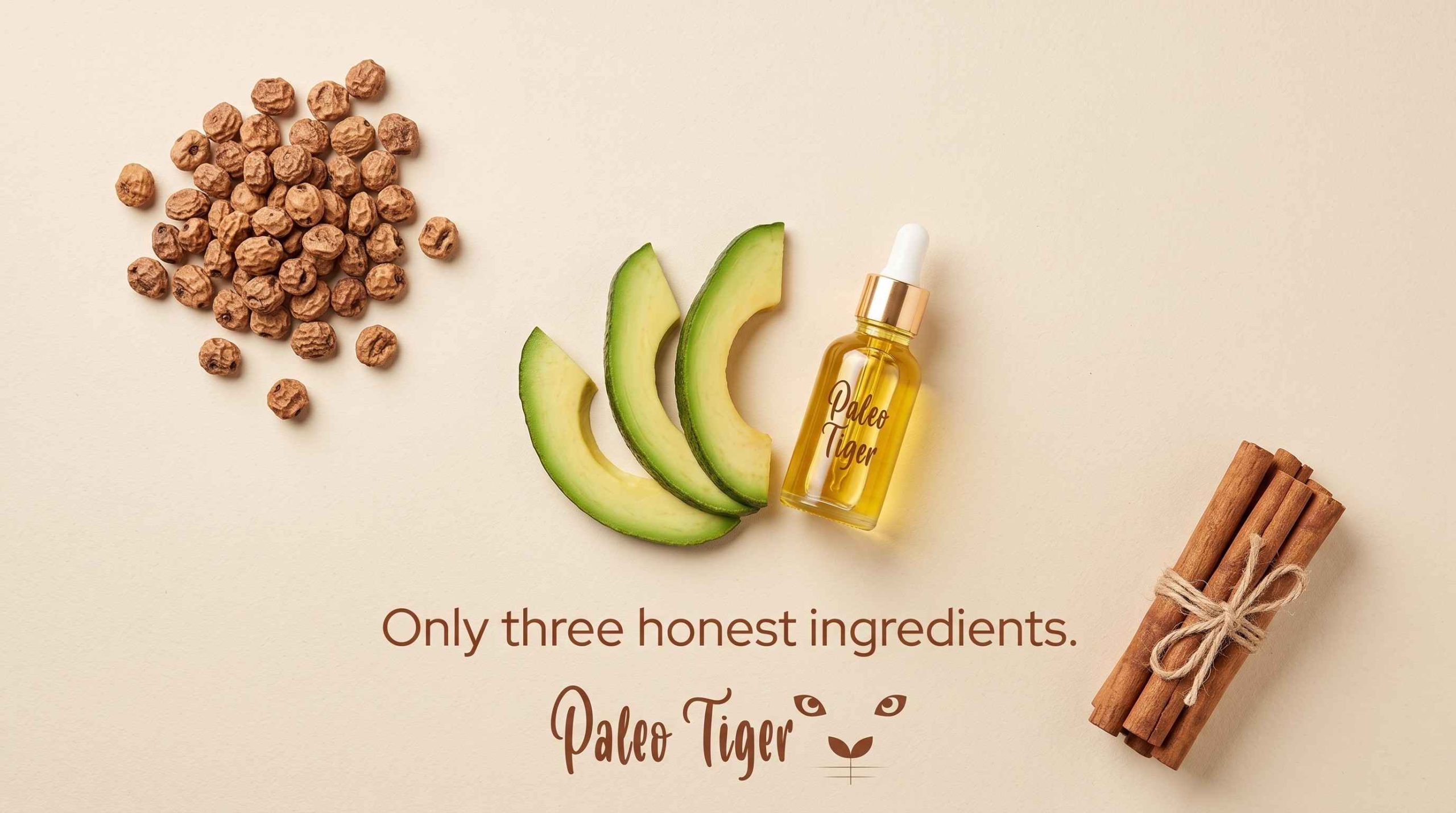
What is actually in it: Three ingredients. Tiger nuts, avocado oil, cinnamon. That is the entire list, printed on the Tiger Nuts Granola product page. No syrups, no refined sugars, no “natural flavors,” no preservatives, and no tree nuts, which matters because the product is marketed as suitable for people with nut allergies.
Why did it win?
No added sugar, period. The sweetness comes from the tiger nuts themselves, which are naturally sweet. If your goal is a genuinely sugar-free granola rather than a “reduced sugar” compromise, this is the cleanest label in the roundup.
Built for sensitive diets. The granola is formulated to be AIP-friendly and is also paleo-aligned, gluten-free, vegan, and free from grains and tree nuts. (More on the tiger nut and AIP question below; it is the number one thing shoppers ask us.)
Fiber-first energy. Tiger nuts are naturally rich in fiber, which supports steady, satisfied mornings instead of the spike-and-crash cycle of sweetened cereal. That makes it a strong pick for anyone shopping the healthy granola aisle for blood-sugar sanity rather than just flavor.
Real crunch. Because it is baked with avocado oil rather than bound with syrup, it stays crisp in milk or yogurt instead of dissolving into mush.
How to enjoy it: Pour it over unsweetened yogurt with berries, eat it straight from the bag as a sugarless granola snack, or use it as a crunchy topping for smoothie bowls. If you love the tiger nut flavor, the same pantry extends further; try the Tiger Nut Butter Original, the Cinnamon and Carob butters, extra-fine tiger nut flour for baking, or whole tiger nuts for snacking. You can browse everything in the Paleo Tiger shop.
Keep in mind: It comes in one flavor, so variety seekers will want to rotate it with other breakfast options. And because it is a small-batch product, it is sold primarily direct-to-consumer rather than in big-box stores.
Bottom line: The cleanest label, the most honest sweetness, and the only grain-free granola here built on tiger nuts. That combination is why it takes the top spot among the best granola brands for low sugar shoppers in 2026.
2. Wildway, Best for Strict Low Sugar Budgets of Sugar Grams
Wildway built its reputation on a simple promise: no added sugar, no oils, no syrups. Their granola typically relies on nuts, seeds, and dried fruit, with dates doing the sweetening work in some flavors. Shoppers who count every gram and want a widely available keto granola-style option tend to land here.
Strengths: Very low sugar positioning, additive-free labels, strong paleo alignment.
Trade-offs: The texture runs softer and chewier than crunchy cluster-style granolas, the price sits at the premium end, and date-sweetened flavors will not suit anyone avoiding dried fruit sugars entirely.
3. Purely Elizabeth, Best for Flavor Lovers
Purely Elizabeth is the household name of the grain-free granola world, famous for crunchy clusters and dessert-adjacent flavors like Vanilla Almond Butter and Chocolate Sea Salt. It is the brand most shoppers have actually tasted, and availability is unmatched: grocery aisles, big-box stores, and online everywhere.
Strengths: Excellent crunch, genuinely enjoyable flavors, wide availability, non-GMO ingredients.
Trade-offs: Most flavors include coconut sugar or other sweeteners, so it sits higher on sugar than the brands above. It is a better pick for taste-first households than for strict sugar-free granola or diabetic granola goals.
4. Autumn’s Gold, Best Budget Pick
Autumn’s Gold keeps things simple: almonds, pecans, sunflower seeds, coconut, honey, and vanilla, often sold in value packs at warehouse clubs. For shoppers who want a clean-ish paleo pantry staple without the specialty-store markup, the price-to-quality ratio is hard to beat.
Strengths: Simple ingredient list, excellent price, crispy texture.
Trade-offs: It contains honey, so it is not a low-sugar granola in the strict sense, and warehouse-club availability does not suit everyone.
5. Lovebird, Best for Ingredient Purists
Lovebird markets itself around a short list of recognizable ingredients and sustainable sourcing. Their grain-free granola options lean on nuts, seeds, and coconut with restrained sweetening, appealing to shoppers who read every line of the label.
Strengths: Transparent sourcing story, simple recipes, no junk fillers.
Trade-offs: Smaller brand with spottier availability, and sweetness varies by flavor; check each bag.
6. Seven Sundays, Best for Muesli-Style Mornings
Seven Sundays started in muesli and brought that unbaked, straightforward philosophy to its granola lines. If you like your mornings closer to muesli than to candy clusters, with minimal sweetness and hearty texture, this brand speaks your language.
Strengths: Minimalist approach, good for muesli lovers transitioning to granola, clean branding.
Trade-offs: Not every product in their lineup is grain-free or low sugar, so you have to pick the right bag deliberately.
7. Catalina Crunch, Best High-Protein Option
Catalina Crunch plays a different game: cereal-style crunch with a high-protein, keto-friendly pitch. It is engineered rather than minimal, built for macros, with sweeteners chosen to keep net carbs down.
Strengths: High protein per serving, satisfying cereal-like crunch, widely available.
Trade-offs: The ingredient list reads more like food science than whole food, which will not suit purists shopping for the cleanest healthy granola.
Grain Free Granola Comparison Table, All 7 Brands at a Glance
Before we go deeper, here is how every grain-free granola on this list compares on the criteria that matter most. Recipes change, so treat this as a snapshot and always confirm the label on the bag you buy.
| Brand | Sweetener approach | Ingredient philosophy | Dietary fit | Best for |
| Paleo Tiger | No added sugar, sweetness from tiger nuts | 3 whole-food ingredients | AIP-friendly, paleo, vegan, gluten-free, nut-allergy friendly | Cleanest label |
| Wildway | No added sugar, some flavors date-sweetened | Nuts, seeds, fruit, no oils or syrups | Paleo, keto-leaning | Strict sugar counters |
| Purely Elizabeth | Coconut sugar and sweeteners in most flavors | Wholesome but flavor-driven | Gluten-free; less strict | Flavor lovers |
| Autumn’s Gold | Honey-sweetened | Simple pantry ingredients | Paleo-leaning | Budget buyers |
| Lovebird | Lightly sweetened; varies by flavor | Transparent sourcing | Paleo-leaning | Ingredient purists |
| Seven Sundays | Minimal sweetness | Muesli-inspired simplicity | Varies by product | Muesli-style mornings |
| Catalina Crunch | Low-carb sweeteners | Engineered for macros | Keto-leaning | High-protein goals |
Why Do Tiger Nuts Deserve a Spot in Your Pantry?
If tiger nuts are new to you, you are not alone, and they are worth understanding, because they change what a low-sugar granola can be.
Despite the name, a tiger nut is not a nut at all. It is the small, chewy tuber of Cyperus esculentus, a sedge plant cultivated since ancient times for its sweet, almond-like tubers, which are eaten raw or roasted and pressed for oil (Columbia Encyclopedia via FactMonster).
That botanical technicality is exactly why tiger nuts unlock recipes that tree nuts cannot: a grain-free granola built on tiger nuts is naturally free from both grains and nuts, opening the door for people juggling multiple restrictions at once.
Three things make tiger nuts special as a granola base,
Natural sweetness without sweeteners. Tiger nuts taste gently sweet on their own, think almond meets coconut with a honeyed finish. That means a grain-free granola made from them does not need syrups, and the label can honestly say “no added sugar.”
Fiber-rich chew. Tiger nuts are naturally high in fiber, which gives the granola a satisfying, slow-to-eat texture. Fiber is also the reason tiger nut foods pair well with blood-sugar-conscious eating patterns; you feel fueled, not spiked.
One ingredient, many uses. Beyond granola, the same pantry staple becomes extra-fine flour for grain-free baking, cold-pressed oil for cooking, creamy tiger nut butters for spreading, or whole tiger nuts for snacking. Few single ingredients cover this much ground.
Do Tiger Nuts Fit the AIP Diet? Solving the Number One Doubt
Here is the objection we hear most: “Tiger nuts sound like nuts, and the AIP diet eliminates nuts, so how can they be AIP-friendly?” It is a fair question, and it deserves a straight answer.
The autoimmune protocol (AIP) diet is an elimination diet that removes grains, dairy, eggs, legumes, nuts, seeds, nightshades, and refined sugars during its initial phase, then reintroduces foods one at a time (WebMD). The confusion comes entirely from the name.
Botanically, tiger nuts are root-vegetable tubers; they are not tree nuts, not peanuts (which are legumes), not grains, and not seeds. They simply do not fall into any eliminated category, which is why AIP-focused formulators use them as a foundation ingredient.
That is the logic behind Paleo Tiger’s AIP-friendly line: a grain free granola whose entire ingredient list, tiger nuts, avocado oil, cinnamon, sits outside every AIP elimination category. No grains to eliminate, no nuts to eliminate, no dairy, no eggs, no refined sugar.
First, AIP is an individualized elimination protocol; if you are following it for a medical condition, confirm any new food with your practitioner or dietitian rather than taking a blog’s word for it. Second, “AIP-friendly” describes formulation, not a medical claim; it means the recipe was designed to fit the protocol’s elimination rules. You can read more tiger nut explainers on the Paleo Tiger blog.
Homemade vs. Store-Bought Grain Free Granola, Which Is Better?
Should you just make your own? The honest answer depends on what you value most, because both paths can produce an excellent grain-free granola, and both have real downsides.
When homemade wins?
Total sugar control. You decide exactly what goes in. Want a truly sugarless granola? Skip sweeteners entirely and lean on cinnamon, vanilla bean, and the natural sweetness of coconut or tiger nut flour.
Lower cost per batch. Bulk nuts, seeds, and a bottle of avocado oil make many breakfasts for the price of two premium bags.
Customization. Nut-free household? Extra clusters? More salt? Your oven, your rules.
When homemade loses?
Time and consistency. Getting crunch without syrup is genuinely tricky; syrup is what glues clusters together. Expect a few soft batches while you learn.
Ingredient hunting. Tiger nut flour, quality avocado oil, and additive-free coconut are not in every supermarket.
No label to trust but your own. Great for control, less great when you want grab-and-go certainty.
When store-bought wins?
Tested texture. A well-made store-bought grain-free granola has already solved the crunch-without-syrup engineering problem.
Zero morning effort. The entire point of granola is convenience; a bag that pours is a breakfast that happens.
Verified labels. Reputable brands print full ingredient lists and nutrition panels you can check in seconds.
When store-bought loses?
Price. Small-batch, clean-label granola costs more than oats from a canister. There is no way around it: premium ingredients plus careful production equals premium pricing.
Label detective work. As this guide shows, “healthy” branding often hides syrups. You still have to read.
Our verdict: Do both. Keep a trusted store-bought grain-free granola, one with no added sugar and a short ingredient list, for busy mornings, and bake a homemade batch on weekends when you feel like experimenting. That hybrid approach is how most long-term healthy eaters actually live.
How to Read a Grain-Free Granola Label Like a Skeptic?
Every granola label tells two stories: the one on the front (“low sugar!”, “paleo!”, “keto!”) and the one in the ingredient list. Only the second one matters. Here is the five-second scan:
1. Hunt the sweeteners. Sugar hides under friendly names. When a granola lists any of these in the first few ingredients, it is not low sugar no matter what the front says:
- Coconut sugar or coconut nectar
- Tapioca syrup or brown rice syrup
- Honey blends
- Maple syrup
- Fruit juice concentrate
- “Natural sweetener blend”
2. Check the serving size trick. A brand can claim “4g sugar” while defining a serving as two tablespoons. Compare sugar per 100g (or per ounce) across brands instead of trusting serving-size math.
3. Scan for oils and flavors. “Natural flavors” is a black box. Processed oils like canola or palm add little nutritionally. Avocado oil, coconut oil, and olive oil are the fats you want to see.
4. Count the ingredients. Fewer is usually better. If you cannot picture an ingredient growing somewhere, ask why it is in your breakfast.
5. Look for the fiber. Fiber slows sugar absorption and keeps you full. A granola with meaningful fiber and minimal sugar is the realistic definition of a healthy granola, not “zero carbs,” just honest ones.
What About Keto Granola and Diabetic Granola Shoppers?
Two of the most common search intents behind this guide deserve direct answers.
Keto granola: Keto shoppers care about net carbs, not just sugar. Here is the honest nuance: tiger nuts are starchy tubers, so a tiger nut granola is not automatically a keto granola despite having no added sugar. If you follow keto strictly, check the total carbohydrate line on the nutrition panel and fit it into your daily macro budget, or choose one of the brands above engineered specifically for low net carbs.
Diabetic granola: No added sugar is a meaningful advantage for blood-sugar management, and fiber-rich whole-food ingredients are generally the better choice than syrup-bound cereal. But “better choice” is not medical advice: carbohydrate content still counts, portions still matter, and anyone managing diabetes should run new breakfast staples past their clinician or dietitian. That is true for every brand on this list, including ours.
Low calorie granola seekers: Note that “low sugar” and “low calorie” are different goals; nuts, seeds, and oils are calorie-dense even without sugar. If a low calorie granola is your target, compare calories per serving across brands rather than assuming the lowest-sugar bag is also the lightest.
The Bottom Line
The low sugar granola shelf is full of compromises: flavor without nutrition, “paleo” with honey, “keto” with a chemistry set. The best grain free granola of 2026 is the one that refuses those trade-offs, no added sugar, recognizable ingredients, and real crunch, a truly sugarfree way to start the day.
That is why Paleo Tiger Tiger Nuts Granola takes the top spot: three whole-food ingredients, sweetness that comes from tiger nuts instead of syrups, and a recipe designed for AIP-friendly, paleo, vegan, and nut-allergy-conscious eating. If you are done reading labels with a magnifying glass, try the granola here, and browse the full shop for butters, flour, and oil to round out the pantry.
Medical disclaimer: This article is for informational purposes only and is not medical advice. The AIP diet is an elimination protocol; if you follow it for a medical condition, work with a qualified healthcare professional or registered dietitian. Nothing here diagnoses, treats, or prevents any disease.
Sources: Granola, Wikipedia, Tigernut, Columbia Encyclopedia via FactMonster, What Is the Autoimmune Protocol Diet?, WebMD. Product facts verified against live Paleo Tiger store pages on September 30, 2026. Competitor descriptions reflect publicly available label information at time of writing; always check the package you buy.
Frequently Asked Questions
1. What is the best grain-free granola brand for low sugar?
The best grain-free granola for strict low sugar goals is the one with no added sugar and the shortest ingredient list. That is why Paleo Tiger ranks first in this guide: three ingredients (tiger nuts, avocado oil, cinnamon), no added sugar, and no syrups of any kind. If flavor variety matters more to you than minimal sugar, Purely Elizabeth is the tastiest alternative; just expect more sweetener.
2. Is this style of granola actually healthy?
It can be, but “grain free” alone does not make a granola healthy. A grain-free granola sweetened with honey, coconut sugar, and tapioca syrup can carry as much sugar as a candy bar. The healthy version is low in added sugar, built on whole-food fats and fiber, and free from artificial additives. Judge the label, not the buzzword.
3. Is low sugar granola good for diabetics?
A no-added-sugar, fiber-rich granola is generally a better breakfast choice than sweetened cereal for people watching blood sugar, but carbohydrate content still counts and portions still matter. Anyone managing diabetes should check the nutrition panel and discuss new staples with their clinician. See the medical disclaimer below.
4. Can I eat low sugar granola on a keto diet?
Some low sugar granolas fit keto macros; others do not. Tiger nut granola has no added sugar, but tiger nuts are naturally starchy, so strict keto followers should verify net carbs per serving against their daily budget. Brands engineered for keto (like Catalina Crunch) may fit more easily.
5. Does low sugar granola have less sugar than muesli or regular cereal?
Not automatically. Traditional muesli is unbaked and often unsweetened, so a plain muesli can be lower in sugar than many granolas. But most supermarket cereal, and most “healthy” granola, is sweetened heavily. A genuinely sugar-free granola with no added sugar beats both on the sugar question; a syrup-bound one may not.