

Summary
- Many AIP diet mistakes happen during the elimination phase.
- The biggest errors include hidden ingredients, under-eating, and poor gut support.
- Not all “paleo” foods are AIP compliant.
- Gut healing requires fiber, resistant starch, and stable blood sugar.
- Simple pantry swaps can dramatically improve autoimmune results.
The most common AIP diet mistakes include accidentally eating inflammatory foods, under-eating calories, and failing to properly support gut healing during the elimination phase. These errors slow autoimmune recovery and prevent symptom improvement.
If you’ve started the Autoimmune Protocol and aren’t seeing results, you’re not alone. Many beginners — and even experienced paleo followers unknowingly sabotage their progress. The AIP diet is stricter than standard paleo. It removes:
- Grains
- Legumes
- Dairy
- Eggs
- Nuts & seeds
- Nightshades
- Seed-based oils
Because of this strict elimination structure, mistakes often happen in hidden ingredients, food substitutions, and meal planning gaps. In our Complete Guide to Grain-Free Granola, we explained how grain confusion alone causes inflammation setbacks. The same pattern shows up repeatedly in AIP compliance errors. Let’s break down the first three most common mistakes.
Mistake #1: Accidentally Eating Hidden Inflammatory Ingredients
Why does this happen?
Many people assume “paleo” automatically means AIP-safe, it doesn’t. Hidden triggers often include:
- Seed oils (sunflower, safflower, canola)
- Spices derived from nightshades
- Natural flavors
- Seed-based seasonings
- Chocolate & cocoa derivatives
Even “healthy” snacks may contain cassava starch blends with seed spices or emulsifiers.
Hidden AIP ingredients are inflammatory compounds that remain in processed foods despite appearing paleo-friendly.
How to Fix It?
- Read ingredient labels carefully.
- Avoid generic “spices” during elimination.
- Cook with stable, AIP-compliant fats.
For example, swapping inflammatory seed oils for 100% Cold-Pressed Tiger Nuts Oil provides:
- High omega-9 fatty acids
- Cooking stability
- Anti-inflammatory fat profile
This helps reduce one of the biggest inflammation triggers in autoimmune diets, oxidized seed oils.Hidden ingredients delay symptom relief. Always verify oils, spices, and flavor additives. Clean cooking fats matter more than most realize.
Mistake #2: Not Eating Enough Calories
Why does AIP cause undereating?
Because so many foods are removed, people unintentionally reduce calorie intake. Symptoms of under-eating include:
- Fatigue
- Hair thinning
- Hormonal imbalance
- Cortisol dysregulation
- Cravings leading to diet relapse
AIP is not meant to be low-calorie. It’s meant to be nutrient-dense. When calories drop too low, your body enters stress mode. Elevated cortisol interferes with gut healing and immune regulation. Many people think their “AIP diet is not working,” but the real issue is metabolic stress.
Practical Daily Fix
Include:
- Starchy vegetables
- Quality fats
- Resistant starch sources
- AIP-safe snacks
Adding Whole Tiger Nuts as a daily snack helps because:
- They provide prebiotic resistant starch
- Support gut microbiome balance
- Improve satiety
- Stabilize blood sugar
Resistant starch feeds beneficial bacteria, a key factor in repairing leaky gut, which is central to autoimmune protocol success. You can also blend a morning smoothie using Tiger-Nut Smoothie Mix for:
- Fiber support
- Digestive comfort
- Sustainable energy
AIP is not starvation. Undereating increases stress hormones. Prioritize nutrient density and gut-friendly carbohydrates.
Mistake #3: Confusing Paleo With AIP
Aren’t They the Same?
No. The Paleo Diet removes grains and processed foods. The Autoimmune Protocol removes additional inflammatory triggers like nuts, seeds, eggs, and nightshades. Many people continue eating:
- Almond flour
- Chia seeds
- Flax seeds
- Egg-based recipes
These are paleo, but NOT elimination-phase AIP compliant.
Why This Slows Progress?
Nuts and seeds contain:
- Lectins
- Phytic acid
- Potential immune-reactive proteins
During early autoimmune healing, these can trigger inflammation.
Safer Swap Strategy
Instead of almond flour baking, use Tiger-Nuts Flour Extra Fine because:
- It’s grain-free
- Nut-free (tiger nuts are tubers)
- High in fiber
- Easier on sensitive digestion
For breakfast, many assume oats are safe. They’re not AIP compliant. Using Tiger-Nuts Granola provides a compliant alternative without triggering grain-related inflammation.
Paleo vs AIP
| Food Type | Paleo | AIP Elimination |
| Almond Flour | Allowed | ❌ Removed |
| Eggs | Allowed | ❌ Removed |
| Oats | ❌ Removed | ❌ Removed |
| Seed Oils | ❌ Avoided | ❌ Strictly Avoided |
| Tiger Nuts | ✅ Allowed | ✅ Allowed |
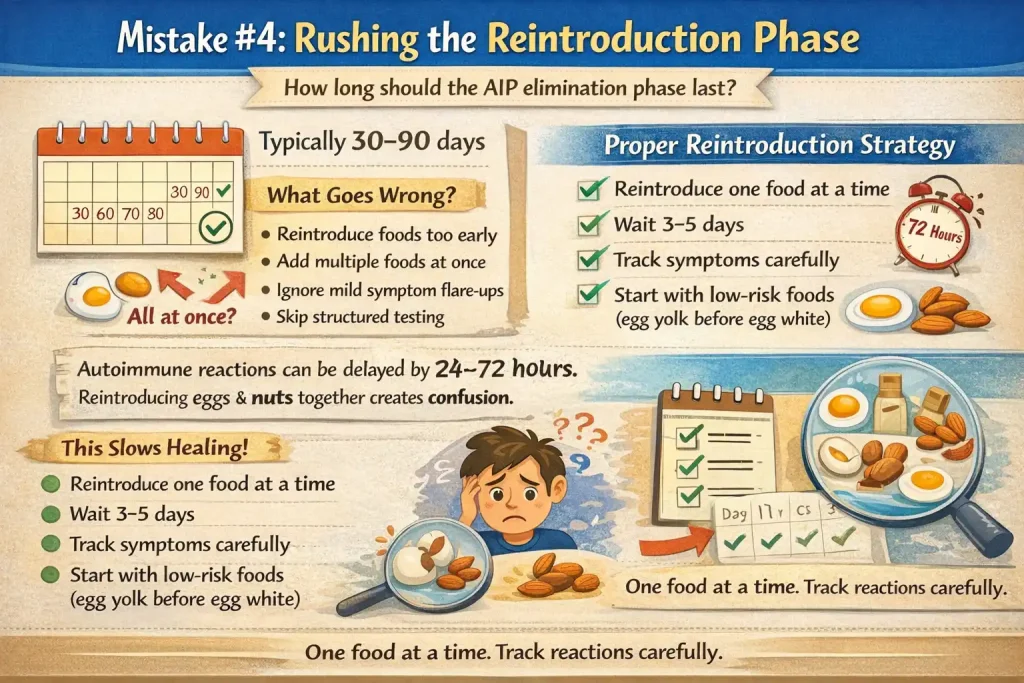
Mistake #4: Rushing the Reintroduction Phase
How long should the AIP elimination phase last?
The elimination phase should typically last at least 30–90 days, depending on symptom severity and medical supervision.
What Goes Wrong?
Many people:
- Reintroduce foods too early
- Add multiple foods at once
- Ignore mild symptom flare-ups
- Skip structured testing
The AIP diet is not just about removing foods it’s about identifying triggers.
Why This Slows Healing?
Autoimmune reactions can be delayed by 24–72 hours. If you reintroduce eggs and nuts together, you won’t know which one caused inflammation. This creates confusion and discouragement.
Proper Reintroduction Strategy
- Reintroduce one food at a time
- Wait 3–5 days
- Track symptoms carefully
- Start with low-risk foods (like egg yolks before egg whites)
Rushing reintroduction causes flare-ups. One food at a time. Track reactions carefully.
Mistake #5: Ignoring Gut Healing Fundamentals
Isn’t removing foods enough?
No. The AIP diet supports gut repair, but only if you actively nourish the microbiome. Elimination alone does not rebuild gut lining.
The Core Problem
Many people remove inflammatory foods but forget to include:
- Prebiotic fiber
- Resistant starch
- Collagen-rich broths
- Fermented vegetables
- Anti-inflammatory fats
Without microbiome support, gut permeability (“leaky gut”) may persist.
Practical Gut-Support Strategy
Adding resistant starch helps feed beneficial bacteria. For example, using Tiger-Nut Smoothie Mix in the morning can support:
- Prebiotic fiber intake
- Digestive balance
- Blood sugar stability
Tiger nuts contain resistant starch, which helps beneficial gut bacteria produce short-chain fatty acids like butyrate, essential for intestinal repair. Cooking with 100% Cold-Pressed Tiger Nuts Oil also provides:
- Stable omega-9 fatty acids
- Reduced oxidative stress
- Better inflammatory control compared to seed oils
AIP is not just elimination, it’s restoration. Feed your gut bacteria. Healthy fats + resistant starch matter.
Mistake #6: Relying Too Much on Packaged “AIP-Friendly” Snacks
Aren’t compliant snacks safe?
They can be, but over-relying on processed replacements may limit nutrient diversity. Even compliant snacks can:
- Be low in micronutrients
- Displace whole-food meals
- Create blood sugar swings
AIP success depends on nutrient density, not just rule-following.
Where People Struggle?
Many beginners miss:
- Organ meats
- Variety of vegetables
- Adequate protein intake
Instead, they rely heavily on packaged foods.
Smarter Snack Strategy
Use snacks as support, not meal replacements. For example:
- Whole Tiger Nuts provide fiber + satiety
- Original Tiger-Nut Butter offers calorie density without nuts or seeds
Tiger-nut-based products are especially useful during elimination because tiger nuts are tubers, not nuts, making them AIP compliant. They help prevent the common mistake of:
“I’m hungry all the time on AIP.”
Compliance does not mean complete nutrition. Whole foods first, snacks second. Focus on diversity.
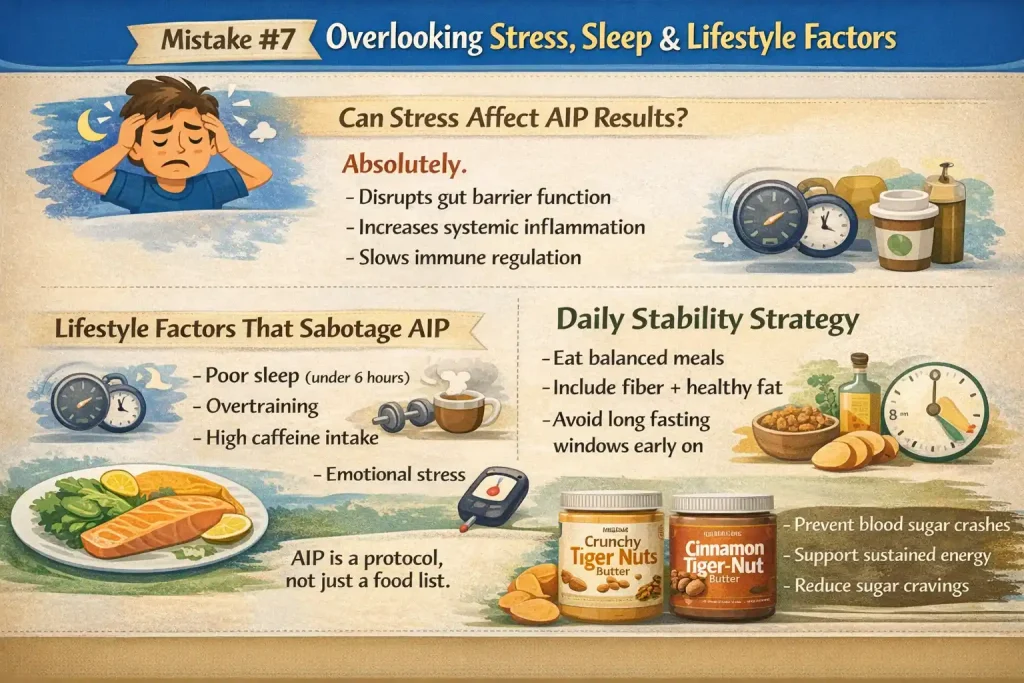
Mistake #7: Overlooking Stress, Sleep & Lifestyle Factors
Can stress affect AIP results?
Absolutely. Chronic stress increases cortisol, which:
- Disrupts gut barrier function
- Increases systemic inflammation
- Slows immune regulation
You can eat perfectly and still struggle if stress remains unmanaged.
Lifestyle Factors That Sabotage AIP
- Poor sleep (under 6 hours)
- Overtraining
- High caffeine intake
- Emotional stress
- Blood sugar instability
AIP is a protocol, not just a food list.
Daily Stability Strategy
To stabilize blood sugar and reduce stress-driven cravings:
- Eat balanced meals
- Include fiber + healthy fat
- Avoid long fasting windows early on
Using Crunchy Tiger Nuts Butter or Cinnamon Tiger-Nut Butter with starchy vegetables can help:
- Prevent blood sugar crashes
- Support sustained energy
- Reduce sugar cravings
When blood sugar is stable, cortisol regulation improves, supporting immune balance. AIP is holistic. Stress and sleep matter. Blood sugar stability supports healing.
Mistake #8: Staying in Elimination Mode Too Long
Should you stay on AIP forever?
No. The AIP elimination phase is temporary. It is designed to calm inflammation — not become a permanent restriction plan.
What Goes Wrong?
Some people:
- Fear reintroducing foods
- Stay hyper-restrictive for years
- Develop food anxiety
- Create nutrient gaps
Over-restriction can reduce dietary diversity, which negatively impacts the gut microbiome.
Why Is This a Problem?
Long-term restriction may:
- Lower micronutrient intake
- Reduce microbial diversity
- Increase stress around eating
The elimination phase is step one, personalization is the goal.
Smart Transition Strategy
- Reintroduce systematically.
- Track reactions.
- Keep tolerated foods in rotation.
- Avoid fear-based decisions.
AIP elimination is temporary. Personalization is the real goal. Food diversity supports gut resilience.
Mistake #9: Letting Restriction Lead to Burnout
Why do people quit AIP?
Because it feels overwhelming. When food options feel limited, people often:
- Crave sweets
- Miss comfort foods
- Experience social isolation
- “Cheat” and trigger flare-ups
Burnout is one of the biggest reasons autoimmune protocol fails.
The Fix: Sustainable AIP Variety
Instead of thinking “I can’t eat anything,” focus on compliant alternatives that provide:
- Texture
- Flavor
- Satisfaction
- Satiety
For example:
- Tiger-Nut Butter – Pumpkin Pie
- Carob Tiger-Nut Butter
- Tiger-Nut Butter – Strawberry AIP Friendly (Limited Edition 8oz)
These provide:
- Nut-free creamy texture
- Natural sweetness
- Blood sugar stability
- Elimination-phase compliance
They can prevent the common mistake of:
“I followed AIP for 3 weeks, then gave up.”
Supportive Treat Strategy
Occasional compliant treats like Tiger-Nut Macaroon can:
- Reduce psychological restriction
- Prevent binge cycles
- Maintain compliance
AIP works best when sustainable. Burnout leads to relapse. Satisfaction improves compliance. Sustainability matters more than perfection.
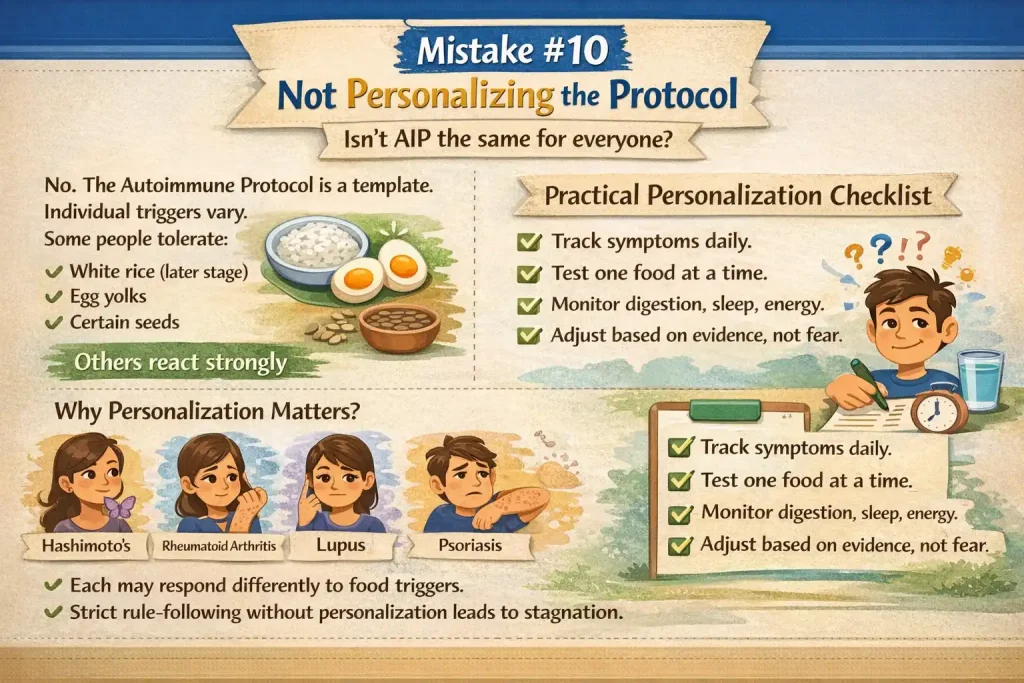
Mistake #10: Not Personalizing the Protocol
Isn’t AIP the same for everyone?
No. The Autoimmune Protocol is a template. Individual triggers vary. Some people tolerate:
- White rice (later stage)
- Egg yolks
- Certain seeds
Others react strongly.
Why Personalization Matters?
Autoimmune conditions differ:
- Hashimoto’s
- Rheumatoid arthritis
- Lupus
- Psoriasis
Each may respond differently to food triggers. Strict rule-following without personalization leads to stagnation.
Practical Personalization Checklist
- Track symptoms daily.
- Test one food at a time.
- Monitor digestion, sleep, energy.
- Adjust based on evidence, not fear.
Final Takeaway
AIP diet mistakes usually involve hidden ingredients, undereating, poor reintroduction strategy, and ignoring stress or gut healing fundamentals. The protocol works best when personalized, nutrient-dense, and sustainable. The 10 most common mistakes on the AIP diet include:
- Hidden inflammatory ingredients
- Undereating
- Confusing paleo with AIP
- Rushing reintroduction
- Ignoring gut repair
- Over-relying on snacks
- Ignoring stress & sleep
- Staying restrictive too long
- Burning out
- Not personalizing
In short, AIP success depends on:
- Nutrient density
- Gut microbiome support
- Blood sugar stability
- Strategic reintroduction
- Lifestyle regulation
If you’re building your AIP pantry, explore compliant staples at the Paleo Tiger Shop to maintain variety without triggering inflammatory setbacks.
FAQs
1. Why am I not improving on the AIP diet?
Common reasons include hidden ingredients, under-eating, stress, or improper reintroduction timing.
2. How long should the AIP elimination phase last?
Typically 30–90 days before structured reintroduction, depending on symptom improvement.
3. Can you lose weight on AIP?
Yes, but AIP is not designed as a weight-loss diet. Undereating may slow metabolism.
4. Are oats allowed on AIP?
No. Oats are grains and excluded during elimination.
5. Is tiger nut AIP compliant?
Yes. Tiger nuts are tubers, not nuts, and are elimination-phase compliant.
6. Can stress affect autoimmune healing?
Yes. Elevated cortisol increases inflammation and slows gut repair.
7. Is AIP meant to be permanent?
No. It is a structured elimination protocol followed by reintroduction and personalization.