
Quick Summary
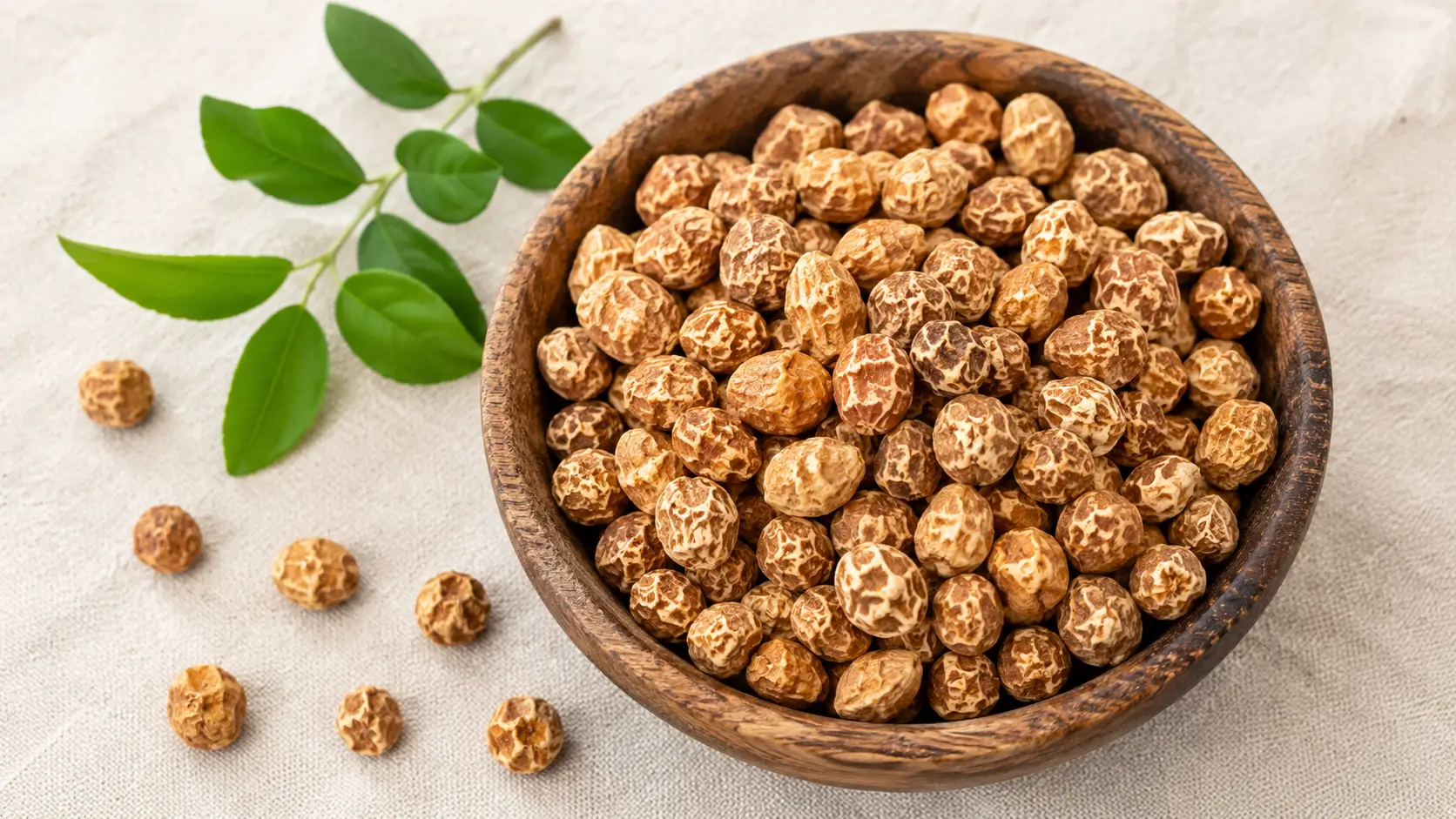
- Whole tiger nuts are small, dried tubers (not actually nuts) from the Cyperus esculentus plant.
- They are one of the richest natural sources of prebiotic fiber and resistant starch.
- These nutritious tubers support gut health, help balance blood sugar, and promote heart health.
- They are naturally gluten-free, grain-free, nut-free, and paleo-friendly.
- You can eat them raw, soaked, or use them to make tiger nut milk (horchata).
- Paleo Tiger offers premium organic whole tiger nuts for everyday use.
If you have been searching for a snack that is genuinely good for your gut, naturally sweet, and fits every major clean-eating lifestyle, you have found it. Whole tiger nuts might look humble, but they are one of nature’s most underrated superfoods. In this complete guide, you will discover exactly what whole tiger nuts are, why their nutrition profile is remarkable, how to eat them, and who should be adding them to their daily diet. Explore the full tiger nut product range at Paleo Tiger to see how easy it is to get started.
What Are Whole Tiger Nuts?

Whole tiger nuts are the answer to a question many health-conscious eaters are asking right now: What is a clean, grain-free, naturally prebiotic snack I can eat every single day?
These small, dried tubers come from the sedge plant Cyperus esculentus. Despite the name, they are not nuts at all; they are root vegetables, making them completely safe for people with tree nut or peanut allergies. They have a naturally sweet, slightly earthy flavour with a chewy texture, often compared to a mix of coconut and vanilla.
The word “tiger” comes from the distinctive striped or wrinkled markings on their outer skin. They grow underground as small tubers attached to the roots of the Cyperus esculentus plant, a grass-like sedge that thrives in warm climates. Spain (Valencia region), West Africa (particularly Ghana and Nigeria), and North Africa (Egypt) are the world’s leading producers of tiger nuts.
Historically, these small tubers are among the oldest cultivated foods. Archaeological evidence suggests humans in ancient Egypt consumed them as far back as 4,000 years ago. In West African cultures, tiger nuts (called aya in Hausa) are eaten daily as a wholesome snack. In Spain, they are famously used to make horchata de chufa, a beloved sweet tiger nut milk drink.
Summary: These small, dried tubers from the Cyperus esculentus plant are naturally sweet, grain-free, nut-free, and rich in prebiotic fiber. They have served as a staple food for humans for thousands of years.
Whole Tiger Nuts Nutrition Profile: What Makes Them So Powerful?
One reason these nutrient-dense tubers are gaining popularity in the wellness world is their exceptional nutritional profile. Despite their small size, they provide an impressive range of macronutrients, micronutrients, and bioactive compounds.
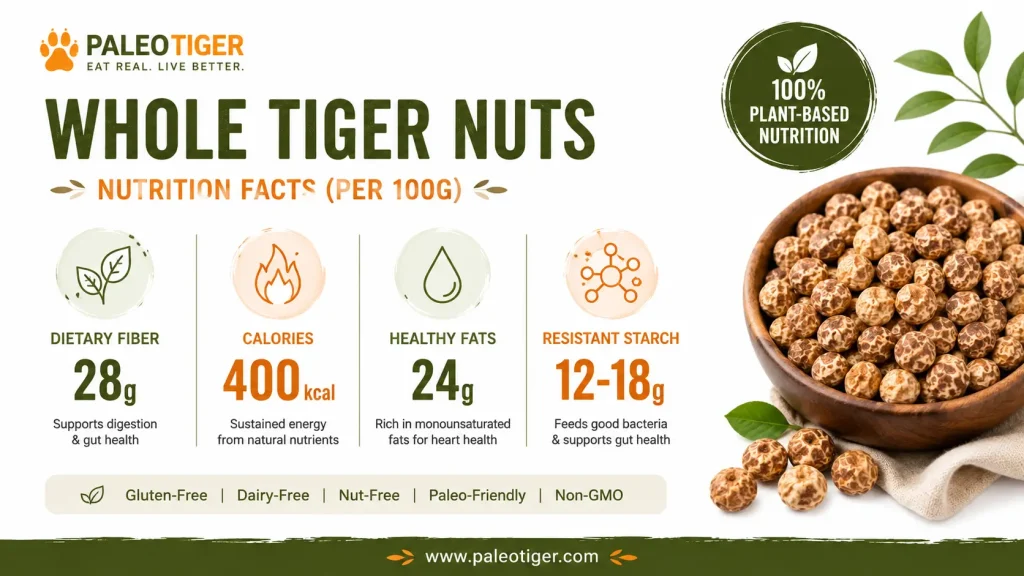
Macronutrients Per 100g of Tiger Nuts
| Nutrient | Amount Per 100g |
| Calories | ~400 kcal |
| Total Carbohydrates | ~44g |
| Dietary Fiber | ~28g |
| Resistant Starch | ~10–15g |
| Total Fat | ~24g |
| Monounsaturated Fat (Oleic Acid) | ~18g |
| Protein | ~4–5g |
| Sugar (Natural) | ~10g |
Key Micronutrients in Whole Tiger Nuts
Beyond macronutrients, these tubers provide significant amounts of:
- Magnesium — supports muscle function, sleep quality, and blood sugar regulation
- Potassium — essential for heart health and blood pressure management
- Phosphorus — supports bone health and energy metabolism
- Zinc — critical for immune function and wound healing
- Vitamin C — antioxidant support and collagen synthesis
- Vitamin E — powerful fat-soluble antioxidant
- Iron — supports healthy red blood cells and energy levels
The Resistant Starch and Prebiotic Fiber Advantage
What truly sets whole tiger nuts apart from other snacks is their exceptionally high resistant starch and prebiotic fiber content. Research published in peer-reviewed literature confirms that tiger nuts contain substantial amounts of dietary fiber, approximately 28 g per 100 g, which is remarkably high compared to most plant foods. A 2022 study in Nutrients (PMC) highlights the significant prebiotic and nutritional potential of tiger nut-derived products, noting their positive effects on gut microbiota composition and metabolic health markers.
Resistant starch acts as a prebiotic: it passes through the small intestine undigested and ferments in the large intestine, feeding beneficial bacteria such as Lactobacillus and Bifidobacterium. This fermentation process produces short-chain fatty acids (SCFAs) like butyrate, which directly nourish the cells lining your colon.
Summary: These nutrient-dense tubers provide ~28g of dietary fiber, ~24g of healthy monounsaturated fats, and significant resistant starch per 100g, all in a naturally grain-free, gluten-free package.
Top 10 Health Benefits of These Nutrient-Dense Tubers
1. Exceptional Gut Health and Microbiome Support
The prebiotic fiber and resistant starch in whole tiger nuts selectively feed beneficial gut bacteria, helping to build a healthier, more diverse gut microbiome. A thriving microbiome is associated with better digestion, stronger immunity, reduced inflammation, and even improved mood via the gut-brain axis. Whole tiger nuts also have a naturally mild enzyme-inhibiting effect that may help slow carbohydrate breakdown, supporting more even blood sugar levels after meals.
2. Blood Sugar Regulation and Insulin Sensitivity
Whole tiger nuts have a moderate to low glycaemic index (GI) despite their natural sweetness. This is largely due to their high fiber content, which slows glucose absorption in the digestive tract. The oleic acid (monounsaturated fat) content also contributes to insulin sensitivity, making whole tiger nuts a smart snack choice for people managing blood sugar levels, including those following low-GI or diabetic-friendly diets.
3. Heart Health and Healthy Cholesterol Levels
The dominant fat in whole tiger nuts is oleic acid, the same monounsaturated fatty acid found in extra-virgin olive oil. Oleic acid has been extensively studied for its role in reducing LDL (“bad”) cholesterol while maintaining or increasing HDL (“good”) cholesterol. Additionally, the high fiber content of whole tiger nuts contributes to cholesterol binding in the digestive tract, further supporting cardiovascular health.
4. Natural Allergy-Friendly Superfood
Whole tiger nuts are naturally free from the eight most common allergens: gluten, wheat, dairy, eggs, soy, peanuts, tree nuts, and shellfish. This makes them one of the most inclusive superfoods available. Whether you are managing celiac disease, a nut allergy, or lactose intolerance, whole tiger nuts offer safe, worry-free nutrition.
5. Supports Healthy Digestion and Reduces Bloating
Traditionally, tiger nuts have been used in African herbal medicine to treat digestive complaints, including diarrhea, dysentery, and flatulence. Modern nutritional science supports this: the high fiber content promotes regular bowel movements, while the prebiotic activity helps reduce gas-producing imbalances in the gut microbiome. Soaking whole tiger nuts before eating them further softens their fiber structure, making them even more digestible.
6. Natural Energy Source Without Sugar Crashes
Whole tiger nuts provide sustained energy through a combination of slow-releasing complex carbohydrates, resistant starch, and healthy fats. Unlike refined snacks or sugary energy bars, they do not trigger rapid blood glucose spikes followed by energy crashes. This makes them an ideal pre-workout snack, afternoon energy booster, or school-safe lunchbox addition.
7. Antimicrobial and Immune-Supportive Properties
Research suggests that tiger nuts contain natural compounds with antimicrobial properties, particularly against certain strains of gut pathogens. Their zinc and vitamin C content further supports a robust immune system, making them a functionally valuable addition to a wellness-focused diet, especially during cold and flu season.
8. Supports Weight Management
Despite being relatively calorie-dense, whole tiger nuts promote satiety through their combination of fiber, resistant starch, and healthy fats. Fiber increases the feeling of fullness and reduces overall calorie intake by slowing gastric emptying. Resistant starch also appears to reduce appetite-stimulating signals. Together, these mechanisms make whole tiger nuts a smart, satisfying snack for anyone managing their weight.
9. Naturally Rich in Magnesium for Muscle and Sleep Health
Many adults are chronically deficient in magnesium, which plays essential roles in over 300 enzymatic reactions in the body. Whole tiger nuts are a meaningful natural source of magnesium, supporting muscle relaxation, better sleep quality, reduced anxiety, and healthy nerve function, all without supplementation.
10. Compatible with Paleo, Keto, Vegan, and Whole30 Diets
Few foods tick as many dietary boxes as whole tiger nuts. They are naturally:
- Paleo-friendly (a whole, unprocessed plant tuber)
- Vegan and plant-based
- Gluten-free and grain-free
- Dairy-free
- Nut-free (despite the name)
- Whole30-compatible
- Lower glycaemic (suitable for many keto-adjacent approaches)
Summary: Whole tiger nuts deliver ten distinct health benefits, from gut microbiome support and blood sugar regulation to heart health and allergy safety, making them one of the most versatile functional foods available.
Is Grain-Free Granola Made with Tiger Nuts Keto-Friendly?
Many people discover whole tiger nuts come via the grain-free granola world, and this is a fair question to address directly. While whole tiger nuts are not strictly zero-carb, their high fiber and resistant starch content means their net carb impact is significantly lower than the total carbohydrate figure suggests. The resistant starch in whole tiger nuts behaves more like dietary fiber in the body; it is not absorbed as glucose in the small intestine.
For strict ketogenic diets, whole tiger nuts are best consumed in moderate portions. For liberal keto, paleo-keto, or cyclical keto approaches, they fit comfortably as a nutrient-dense carbohydrate source with genuine metabolic benefits. Many keto athletes use whole tiger nuts specifically for their resistant starch content as a pre-workout carbohydrate that does not spike insulin aggressively.
How to Eat Whole Tiger Nuts: 8 Delicious Ways
Whole tiger nuts are wonderfully versatile. Here are eight practical ways to enjoy them every day:
1. Eat Them Raw as a Snack
The simplest way. Grab a small handful and eat them just as they are; they taste naturally sweet and nutty, similar to a sweet almond crossed with coconut. Their chewy texture makes them deeply satisfying.
2. Soak Them Overnight for Softer Texture
Soaking whole tiger nuts in cold water for 8–24 hours softens their flesh, making them easier to chew and digest. Soaked tiger nuts taste even sweeter and more coconut-like. Drain, rinse, and enjoy chilled.
3. Make Homemade Tiger Nut Milk (Horchata)
Blend soaked whole tiger nuts with filtered water, a medjool date, and a pinch of cinnamon. Strain through a nut milk bag and chill. The result is a creamy, naturally sweet dairy-free milk perfect for coffee, smoothies, or drinking straight. This is the classic Spanish horchata de chufa.
4. Add to Smoothies and Smoothie Bowls
Blend a small handful of soaked whole tiger nuts directly into smoothies for a boost of fiber, resistant starch, and natural sweetness no added sugar needed.
5. Use as a Trail Mix Ingredient
Combine whole tiger nuts with cacao nibs, coconut flakes, dried mulberries, and pumpkin seeds for a nutrient-dense grain-free trail mix. Perfect for hiking, travel, or desk snacking.
6. Use in Grain-Free Baking
Soaked and blended whole tiger nuts can be incorporated into paleo muffin, cookie, and energy ball recipes. They add natural sweetness and moisture to baked goods.
7. Make Tiger Nut Flour at Home
Dry soaked tiger nuts, then blend them into a fine flour using a high-speed blender. Use Paleo Tiger’s whole tiger nuts as your base for the freshest homemade tiger nut flour.
8. Add to Porridge, Oatmeal Alternatives, and Breakfast Bowls
Slice or roughly chop soaked whole tiger nuts and scatter over grain-free porridge made from coconut flour, almond flour, or cassava. They add crunch, natural sweetness, and a significant fiber boost to your morning meal.
Summary: Whole tiger nuts can be eaten raw, soaked, blended into milk, added to smoothies, used in baking, or ground into flour, making them one of the most adaptable functional foods in a clean-eating kitchen.
Whole Tiger Nuts vs Other Tiger Nut Products: What’s the Difference?

| Product | Form | Best For | Fiber Per Serving |
| Whole Tiger Nuts | Dried whole tuber | Snacking, soaking, milk-making, flour | Highest (~7g per 30g) |
| Tiger Nut Flour | Finely ground powder | Baking, cooking | High (~5g per 30g) |
| Tiger Nut Milk | Liquid (strained) | Drinking, coffee, cereal | Lower (fiber strained out) |
| Tiger Nut Oil | Cold-pressed oil | Cooking, skincare | None |
| Sliced Tiger Nuts | Thinly sliced | Granola, toppings | High (~6g per 30g) |
For maximum nutritional benefit, particularly for gut health and resistant starch intake, whole tiger nuts are the gold standard. No other tiger nut format preserves the full fiber matrix and resistant starch as completely as the whole, minimally processed tuber.
Browse the complete Paleo Tiger tiger nut collection to find the right tiger nut format for your lifestyle.
Who Should Eat Whole Tiger Nuts?
Whole tiger nuts are genuinely suitable for a very wide range of people. Here is a quick guide:
Ideal for:
- People following paleo, grain-free, or ancestral diets
- Those with tree nut or peanut allergies looking for safe crunchy snacks
- Anyone managing blood sugar or insulin resistance
- Those seeking to improve their gut microbiome diversity
- Vegans and plant-based eaters need diverse fiber sources
- Athletes looking for slow-releasing carbohydrates
- Parents looking for school-safe, allergen-free children’s snacks
- People following low-FODMAP diets (tiger nuts are generally low-FODMAP in moderate portions)
Use with awareness:
- People with IBS or sensitive digestive systems should start with small portions (15–20g) and gradually increase, as the high fiber content can cause temporary gas during initial adaptation
- Those on very strict therapeutic ketogenic diets should monitor portion size
How to Choose the Best Whole Tiger Nuts: A Buyer’s Guide
Not all whole tiger nuts are equal. Here is what to look for when choosing a quality product:
Check for Organic Certification
Tiger nuts grown without pesticides and synthetic fertilisers offer a cleaner product. Look for organic certification or transparent sourcing information.
Sourcing and Origin
Spanish Valencia tiger nuts (tigernuts de chufa) are widely considered premium quality, as Valencia has a protected designation of origin (PDO) for its tiger nut crop. West African tiger nuts (Ghana/Nigeria) are also excellent when well-sourced and processed.
Drying and Processing Method
Minimally processed, naturally sun-dried or air-dried whole tiger nuts retain the most nutritional integrity. Avoid products with added oils, sugars, or preservatives.
Packaging
Resealable, moisture-proof packaging preserves freshness and prevents oxidation of the healthy fats in tiger nuts. Kraft paper pouches with a resealable zipper are ideal.
Freshness and Texture
Quality whole tiger nuts should be firm but not rock-hard, with a natural sweetness. Excessively hard or completely flavourless tiger nuts may be old or improperly stored.
At Paleo Tiger, we source our organic whole tiger nuts with full transparency on origin and processing. Use our product Whole Tiger Nuts to experience the difference quality makes.
How to Store Whole Tiger Nuts Properly
Correct storage extends the shelf life of whole tiger nuts significantly:
- Pantry/cupboard (sealed bag): Up to 12 months in a cool, dry, dark place
- Refrigerator (sealed container): Up to 18 months
- Freezer: Up to 24 months with minimal quality loss
- After soaking: Keep soaked tiger nuts in the refrigerator in a covered container of fresh water and consume within 3–4 days
- After opening: Always reseal the packaging tightly and keep it away from moisture and direct sunlight
Whole Tiger Nuts for Skin and Hair Health
Beyond internal nutrition, whole tiger nuts offer interesting benefits for external use as well. Tiger nut oil, cold-pressed from the same tubers, is rich in vitamin E and oleic acid, making it a deeply nourishing natural moisturiser. Many holistic skincare practitioners recommend it for dry skin, stretch marks, and as a natural hair conditioning treatment.
The anti-inflammatory compounds in whole tiger nuts may also help reduce the dietary triggers of inflammatory skin conditions like acne and eczema when consumed regularly as part of an anti-inflammatory diet. Pairing whole tiger nut consumption with an omega-3-rich diet creates a powerful internal anti-inflammatory protocol.
Whole Tiger Nuts in Traditional and Global Cuisines
Tiger nuts have deep cultural roots across several continents:
Spain (Valencia): Horchata de chufa is a nationally beloved cold drink made from tiger nut milk, water, sugar, and cinnamon. Tiger nuts have been cultivated in Valencia since the 8th century, when Moorish settlers introduced them.
West Africa (Nigeria, Ghana, Senegal): Known as aya (Hausa), ofio (Yoruba), and atadwe (Twi), tiger nuts are eaten daily as street snacks, often paired with coconut and dried dates, a combination called dakuwa or kulikuli tigernuts.
North Africa (Egypt): Archaeological findings at ancient Egyptian sites confirm tiger nuts were consumed as early food crops, found preserved in tombs dating back to 4000 BCE.
United States and Europe: Tiger nuts are increasingly appearing in health food stores, paleo snack aisles, and functional food brands driven by consumer demand for grain-free, allergen-free, prebiotic snack options.
Whole Tiger Nuts and the Gut-Brain Axis
One of the most exciting emerging areas of tiger nut research involves their impact on the gut-brain axis, the bidirectional communication system between the gut microbiome and the brain. The prebiotic fiber in whole tiger nuts feeds gut bacteria that produce neurotransmitter precursors, including serotonin (approximately 90–95% of which is produced in the gut) and GABA. A healthier, more diverse gut microbiome supported by prebiotic foods like whole tiger nuts may contribute to improved mood stability, reduced anxiety, and better cognitive function.
This connection between gut health and mental wellbeing is an active area of nutritional research, and whole tiger nuts, as a powerful prebiotic food, represent one of the most accessible dietary tools for supporting the gut-brain connection naturally.
Frequently Asked Questions About Whole Tiger Nuts
Are whole tiger nuts actually nuts?
No. Despite the name, whole tiger nuts are not nuts at all. They are small edible tubers (root vegetables) from the plant Cyperus esculentus. They are completely safe for people with tree nut and peanut allergies.
Can I eat whole tiger nuts raw?
Yes, whole tiger nuts can be eaten raw straight from the bag. They have a firm, chewy texture and a naturally sweet, coconut-vanilla flavour. Many people prefer to soak them overnight in water first to soften the texture and enhance their natural sweetness.
How many whole tiger nuts should I eat per day?
A typical serving is 30g (about 3–4 tablespoons), which provides approximately 7g of dietary fiber. If you are new to tiger nuts, start with a smaller portion (15g) to allow your digestive system to adapt to the high fiber and resistant starch content, then gradually increase to a full serving over 1–2 weeks.
Are whole tiger nuts good for weight loss?
Whole tiger nuts support weight management through their high fiber and resistant starch content, both of which promote satiety and reduce overall calorie intake. They are a satisfying snack that helps prevent overeating while providing genuine nutrition. However, they are calorie-dense (~400 kcal per 100g), so moderate portion sizes are advisable.
Are whole tiger nuts safe for people with diabetes?
Whole tiger nuts have a moderate glycaemic index, and their high fibre content slows glucose absorption significantly. Many people managing type 2 diabetes or insulin resistance include them as part of a balanced diet. Always consult your healthcare provider before making significant dietary changes.
Are Paleo Tiger’s whole tiger nuts gluten-free?
Yes. Paleo Tiger whole tiger nuts are naturally 100% gluten-free. They are grown and processed without contact with gluten-containing grains.
Where can I buy whole tiger nuts in the UK or the US?
Whole tiger nuts are available online through specialist health food retailers. Paleo Tiger ships organic whole tiger nuts directly to customers. For questions about shipping and availability, visit the Paleo Tiger contact page.
Why Choose Paleo Tiger Whole Tiger Nuts?
At Paleo Tiger, we believe that real food should be clean, honest, and traceable. Our whole tiger nuts are:
- Organically sourced — no pesticides, no synthetic fertilisers
- Minimally processed — naturally dried to preserve full nutritional integrity
- Transparent sourcing — we know exactly where our tiger nuts come from
- Free from additives — no added sugar, salt, oil, or preservatives
- Packaged for freshness — resealable moisture-proof pouches
At Paleo Tiger, we tested our whole tiger nuts extensively, eating them raw, soaked, and blended to confirm that the texture, sweetness, and nutritional freshness meet our standards before they ever reach your door. This is real food the way it should be.
Ready to experience the difference? Use our organic Whole Tiger Nuts to transform your snacking, baking, and gut health routine.
Final Takeaway: Why Whole Tiger Nuts Deserve a Permanent Place in Your Pantry
Whole tiger nuts are not a trend. They are an ancient, time-tested food with a genuinely impressive nutritional profile backed by modern science and beloved by cultures across three continents for thousands of years.
Whether you are eating them raw as a satisfying daily snack, soaking them to make creamy tiger nut milk, adding them to grain-free granola and trail mixes, or grinding them into flour for paleo baking, whole tiger nuts deliver consistent, real-world benefits:
- Deep gut microbiome support through prebiotic fiber and resistant starch
- Sustained energy without blood sugar spikes
- Heart-healthy monounsaturated fats
- Complete allergen safety for the most sensitive eaters
- Compatibility with every major clean-eating lifestyle
So the bottom line is: if you eat food, care about your gut health, and want a snack that genuinely works as hard as you do, whole tiger nuts belong in your kitchen. Explore the full range of organic tiger nut products at Paleo Tiger and take the first step toward a cleaner, more prebiotic-rich diet today.