
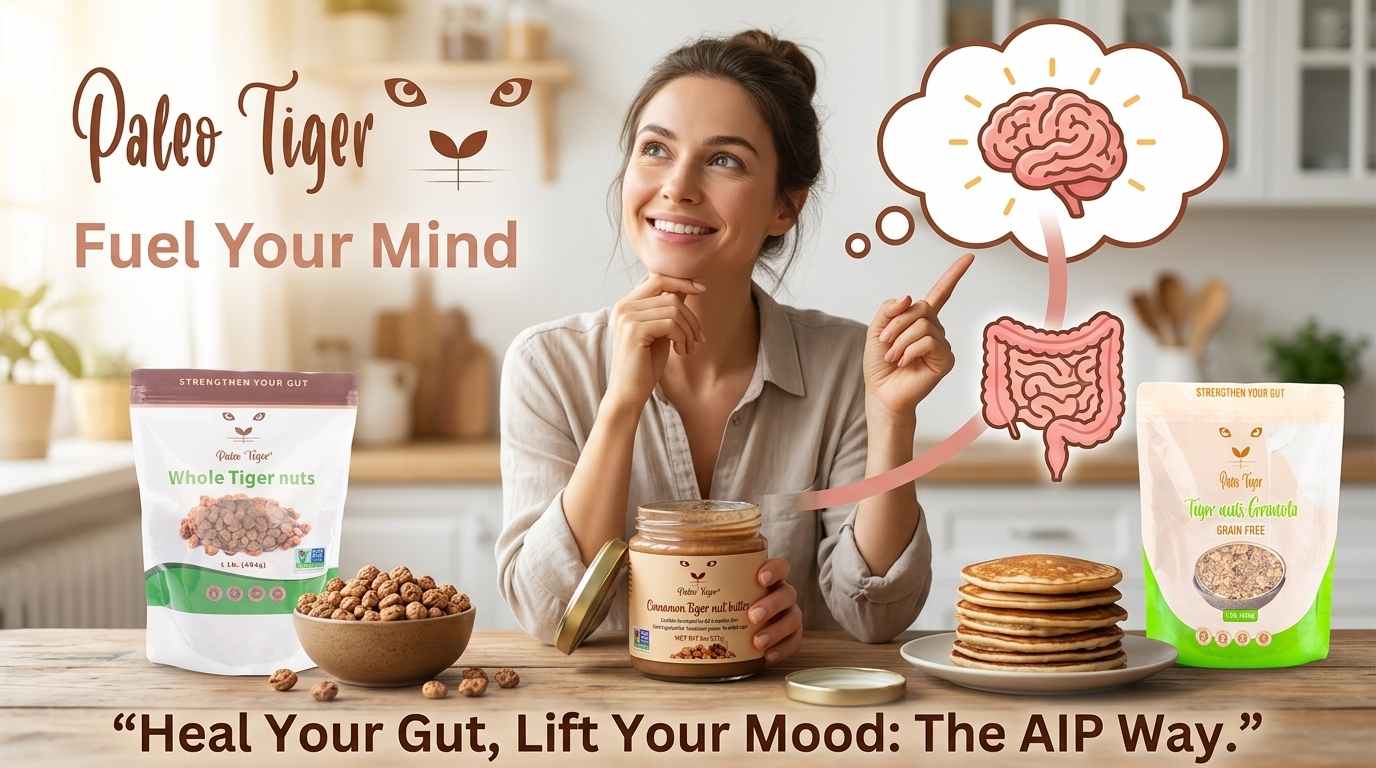
AIP Diet and Mental Health: What We Know About Food, Gut and Mood
Quick answer: There’s no good evidence that the AIP diet treats depression, anxiety or other mental health conditions. Research on the gut-brain axis is real and growing, and overall diet quality is linked with mood in some studies, but it’s early science. If you follow AIP, the best thing you can do for your mental health is keep meals varied and regular, avoid unnecessary restriction, and keep working with your health care team.
Many people with autoimmune conditions also live with anxiety, low mood or fatigue. It’s natural to hope that changing your diet will help with all of it. This guide explains what the research does and doesn’t say, how AIP can affect your mood (for better and worse), and practical ways to make the protocol easier on your mind.
What is the gut-brain axis?
The gut-brain axis is the two-way communication between your digestive system and your brain. It involves nerves (especially the vagus nerve), hormones, the immune system and the trillions of microbes in your gut. Scientists study it because gut microbes produce compounds that can affect body systems, including the nervous system.
The National Center for Complementary and Integrative Health notes that research on the microbiome and on probiotics for conditions like depression is still in early stages. Most findings come from animal studies or small human trials.
Does diet affect mood?
Some studies link diets rich in vegetables, fruit, fish and whole foods with fewer depression symptoms, and diets high in ultra-processed foods with more. These are mostly observational, so they show links, not cause. Healthy eating patterns like those in the Dietary Guidelines for Americans support general health, which matters for wellbeing.
No studies have tested AIP specifically for depression or anxiety. So it’s honest to say: AIP is a whole-food pattern, and whole-food eating is generally good for you, but AIP is not a mental health treatment.
How AIP can help how you feel day to day
Some people do report feeling better on AIP. Possible reasons include:
- Fewer physical symptoms. If pain, bloating or fatigue ease, mood often improves too.
- More regular meals. Planning meals can stabilize energy across the day.
- More vegetables and protein. A less processed diet often means more fiber and nutrients.
- Less alcohol. AIP removes alcohol, which can affect sleep and mood.
- A sense of control. Taking action on your health can feel empowering.
How AIP can make things harder
AIP is restrictive, and restriction has mental costs:
- Food anxiety. Constant label checking and fear of “bad” foods can become stressful.
- Social isolation. Eating out or at family events is harder.
- Low energy. Without grains and legumes, it’s easy to under-eat carbohydrates.
- Risk for disordered eating. For anyone with a history of an eating disorder, a strict elimination diet can be risky. Talk to your clinician before starting.
If AIP is making you more anxious, isolated or preoccupied with food, that’s a valid reason to change course.
Signs you should talk to a professional
Please reach out for support if you notice:
- Low mood or loss of interest lasting more than two weeks
- Constant worry that gets in the way of daily life
- Thoughts of harming yourself
The National Institute of Mental Health lists ways to find help. In the US, you can call or text 988 for the Suicide and Crisis Lifeline any time.
Practical ways to protect your mood on AIP
Eat enough, regularly
Aim for three meals and one or two snacks. Include a starchy vegetable (sweet potato, plantain, cassava, squash) at most meals so you get enough carbohydrates.
Prioritize variety
Rotate proteins and vegetables, and try a new vegetable each week. Diverse plant foods are one of the simplest ways to feed a varied gut microbiome.
Get fiber from many sources
Root vegetables, leafy greens, berries and tiger nuts all add fiber. Whole tiger nuts are small tubers that are naturally high in fiber, which you can learn more about in our tiger nuts for gut health guide. Go slowly with high-fiber foods if you’re not used to them.
Keep easy food on hand
Decision fatigue is real. Having ready-to-eat AIP foods means you’re less likely to skip meals:
- Tiger Nuts Granola with coconut yogurt and berries
- Original Tiger Nut Butter on apple slices or plantain chips
- Leftover roast vegetables with shredded chicken

Look after the basics
Sleep, daylight, movement and social contact all affect mood as much as food does. A short walk after a meal and a regular bedtime are simple wins.
Don’t stay in elimination longer than needed
AIP is designed to end with reintroduction. Follow our AIP reintroduction guide to widen your diet once symptoms settle.
A simple day of mood-friendly AIP meals
| Meal | Idea |
|---|---|
| Breakfast | Coconut yogurt, tiger nut granola, blueberries |
| Snack | Apple slices with tiger nut butter |
| Lunch | Salmon, roasted sweet potato, greens with olive oil and lemon |
| Snack | Plantain chips and guacamole |
| Dinner | Chicken and vegetable soup with herbs |
| Dessert | Baked pear with cinnamon and a spoon of Cinnamon Tiger Nut Butter |
Managing stress around food on AIP
Food rules can easily turn into food worry. A few habits help keep AIP from taking over your thoughts:
- Plan once, then relax. Write a weekly menu on Sunday so you aren’t deciding at every meal.
- Use the “good enough” rule. One non-compliant ingredient by accident isn’t a failure. Note it and move on.
- Keep a short list of safe meals. Five reliable meals you enjoy cover most busy nights.
- Bring food to events. A dish you can eat lets you focus on the people, not the menu.
- Talk about it. Tell friends and family what you’re doing and why. Most people want to help.
Sleep, caffeine and AIP
Coffee is removed during AIP elimination, and the first days without caffeine can bring headaches, tiredness or irritability. That’s caffeine withdrawal, not a sign that AIP is failing. Cutting down gradually before you start can make it easier. Herbal teas such as peppermint, ginger or rooibos are common AIP swaps. Some people find their sleep improves without late-day caffeine and alcohol.
Questions to bring to your doctor
- Could my mood symptoms be related to my autoimmune condition or my medication?
- Should I check vitamin D, B12, iron or thyroid levels?
- Is an elimination diet appropriate for me right now?
- Can you refer me to a dietitian or mental health professional?
What about omega-3s and specific nutrients?
Fatty fish like salmon and sardines are AIP-friendly and provide omega-3 fats. NCCIH reports mixed evidence on omega-3 supplements for depression. Vitamin B12, folate, iron and vitamin D also matter for energy and mood; if you’re concerned about deficiency, ask your doctor for testing rather than guessing.
Bottom line
AIP can be a healthy, whole-food way to eat while you find your food triggers. It’s not a treatment for mental health conditions. Focus on eating enough, keeping variety high, staying connected with people, and getting professional help when you need it.
For more support, read top challenges people face on the AIP diet.
FAQ
Can the AIP diet cure depression or anxiety?
No. There’s no evidence that AIP treats depression or anxiety. Some people feel better overall when physical symptoms improve, but mental health conditions need proper care.
What is the gut-brain axis?
It’s the communication network between the gut and the brain through nerves, hormones, the immune system and gut microbes. Research is ongoing.
Can AIP make my mood worse?
It can for some people, especially if restriction causes stress, isolation or under-eating. If that happens, talk to your clinician about adjusting your plan.
Is AIP safe if I’ve had an eating disorder?
Strict elimination diets can be risky for people with a history of disordered eating. Speak to your doctor or dietitian before starting.
Which AIP foods support a healthy gut?
A wide variety of vegetables, fruits, fiber-rich tubers like tiger nuts, fermented foods like sauerkraut if tolerated, and quality proteins.
Are tiger nuts good for gut health?
Tiger nuts are high in fiber, and fiber supports digestion. Introduce them gradually to avoid gas or bloating.
Where can I get help right away?
In the US, call or text 988 for the Suicide and Crisis Lifeline. Outside the US, contact local emergency services.