
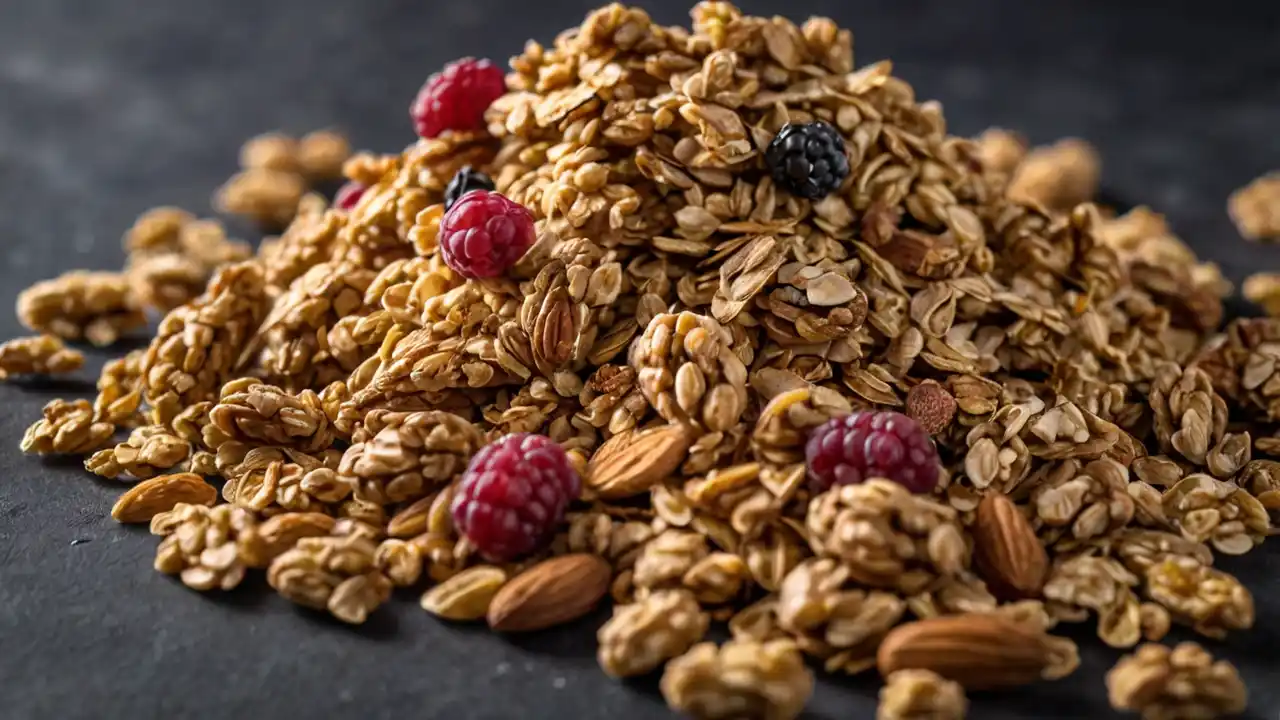
Bulk Grain-Free Granola: How to Buy, Store and Sell It
Quick answer: Buying grain-free granola in bulk makes sense if you eat it every day, run a cafe or office pantry, or stock a shop. Compare price per ounce rather than per bag, buy only what you can finish within its best-by date, and store it airtight, cool and dark so the nuts and oils don’t go stale. If you plan to make granola to sell, US rules require a Nutrition Facts panel (with some small-business exemptions), an ingredient list, an allergen statement, net weight and your business details.
Grain-free granola costs more than oat granola because nuts, seeds and tiger nuts cost more than oats. Buying in larger quantities can bring the cost down, but only if none of it goes stale. This guide covers how to do it well.
Who should buy grain-free granola in bulk?
- Households that eat granola daily, especially families on paleo, AIP or gluten-free diets
- Cafes and bakeries that offer a grain-free parfait or acai bowl topping
- Offices and gyms stocking allergy-aware snacks
- Retailers selling health foods
- Gift makers putting together hampers or care packages, like our AIP granola care packages
How to compare bulk prices
Bag sizes vary so much that the sticker price tells you little. Work out the cost per serving instead.
| Step | Example |
|---|---|
| Find the price per bag | $X for a 12 oz bag |
| Convert to price per ounce | $X ÷ 12 |
| Find the serving size on the label | Often 1/3 to 1/2 cup, around 1 to 1.5 oz |
| Multiply | Price per ounce × serving size = cost per bowl |
Then compare like with like: grain-free with grain-free, and similar sugar levels. A cheaper granola with twice the sugar isn’t really a better deal. The FDA guide to the Nutrition Facts label explains servings, and the added sugars page explains the sugar line.
How much should you buy?
A simple rule: buy no more than you’ll use within about 2 to 3 months of opening, and check the best-by date first.
- One person, one serving a day: roughly 2 to 3 lb a month
- A family of four, a few times a week: 4 to 6 lb a month
- A small cafe: track usage for a month before committing to large orders
Storing bulk granola so it stays fresh
Grain-free granola is rich in nuts, seeds and oils. Its biggest enemies are air, heat, light and moisture, which make fats go rancid and clusters go soft.
- Keep bags sealed until you need them
- Decant an open bag into an airtight glass jar or tub
- Store cool and dark, away from the stove, dishwasher and sunny windows
- Freeze extra in airtight bags for up to about 3 months; it thaws in minutes
- Use the sniff test. Rancid granola smells like paint, crayons or old oil. Throw it out
The FDA safe food handling page covers general storage and hygiene for cafes and home kitchens.
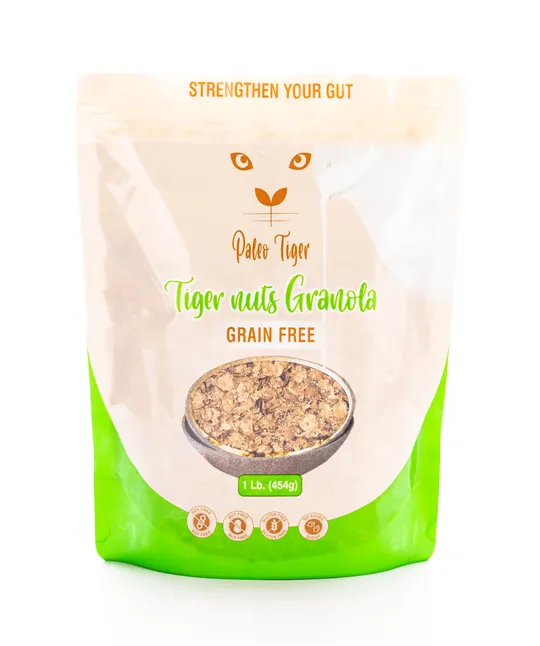
Buying Paleo Tiger granola for home or business
Paleo Tiger Tiger Nut Granola is made with tiger nuts, which are tubers rather than nuts. That makes it a good fit for households and cafes that need a nut-free, grain-free topping. Always check the current label for allergens such as coconut.
- For home: order through the Paleo Tiger shop and keep a sealed bag in reserve
- For cafes, offices and retailers: contact the Paleo Tiger team to ask about larger orders
- For DIY bulk batches: whole tiger nuts and tiger nut flour let you bake big batches at home
Making grain-free granola to sell: the basics
If you’re a home baker thinking about selling granola at a market or online, the rules depend on where you live. In the US, many states have “cottage food” laws for low-risk foods like granola, with their own limits and labeling rules. Check with your state or local health department first.
If you sell beyond cottage food rules, federal food labeling applies. The FDA food labeling hub is the starting point. A typical granola label needs:
- Product name (for example, “Grain-Free Granola”)
- Net weight in ounces and grams
- Ingredient list in descending order by weight
- Allergen declaration for any of the nine major allergens, including tree nuts, peanuts, sesame and milk (FDA food allergies)
- Nutrition Facts panel, unless you qualify for a small business exemption. Values must come from lab analysis or a reliable nutrient database such as FoodData Central
- Name and address of the manufacturer or distributor
Claims need care too. “Gluten-free” has a legal meaning in the US: under 20 parts per million of gluten, explained on the FDA gluten-free labeling page. Health claims such as “boosts immunity” or “heals your gut” aren’t allowed without approval. Commercial kitchens also follow current good manufacturing practices.
Shelf life testing for small makers
You don’t need a lab to start, but you do need records:
- Bake a batch, pack it as you would sell it and date it
- Taste and smell samples at 2, 4, 8 and 12 weeks
- Note when the texture softens or the flavor fades
- Set your best-by date well before that point
Use oxygen-barrier, resealable pouches. Clear bags look nice but let in light, which speeds up rancidity.
Bulk buying for allergy-aware kitchens
Cafes, schools and offices often buy grain-free granola because someone on the team or menu has an allergy. If that’s you:
- Keep allergen information for every product you stock, and update it when a supplier changes a recipe
- Store nut-free granola separately from nut-containing products, with its own scoop
- Label decanted containers with the product name, allergens and the date it was opened
- Train staff to check the original packaging before answering allergy questions
- Remember that “nut-free” in a recipe doesn’t cover “may contain” warnings from the factory
Tiger nut granola can help here, because tiger nuts are tubers, not tree nuts. Always confirm the full allergen statement on the current label.
Common bulk buying mistakes
- Buying a huge bag of a flavor you’ve never tried
- Storing an open bag with just a clip
- Keeping granola above the stove or in a hot car
- Ignoring the best-by date on clearance stock
- Comparing price per bag rather than price per serving
Ways to use a big batch
- Breakfast bowls with yogurt and fruit, like our granola and strawberry yogurt combo
- Parfait cups for meal prep
- Topping for baked fruit or smoothie bowls
- No-bake bars (see DIY grain-free granola bars)
- Trail mix with dried fruit and coconut
FAQ
Is it cheaper to buy grain-free granola in bulk?
Often, if you compare price per ounce and finish it before it goes stale.
How long does bulk grain-free granola last?
Check the best-by date. Once opened, aim to finish it within a few weeks, or freeze extra for up to 3 months.
Can you freeze granola?
Yes. Freeze it airtight for up to about 3 months. It doesn’t need long to thaw.
Do I need a license to sell homemade granola?
It depends on your state or country. Many US states allow granola under cottage food laws. Check with your local health department.
Does homemade granola need a nutrition label?
Under federal rules most packaged foods do, but small businesses can qualify for exemptions. Cottage food rules vary by state.
Can cafes order Paleo Tiger granola in larger quantities?
Contact the Paleo Tiger team through the contact page to ask about larger orders.