
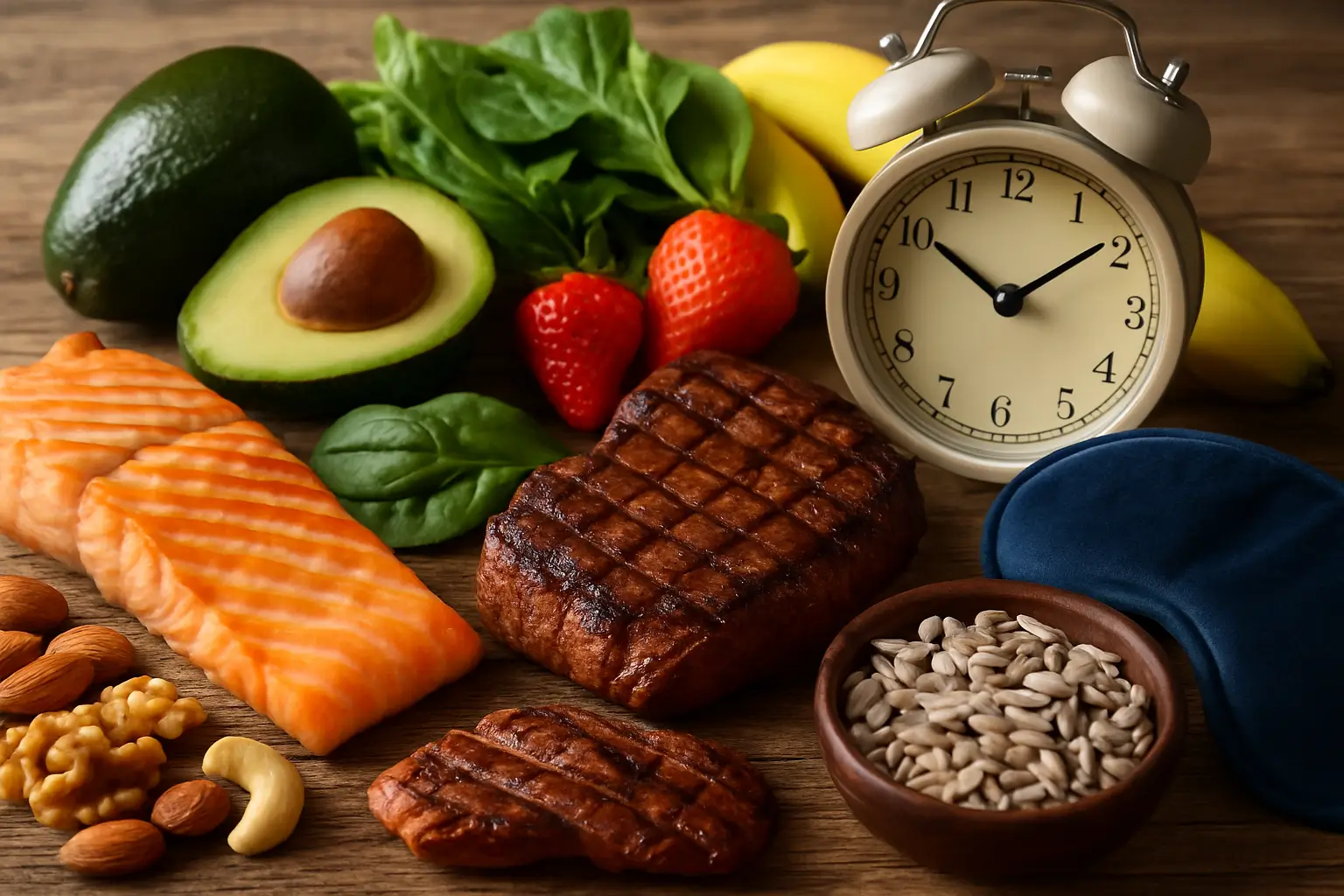
Foods for Better Sleep: How Paleo Eating Can Support Sleep and Energy
Quick answer: No single food guarantees good sleep, but your eating pattern can help. The most useful habits are cutting caffeine after midday, avoiding heavy meals and alcohol close to bedtime, eating regular meals with protein, fiber and some carbohydrate, and including foods that supply magnesium and tryptophan, such as leafy greens, fish, poultry, kiwi and tart cherries. A whole-food paleo pattern makes most of these habits easier, though there’s no strong evidence that paleo itself improves sleep.
Sleep and energy are linked: poor sleep drains energy, and erratic eating can disrupt sleep. This guide covers what’s known about food and sleep, a list of foods for better sleep that fit paleo, and an evening routine you can start tonight.

Why sleep matters for energy
Adults generally need seven or more hours of sleep a night. Ongoing short sleep is linked to daytime fatigue, trouble concentrating and a higher risk of several chronic conditions (NHLBI sleep deprivation). Food is only one piece. Light, stress, activity and a regular schedule matter as much or more (MedlinePlus healthy sleep).
How diet affects sleep
| Habit | Effect on sleep | Better approach |
|---|---|---|
| Caffeine in the afternoon | Can delay sleep for hours | Last coffee or tea before noon |
| Large, rich dinner late at night | Reflux and discomfort | Finish dinner 2–3 hours before bed |
| Alcohol in the evening | Lighter, broken sleep later in the night | Limit or skip on weeknights |
| Skipping meals | Late-night hunger, waking up hungry | Regular meals and a planned snack |
| Very low-carb eating | Some people report lighter sleep | Include a starchy vegetable at dinner |
| Lots of fluids at night | Bathroom trips | Drink earlier in the day |
The FDA notes that caffeine can affect people differently and that up to about 400 mg a day is generally not linked to harmful effects for most healthy adults (FDA caffeine). Sensitivity varies, so if sleep is a problem, timing matters more than total amount.
10 foods for better sleep that fit paleo
- Kiwi. A couple of small studies found eating kiwi before bed was linked to falling asleep faster. Easy to add as an evening fruit.
- Tart cherries. They contain some melatonin. Small studies looked at tart cherry juice for sleep with mixed results.
- Fatty fish. Salmon, sardines and mackerel provide omega-3 fats and vitamin D.
- Turkey and chicken. Good sources of tryptophan, an amino acid the body uses to make serotonin and melatonin.
- Leafy greens. Spinach, chard and kale supply magnesium.
- Pumpkin seeds. A magnesium-rich paleo snack (not for AIP elimination).
- Sweet potatoes. A carbohydrate source that pairs well with protein at dinner. See our AIP sweet potato guide.
- Bananas. Provide potassium and some magnesium.
- Herbal teas. Chamomile or peppermint, caffeine-free, as part of a wind-down routine.
- Tiger nuts. A fiber-rich tuber that makes an easy evening snack instead of sweets. Try a small bowl of Paleo Tiger Tiger Nut Granola or a spoon of Original Tiger Nut Butter on banana.
Important: these foods support a healthy pattern. Research on individual foods and sleep is mostly small, so don’t expect any one of them to fix insomnia.
Does the paleo diet improve sleep?
There’s little direct research on paleo and sleep. What paleo does well is remove many habits linked to worse sleep, such as sugary late-night snacks and ultra-processed foods, and it encourages regular whole-food meals. Paleo can also go wrong for sleep if it becomes very low in carbs or calories, or if it leaves you hungry at night. Keep a starchy tuber or fruit at dinner, and see paleo vs keto if you’re unsure about carb levels.
How to keep energy steady during the day
- Eat breakfast with protein and fiber, such as eggs with vegetables, or coconut yogurt with tiger nut granola and berries.
- Don’t skip lunch. Afternoon crashes often start with a small or missed lunch.
- Plan a 3 p.m. snack. Fruit with tiger nut butter or a handful of Whole Tiger Nuts.
- Get daylight and move. A 10-minute walk after lunch helps alertness.
- Hydrate. Mild dehydration can feel like tiredness.
More snack ideas: paleo snacks for busy days and nut-free workout snacks.
A sleep-friendly paleo day
| Time | What to eat or do |
|---|---|
| 7:00 a.m. | Daylight outside; breakfast with protein and vegetables |
| 10:00 a.m. | Last coffee of the day |
| 12:30 p.m. | Big lunch: salmon salad with greens, avocado and sweet potato |
| 3:30 p.m. | Banana with tiger nut butter |
| 6:30 p.m. | Dinner: roast chicken, roasted roots, greens |
| 8:30 p.m. | Chamomile tea; two kiwis if hungry |
| 9:30 p.m. | Screens off, cool dark room |
Evening wind-down routine
- Set a consistent bedtime and wake time, even on weekends.
- Dim lights and screens an hour before bed.
- Keep the bedroom cool, dark and quiet.
- If you’re hungry, have a small snack rather than going to bed starving.
- Write down tomorrow’s tasks to clear your head.
The Sleep Foundation sleep hygiene guide has more tips.
Sleep-friendly tiger nut snack ideas
| Snack | Why it works at night |
|---|---|
| Banana with 1 tbsp tiger nut butter | Small, satisfying and not too heavy |
| Coconut yogurt with tiger nut granola and tart cherries | Fiber and fruit in a light bowl |
| Warm tiger nut milk with cinnamon | A caffeine-free, comforting drink |
| Kiwi with a sprinkle of granola | Light, fresh and easy to digest |
For more ways to use tiger nuts, see health benefits of tiger nuts.
Common mistakes to avoid
- Cutting carbs too far. If you’ve started waking at 3 a.m., try adding a starchy vegetable to dinner for a week.
- Swapping coffee for energy drinks or pre-workout. Both can contain more caffeine than a cup of coffee.
- Treating dark chocolate as a bedtime snack. It contains caffeine and theobromine.
- Using supplements first. Talk to a pharmacist or doctor before trying melatonin or magnesium, especially if you take other medicines.
When to see a doctor
See a clinician if you regularly struggle to fall or stay asleep for more than a few weeks, snore loudly, stop breathing during sleep, or feel very sleepy during the day despite enough time in bed. Sleep apnea, insomnia, thyroid problems and anemia all need proper diagnosis and treatment, not just diet changes.
FAQ
What foods help you sleep better?
Kiwi, tart cherries, fatty fish, poultry, leafy greens and bananas are commonly studied or recommended, but research on single foods is small.
Does the paleo diet improve sleep?
There’s little direct research. Paleo removes some habits linked to poor sleep, but very low-carb or low-calorie versions may make sleep worse for some people.
Should I eat carbs at night to sleep better?
Many people sleep better with a moderate portion of carbohydrate at dinner, such as sweet potato or fruit.
What time should I stop drinking coffee?
Many sleep experts suggest stopping caffeine at least 6–8 hours before bed.
Is it bad to eat right before bed?
A large meal can cause discomfort and reflux. A small snack is fine if you’re hungry.
Are tiger nuts good before bed?
A small portion of tiger nut granola or tiger nut butter is a fiber-rich alternative to sweets. They aren’t a sleep aid.
How can I boost energy without caffeine?
Eat regular meals, get morning daylight, walk after meals, stay hydrated and protect your sleep.