
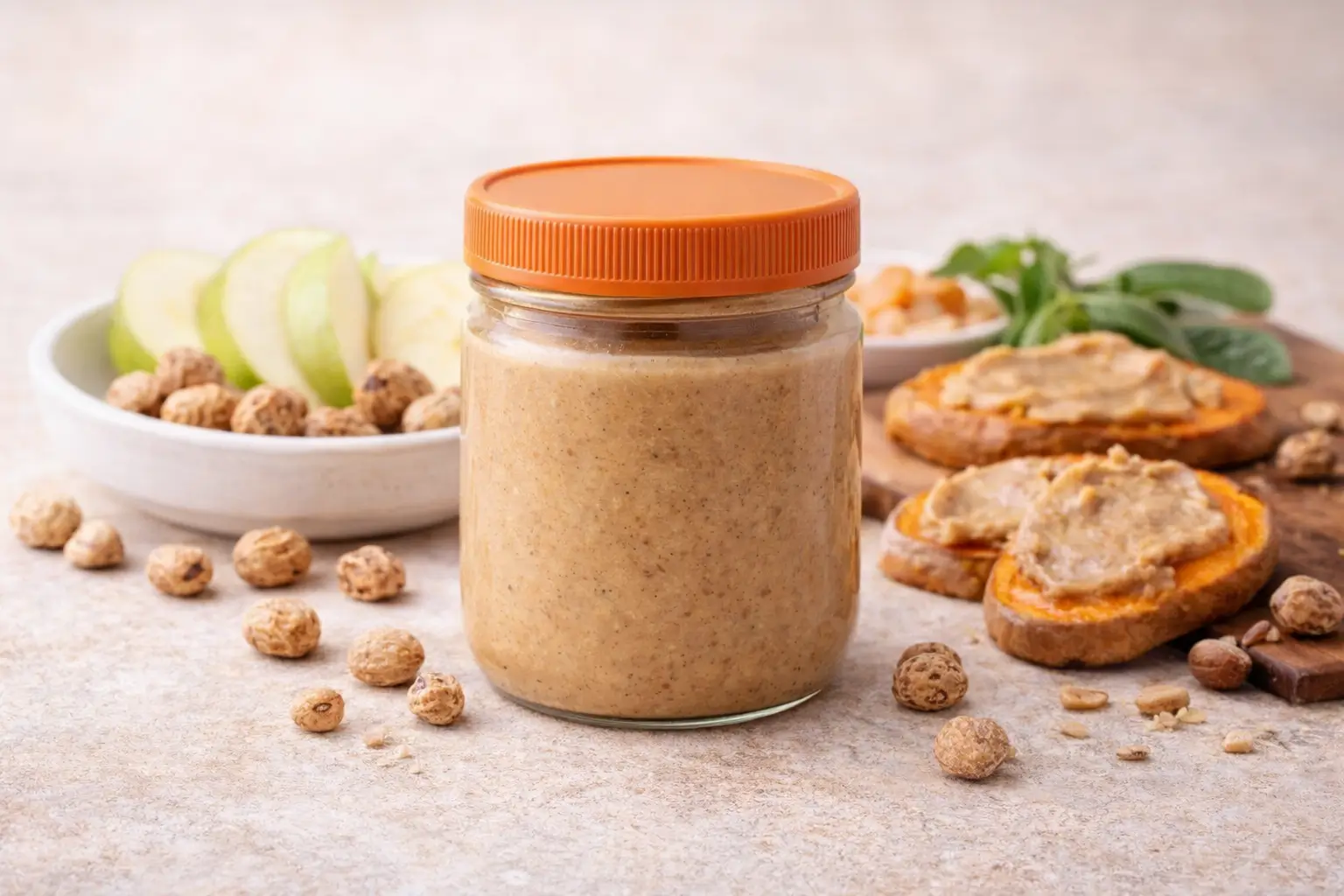
Is Tiger Nut Butter AIP-Friendly? Benefits, Nutrition and How to Use It
Quick answer: Yes. Tiger nut butter is AIP-friendly as long as every ingredient on the label fits the protocol. Tiger nuts are small tubers, not nuts, so they’re allowed during the AIP elimination phase, unlike almond, peanut, cashew or sunflower butter. Most tiger nut butters also contain an oil such as coconut or avocado oil, both of which are AIP-compliant. Check flavored versions for spices or cocoa, and start with a tablespoon or two because tiger nuts are high in fiber.
For many people starting AIP, losing nut butter is one of the hardest changes. Tiger nut butter fills that gap: it spreads, tastes nutty and sweet, and fits the elimination rules.
Why tiger nut butter fits AIP
The autoimmune protocol’s elimination phase removes nuts and seeds, along with grains, legumes, dairy, eggs and nightshades. Tiger nuts are the tubers of *Cyperus esculentus*, a plant in the sedge family. They grow underground like potatoes or sweet potatoes and are classed with tubers, which AIP allows. Read more in what is the AIP diet and AIP and tiger nuts.
What to check on the label
Not every tiger nut butter is automatically AIP. Look at the full ingredient list:
| Ingredient | AIP elimination? |
|---|---|
| Tiger nuts | Yes |
| Coconut oil, avocado oil, olive oil | Yes |
| Tiger nut oil | Yes |
| Carob | Yes |
| Cinnamon, vanilla, ginger | Yes |
| Honey, maple syrup, coconut sugar | Yes, in moderation |
| Sea salt | Yes |
| Cocoa or chocolate | No |
| Sunflower, canola or other seed oils | No |
| Almonds, cashews or other nuts | No |
| Nutmeg, cardamom or other seed spices | No |
About Paleo Tiger butters: Paleo Tiger’s tiger nut butters, including Original, Cinnamon, Carob, Crunchy and Macaroon, are made with tiger nuts and AIP-friendly oils such as coconut oil. Because they contain coconut, they aren’t suitable for anyone avoiding coconut. Always read the current label for the exact ingredients.

Tiger nut butter nutrition
Tiger nut butter takes on the nutrition of tiger nuts plus whatever oil and sweetener are added. A scientific review of tiger nuts describes them as:
- High in dietary fiber, mostly insoluble, with some resistant starch
- Rich in fat, mainly oleic acid, the monounsaturated fat that dominates olive oil
- Starchy, with natural sugars that make them taste sweet
- Lower in protein than most nut butters
- A source of minerals including potassium, phosphorus and magnesium
Exact numbers depend on the product, so read the Nutrition Facts panel. The FDA’s label guide explains how to compare serving sizes and nutrients.
What that means in practice
- It’s energy-dense, like any nut-style butter. A typical serving is 1 to 2 tablespoons
- It’s a source of fiber, which many people on restrictive diets fall short on
- It isn’t a high-protein food, so pair it with protein (chicken, fish, collagen) for a filling snack
- Added coconut oil adds saturated fat; the Dietary Guidelines suggest keeping saturated fat under 10% of calories
How it compares with other spreads
| Spread | AIP elimination? | Notes |
|---|---|---|
| Tiger nut butter | Yes | Tuber-based, nut-free; check added ingredients |
| Coconut butter (coconut manna) | Yes | Very high in saturated fat; firm at room temperature |
| Almond butter | No | Tree nut |
| Cashew butter | No | Tree nut |
| Peanut butter | No | Legume |
| Sunflower seed butter | No | Seed |
| Tahini | No | Sesame seed |
More detail: tiger nut butter vs peanut butter and tiger nut butter vs almond butter.
Is tiger nut butter safe for nut allergies?
Tiger nuts aren’t tree nuts or peanuts, so tiger nut butter is generally suitable for people with nut allergies. The FDA doesn’t list tiger nuts among the major allergens. Still:
- Check for “may contain” statements about shared facilities
- Rare allergies to tiger nuts themselves have been reported
- Some products contain coconut, which the FDA no longer lists as a tree nut but which some people react to
If you have a severe allergy, ask your allergist before trying a new food. See tiger nut butter for nut allergies.
Tolerance: start small
Because tiger nuts are fiber-rich, a big serving can cause gas or bloating in people who aren’t used to it. Start with a teaspoon to a tablespoon and increase over a week or two. If you have IBS, SIBO or another digestive condition, work with your dietitian. The NIDDK has practical advice on fiber and gas.
12 easy ways to use tiger nut butter on AIP
- Spread on apple or pear slices
- Stir into a smoothie with banana, spinach and coconut milk (tiger nut butter smoothie)
- Swirl into coconut yogurt with berries and tiger nut granola
- Spread on roasted sweet potato rounds with cinnamon
- Mash with ripe plantain for a quick breakfast
- Roll into no-bake energy bites with coconut and dates
- Whisk into a savory sauce with coconut aminos, garlic and ginger (AIP tiger nut butter sauce)
- Use as a binder in homemade granola
- Drizzle (warmed) over baked apples
- Bake into muffins with tiger nut flour
- Fill dates with a teaspoon for a sweet snack
- Spread on cassava or plantain crackers
For recipe ideas, see 5 recipes using tiger nut butter for AIP meals.
During reintroduction and beyond
When you begin reintroducing foods, you may test nuts or seeds. Tiger nut butter doesn’t depend on those results, because it doesn’t contain them, so it can stay in your routine whatever you learn. Many people keep it as a long-term pantry staple. See the AIP reintroduction guide.
Make your own (or buy ready-made)
You can make tiger nut butter at home. Soak whole tiger nuts for 24 to 48 hours, drain and dry them, then blend in a high-powered processor with a few tablespoons of coconut or tiger nut oil until smooth. Tiger nuts are very hard and fibrous, so homemade butter is usually grittier than store-bought and takes patience and a strong motor. Add a pinch of salt, and cinnamon or carob if you like. Ready-made jars save time and give a smoother texture, which is why many people keep one in the pantry for busy weeks.
Storage tips
- Stir well before using; natural oil separation is normal
- Store in a cool, dark place, or refrigerate if the label says so
- Use a clean, dry spoon to avoid moisture and crumbs
- If it smells bitter or like paint, the oils may have gone rancid
FAQ
Is tiger nut butter AIP?
Yes, if all its ingredients are AIP-compliant. Tiger nuts are tubers, not nuts.
Are tiger nuts nuts?
No. They’re small tubers from a sedge plant. The name comes from their shape and the stripes on their skin.
Does tiger nut butter contain coconut?
Many do, as coconut oil. Paleo Tiger butters include coconut oil, so check the label if you avoid coconut.
Is carob tiger nut butter AIP?
Carob is AIP-friendly, so a carob tiger nut butter with compliant oils fits. Cocoa versions do not.
Is tiger nut butter high in protein?
No. It’s lower in protein than most nut butters, so pair it with a protein food.
Can I eat tiger nut butter every day on AIP?
Yes, in sensible portions of 1 to 2 tablespoons, if it agrees with you.
Is tiger nut butter safe for tree nut allergies?
Generally yes, but check “may contain” warnings and ask your allergist if your allergy is severe.