
If you follow the autoimmune protocol, breakfast can feel like a puzzle with half the pieces missing. Oats are out. Nuts are out. Seeds, dairy, eggs, and refined sugar are out too, which wipes out nearly every granola on the supermarket shelf. So when someone mentions tiger nut granola, the first question is usually: is this actually allowed, or is it another “almost AIP” trap?
Short answer: yes, tiger nut granola can be fully AIP-compliant, because tiger nuts aren’t nuts at all. They’re small, naturally sweet tubers, which puts them in completely different territory from almonds, oats, and chia. For years, finding genuinely compliant granola meant baking your own; tiger nuts changed that.
This isn’t a niche hack, either. As AIP and paleo eating have gone mainstream, tiger nut products have moved from specialty stores to everyday pantries, and granola is where they shine brightest, because crunch is the hardest texture to replace without grains or nuts.
If you’ve been hunting for an AIP granola you can trust, this guide covers everything: what tiger nut granola is, why it fits the autoimmune protocol, the nutrition benefits that matter, how to read a label like a pro, whether to make it or buy it, and 15 genuinely AIP-friendly ways to eat it. Note that not every product marketed as AIP granola is truly compliant, so we’ll show you exactly what to check before you buy.
What Is Tiger Nut Granola, Exactly?
Tiger nuts (Cyperus esculentus) are marble-sized tubers that grow underground, closer botanically to a sweet potato than to an almond. They’ve been eaten for thousands of years, most famously ground into horchata de chufa, the creamy, naturally sweet drink of Valencia, Spain. Nutrition circles now rank them among legitimate superfoods.
Tiger nut granola takes sliced or chopped tiger nuts and bakes them with AIP-friendly partners: coconut flakes, tiger nut flour, a little raw honey or date paste for sweetness, coconut oil or cold-pressed tiger nut oil, plus cinnamon and vanilla. In the U.S., tiger nuts are still a discovery for most shoppers, which is exactly why an AIP shopper who finds them feels like they’ve unlocked a cheat code. The result is the same golden crunch you expect from granola, with none of the grains, nuts, seeds, dairy, or eggs.
Here’s the differentiator that matters: because tiger nuts are tubers, tiger nut granola is nut-free by nature, not nut-free by substitution. That makes it a rare safe option for households juggling nut allergies, school lunchbox rules, and autoimmune protocols at the same time. A well-crafted AIP granola starts with tiger nuts precisely because they clear every major elimination hurdle in a single ingredient. That single-ingredient advantage is why tiger nut–based granola outperforms oat-based blends wearing a “paleo” label.
PaleoTiger’s Tiger Nuts Granola keeps it even simpler: just tiger nuts, avocado oil, and cinnamon. Grain-free, nut-free, and no added sugar.
Is Tiger Nut Granola AIP-Friendly? The Full Breakdown
The short answer is yes, tiger nut granola is AIP-friendly when every ingredient in the bag complies with the autoimmune protocol. Let’s unpack why, because the reasoning matters more than the verdict.
What AIP eliminates
The autoimmune protocol’s elimination phase removes grains, legumes, dairy, eggs, nuts, seeds (including seed-based spices and oils), nightshades, alcohol, coffee, refined and processed sugars, and industrial food additives. The goal is to calm immune reactivity and support gut healing, then reintroduce foods methodically.
Why tiger nuts pass every filter
Tiger nuts clear all of it: they’re not a grain, not a legume, not a nut, not a seed, and not a nightshade. They’re a root vegetable, a tuber, so none of the AIP red flags apply. The name is the only confusing part, and it’s a historical accident, not a botanical fact. If the “tiger nut doesn’t match AIP” worry has been holding you back, you can set it aside: the concern comes from the name, not the food.
What to watch for on the label
So is every AIP granola on the shelf automatically safe? Not quite. Granola is only as compliant as its full ingredient list, and this is where most products fail. When you read any granola label on AIP, watch for these common non-compliant add-ins:
- Nuts and nut butters, almonds, cashews, peanuts (a legume), and their butters
- Seeds, chia, flax, pumpkin, sunflower, sesame, and seed oils like canola or sunflower oil
- Oats and other grains, including “gluten-free” oats, which are still grains
- Dairy, butter, ghee (excluded on strict AIP), milk powder, whey
- Chocolate chips typically contain dairy, soy lecithin, or refined sugar
- Refined sweeteners, cane sugar, brown rice syrup, excessive agave
- “Natural flavors” and additives, vague flavor systems and emulsifiers have no place in a clean AIP product
Compliant sweeteners used in moderation, raw honey, maple syrup, date paste, coconut sugar, are generally accepted on AIP. Carob is a fine chocolate stand-in. And compliant fats include coconut oil, olive oil, avocado oil, and cold-pressed tiger nut oil.
One more check: cross-contamination. If a granola is made in a facility that also processes wheat, nuts, or seeds, strict-AIP followers may react. Look for brands that are transparent about allergen-free production; it’s one of the quiet markers of a serious AIP brand.
Tiger Nut Nutrition: Why This Superfood Earns the Hype?
Compliance gets tiger nut granola through the door; nutrition is why it deserves to stay. Here’s what the tuber brings:
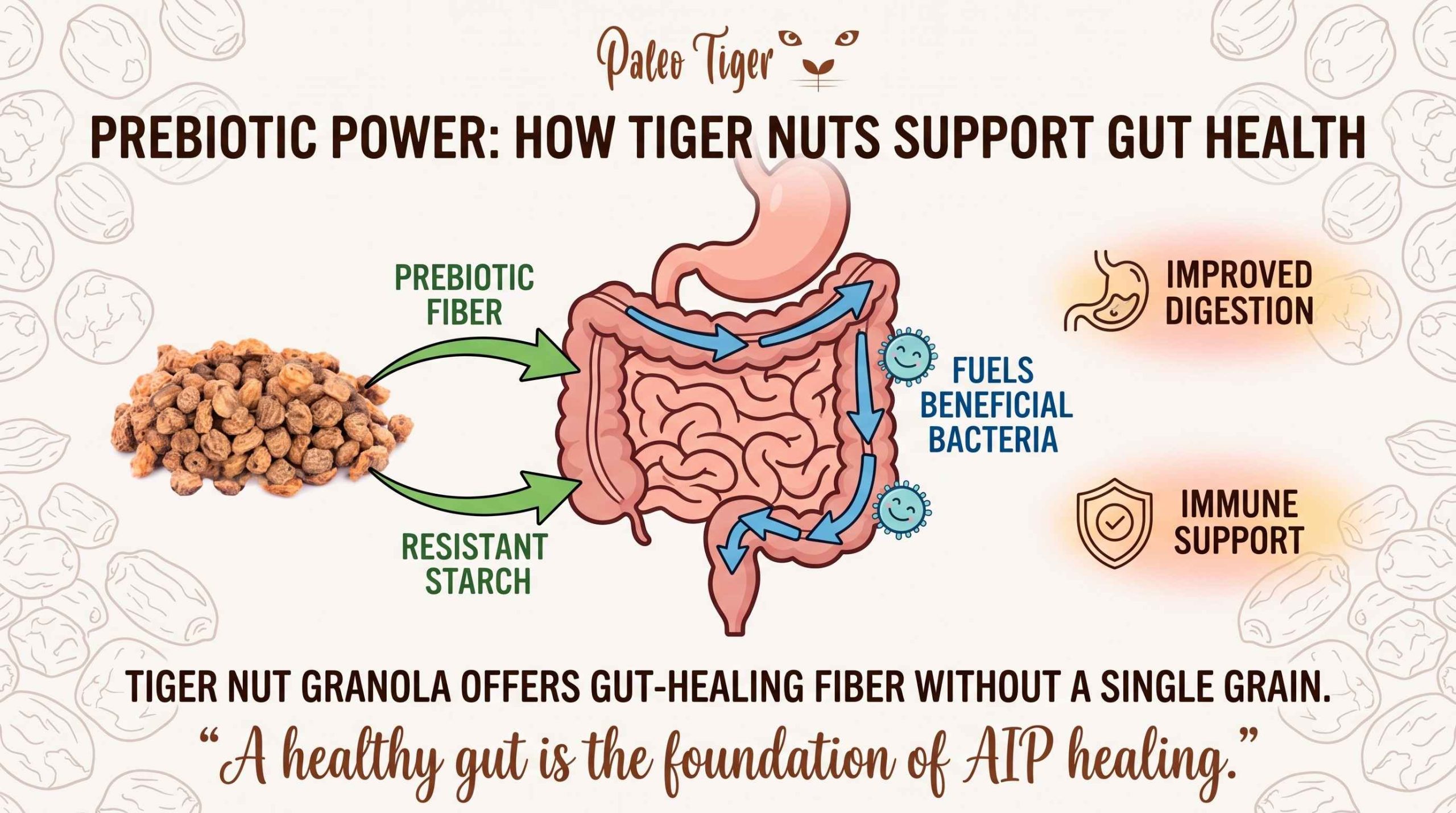
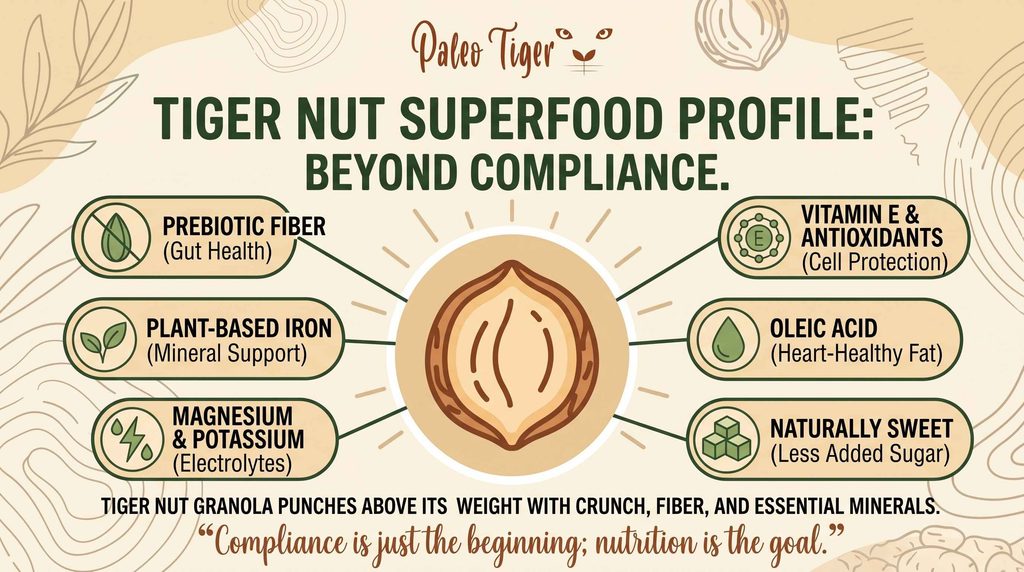
Prebiotic fiber and resistant starch. Tiger nuts are exceptionally rich in dietary fiber, including resistant starch, the type that feeds beneficial gut bacteria rather than spiking blood sugar. For anyone on AIP specifically to support gut health, that prebiotic action is the single most relevant benefit. Most “healthy granola” on the market offers fiber from oats; tiger nut granola offers it without a single grain.
Plant-based iron. Tiger nuts are a noteworthy source of iron, a mineral many people on restricted diets struggle to get enough of, especially when legumes and fortified grains are off the table.
Magnesium, potassium, and phosphorus. This electrolyte-mineral trio supports muscle function, hydration balance, and steady energy, genuinely useful when your diet already cuts entire food groups.
Vitamin E and antioxidants. Tiger nuts contain vitamin E and antioxidant compounds that help protect cells from oxidative stress, adding a protective layer to your morning bowl.
Oleic acid. Much of the tiger nut’s fat is oleic acid, the same heart-healthy monounsaturated fat that makes olive oil famous. It’s part of why tiger nut oil is prized as a finishing oil, not just a baking fat.
Natural sweetness, less added sugar. Tiger nuts taste faintly of coconut and almond with an inherent sweetness, which means a good recipe needs far less sweetener. That’s the foundation of a genuinely low-sugar granola: PaleoTiger’s granola is made with no added sugar at all, letting the tiger nuts do the work.
That nutrition profile is exactly why AIP granola made from tiger nuts punches above its weight; you’re getting crunch plus prebiotic fiber, minerals, and healthy fats in one ingredient. (Nutrient levels vary by harvest and preparation; general values are documented in the USDA FoodData Central database.)
Tiger Nut Granola vs. Regular Granola, What’s Actually Different?
| Regular granola | Tiger nut granola | |
| Base | Oats (a grain) | Tiger nuts (a tuber) |
| Nuts & seeds | Usually almonds, cashews, chia, flax | None, nut-free and seed-free by nature |
| Sweetener | Often cane sugar or brown rice syrup | Honey, dates, or none; PaleoTiger uses no added sugar |
| Dairy & eggs | Butter and egg whites are common binders | Coconut oil or tiger nut oil; no dairy or eggs |
| AIP status | Not compliant | Compliant when the full ingredient list is clean |
The takeaway: regular granola is built from nearly every food group AIP eliminates, while tiger nut granola is built from foods AIP welcomes. That’s not marketing; it’s simply what happens when your base ingredient is a root vegetable. If you’ve ever flipped a “paleo” granola bag around only to find oats, glucose syrup, and “natural flavors,” you know exactly the gap this fills.
How to Choose a Healthy Granola on AIP? The Label Checklist
Use this five-point check on any bag before it goes in your cart:
- Grain-free, nut-free, seed-free. The big three must be absent: no oats, no almonds, no chia hiding in the fine print. A true grain-free granola and nut-free granola in one bag is rare; tiger nut granola is one of the few that delivers both.
- No dairy, eggs, or nightshade spices. Check for butter, whey, milk powder, and paprika-family seasonings.
- Low sugar, honestly sweetened. Aim for a low sugar granola with 10g or less of added sugar per serving, or, better, no added sugar at all. Sweetness should come from tiger nuts, coconut, dates, or a touch of honey.
- Clean fats only. Coconut oil, olive oil, avocado oil, or tiger nut oil. If you see canola, sunflower, safflower, or “vegetable oil,” put the bag back.
- Short ingredient list, transparent facility. You should recognize everything on the label, and the brand should be upfront about allergen-free production.
PaleoTiger Tiger Nuts Granola was formulated against exactly this checklist, which is why it works as a daily-driver AIP granola rather than an occasional exception. Save this checklist; picking a trustworthy bag gets quick once you know the five points.
Homemade vs. Store-Bought AIP Granola
Should you bake it yourself or buy a bag? Honest answer: both can work. Here’s how they compare:
| Homemade | Store-bought | |
| Ingredient control | Total, you choose every item | Depends on the brand’s standards |
| Time | 45–60 minutes plus cleanup | Zero |
| Cost per serving | Lower, if you buy in bulk | Higher, but no waste |
| Cross-contamination risk | Low in your own kitchen | Low only with allergen-aware brands |
| Consistency | Varies batch to batch | Same crunch every time |
Make it if you enjoy baking and want full control. Start with whole tiger nuts, extra-fine tiger nut flour for binding, and cold-pressed tiger nut oil for a clean fat base. Roughly chop the tiger nuts, toss with coconut flakes, honey, cinnamon, vanilla, and oil, then bake low and slow (around 300°F / 150°C), stirring every 10 minutes until golden.
Buy it if you want reliability without the project. A quality store-bought AIP granola from a dedicated allergen-free facility saves time and removes guesswork, particularly valuable during the strict elimination phase, when label fatigue is real, and one wrong ingredient can cost you a reintroduction round. Just run it through the five-point checklist above first.
A simple homemade granola recipe (AIP-friendly)
Want to try the homemade route? Here’s a starter formula:
- 2 cups roughly chopped whole tiger nuts (soaked 4 hours, drained, patted dry)
- 1 cup coconut flakes
- ½ cup tiger nut flour
- ⅓ cup melted coconut oil or tiger nut oil
- 3 tbsp raw honey
- 1 tsp cinnamon, ½ tsp vanilla, pinch of sea salt
Toss everything, spread on a parchment-lined tray, and bake at 300°F (150°C) for 25–30 minutes, stirring every 10 minutes, until golden and fragrant. Cool completely; it crisps as it cools, then store airtight. Soaking the tiger nuts first softens them slightly and gives a better crunch.
How to Eat Granola, 15 AIP-Friendly Ways
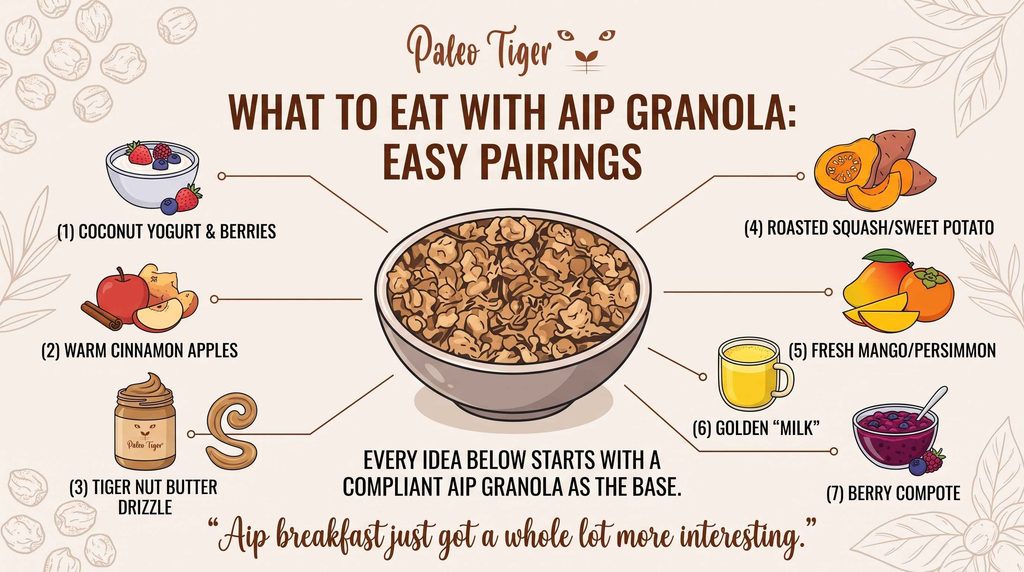
Once you have a compliant granola, the question shifts from can I eat it to how to eat granola in ways that stay interesting. Every idea below starts with a compliant AIP granola as the base: no peanuts, no chocolate chips, no dairy butter, no grains.
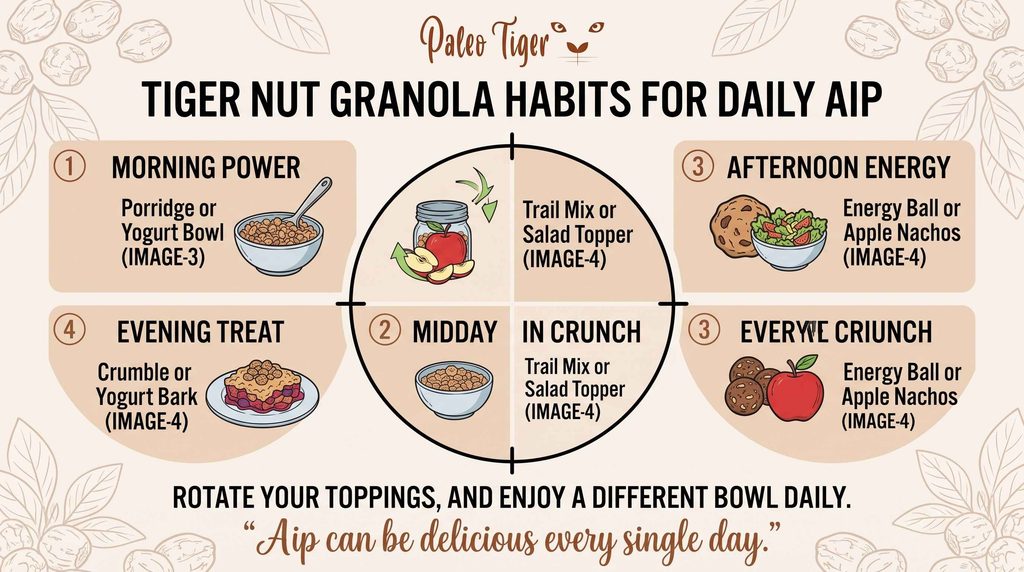
1. The classic granola bowl. Pour coconut milk or another AIP-friendly milk over a ⅓-cup serving, add fresh berries, and you have the simplest granola bowl there is. It answers “can you eat granola with milk?” Yes, just make it dairy-free milk.
2. Coconut yogurt parfait. Layer Tiger Nuts Granola with coconut yogurt and sliced mango or berries. One of the easiest AIP breakfast ideas for busy mornings; prep the jars the night before.
3. Warm breakfast topper. Sprinkle granola over warm mashed sweet potato, tiger nut flour porridge, or baked plantain for a grain-free breakfast with real crunch. Add it at the last second so it stays crisp. A pinch of cinnamon and a drizzle of honey make it taste like oatmeal’s cooler cousin.
4. Smoothie bowl crunch. Blend a thick banana-mango smoothie, pour it into a bowl, and crown it with granola. The texture contrast is what turns a drink into a meal.
5. No-bake energy balls. Mix granola with tiger nut butter, raw honey, and shredded coconut; roll into balls, chill, and grab on the go. For a dessert-like twist, use the carob tiger nut butter instead of chocolate.
6. Apple nachos. Fan out apple slices on a plate, drizzle with warmed cinnamon tiger nut butter, and scatter granola over the top. A kid-approved snack that happens to be AIP.
7. Frozen banana pops. Halve bananas, insert sticks, coat in macaroon tiger nut butter, roll in crushed granola, and freeze until firm.
8. AIP trail mix. Combine granola with dried mango, coconut chips, and a few carob chips for a packable, lunchbox-safe snack, no nuts, no problem. Portion into small bags on Sunday and your weekday snacking is solved.
9. Sweet potato boats. Fill roasted sweet potato halves with coconut yogurt, berries, and a granola sprinkle. Sweet, hearty, and satisfying enough for dinner.
10. Salad crunch. Swap croutons for granola on fruit-and-greens salads. The sweet crunch works especially well with citrus vinaigrette and avocado. Massage the dressing into hearty greens like kale first so the granola doesn’t slide off.
11. Baked into AIP treats. Fold granola into muffin or cookie batter made with tiger nut flour for extra texture and a bakery-style top.
12. Warm fruit crumble. Top sliced apples or pears with granola tossed in coconut oil and cinnamon; bake until bubbling. It eats like apple crisp, minus every excluded ingredient.
13. Coconut yogurt bark. Spread coconut yogurt on parchment, top with granola and berries, freeze until solid, and break into pieces for a cooling snack.
14. Savory coating for chicken or fish. Crush granola finely, mix with tiger nut flour and sea salt, and use it to crust chicken tenders or white fish before baking. The natural sugars caramelize beautifully; watch closely in the last few minutes so it doesn’t burn. Serve with coconut aminos or garlic-infused olive oil for dipping.
15. Gift jars and prep packs. Portion granola into jars with dried fruit for homemade gifts, or into small snack bags for the week ahead. The best AIP granola habit is the one that’s already portioned when hunger hits.
However you eat granola on AIP, one rule keeps it simple: keep every pairing compliant, and a single bag becomes fifteen different meals.
What to Eat With Granola, Easy AIP Pairings

If “how to eat granola” is the question, “what to eat with granola” is the cheat code. These pairings keep things fully AIP-friendly, and all of them take under five minutes, because the best AIP food is the food you’ll actually make:
- Coconut yogurt + berries, the classic parfait formula: creamy, tangy, crunchy.
- Warm cinnamon apples: sautéed apples with granola on top taste like deconstructed pie.
- Tiger nut butter drizzle: a spoonful of warmed tiger nut butter turns any bowl into dessert.
- Roasted squash or sweet potato: granola adds the crunch these soft vegetables miss.
- Fresh mango or persimmon: tropical fruit and tiger nuts’ coconut-like flavor are natural partners.
- Herbal tea or golden “milk”: a warm drink alongside a granola bowl rounds out breakfast.
- Berry compote: simmer frozen berries into a quick compote and spoon it warm over a granola bowl.
- Avocado sweet-potato rounds: smashed avocado on roasted sweet potato rounds, granola sprinkled over the top for crunch.
Mix and match; most AIP breakfast ruts break the moment a second texture enters the bowl.
The Bottom Line
Tiger nut granola isn’t a loophole; it’s one of the few genuinely AIP granola options built on an ingredient that was compliant all along. Nut-free by nature, grain-free, rich in prebiotic fiber, and endlessly versatile, it earns its place in an AIP pantry. Whether you bake it or buy it, keep the checklist handy, and let tiger nuts do what oats never could.
Ready to taste the difference? Shop Tiger Nuts Granola, explore the tiger nut butter collection, including Original, Crunchy, Cinnamon, Carob, and Macaroon, and browse everyday staples like tiger nut flour, cold-pressed tiger nut oil, and whole tiger nuts in our shop.
Portion Smarts: How Much Granola Should You Eat?
Even the cleanest AIP granola is energy-dense; that’s the nature of baked tubers, coconut, and honey. Stick to about ⅓ to ½ cup per serving, and anchor it with protein or fat (coconut yogurt, a spoonful of tiger nut butter, or a side of fruit) so it eats like a meal rather than a snack that disappears by the handful. Pre-portioning into small jars is the simplest way to enjoy it daily without overdoing it. If weight loss is a goal, treat granola as a condiment rather than the base; two tablespoons over fruit or yogurt deliver the crunch for a fraction of the calories.
Frequently Asked Questions
Is tiger nut granola AIP-compliant?
Yes, provided every ingredient complies. Tiger nuts themselves are tubers, not nuts, grains, seeds, or legumes, so they pass the AIP elimination filters. Always verify the full label of any AIP granola for hidden non-compliant add-ins like seed oils, chocolate chips, or “natural flavors.”
Wait, are tiger nuts actually nuts?
No. Despite the name, tiger nuts are small root vegetables (Cyperus esculentus). They contain none of the proteins that trigger tree nut or peanut allergies, which is why tiger nut products are considered nut-free by nature.
Can I eat AIP granola with milk?
Yes, with dairy-free milk. Coconut milk, homemade tigernut horchata, or other AIP-friendly plant milks all work beautifully in a granola bowl. Dairy milk is excluded during AIP elimination.
How much granola can I eat per day on AIP?
A ⅓- to ½-cup serving daily fits most AIP meal plans, especially a low-sugar granola with no added sugar. Pair it with fruit, coconut yogurt, or healthy fats for a balanced meal.
Is AIP granola good for gut health?
Tiger-nut-based AIP granola is a strong choice for gut support: tiger nuts supply prebiotic fiber and resistant starch that feed beneficial gut bacteria, a priority for many people following the autoimmune protocol.
What’s the difference between AIP granola and regular granola?
Regular granola is built on oats, nuts, seeds, and often refined sugar or dairy butter, nearly all excluded on AIP. AIP granola replaces those with compliant bases like tiger nuts and coconut, clean oils, and minimal natural sweeteners.
Is tiger nut granola safe for nut allergies and kids’ lunchboxes?
Tiger nuts are nut-free by nature, making tiger nut granola a practical option for nut-free schools and households managing allergies. As always, check the brand’s facility practices and consult your allergist for severe allergies. When in doubt, contact the brand directly about their production practices before serving it to a highly allergic child.
Homemade or store-bought, which AIP granola is better?
Neither is universally better. Homemade gives total ingredient control; a reputable store-bought AIP granola made in an allergen-aware facility gives consistency and convenience. Choose based on your time, budget, and how strict your elimination phase is.
How should I store granola?
Keep it in an airtight container in a cool, dry spot for up to a month. For longer storage, refrigerate or freeze; the crunch holds up well either way.
Is tiger nut granola keto or low-carb?
Not really; tiger nuts are a starchy tuber, so tiger nut granola is naturally higher in carbohydrates than keto-style seed granolas. On AIP, that’s a feature, not a bug: carbohydrates from whole-food sources support energy and thyroid function during healing.
Can I eat granola on AIP every day?
Yes, as long as the granola is fully compliant and fits your calorie needs. Rotate your toppings: berries one day, baked apple the next, coconut yogurt after that, so you get a range of nutrients instead of the same bowl on repeat. If you’re in the strict elimination phase, introduce any new packaged product the way you would a new food: one at a time, watching for reactions.