
If you’re searching for a low-calorie granola that actually supports weight loss, not one that just says “healthy” on the bag, you’re asking the right question. Most granola is a breakfast cereal in disguise: oats, sugar, and oil baked into clusters that can quietly deliver 400+ calories before you’ve finished your coffee.
But not every product labeled diet granola qualifies as a true low-calorie granola. The difference comes down to three things: calorie density, sugar load, and portion honesty. Get those right, and granola goes from diet-saboteur to one of the most satisfying tools in a weight-loss diet.
In this guide, you’ll learn exactly what makes a granola genuinely low-calorie, why tiger nuts (despite the name) are a perfect AIP-friendly base, how to make your own batch at home, and how a ready-made option like Paleo Tiger Tiger Nuts Granola compares. Let’s dig in.
What “Low Calorie” Actually Means in a Breakfast Cereal
“Low calorie” on a breakfast cereal label is meaningless without context. An honest low-calorie granola earns the name through low-energy density: fewer calories per bite, achieved with fiber-rich, naturally sweet ingredients instead of sugar and oil.
Here’s the math that matters:
- Traditional oat granola: 200–280 calories per ¼ cup, mostly from oats, honey, and vegetable oil.
- A well-built grain-free granola: 130–170 calories per ¼ cup, with more fiber and protein per calorie.
That gap comes from ingredient choice. Oats are cheap filler; honey and brown sugar are calorie-dense glue; and the oil used to create those crunchy clusters adds up fast. The right grain-free recipe flips the formula: a fiber-rich base, minimal added sweetener, and just enough healthy fat for crunch and satiety, never as the main event.
That gap is the entire job of a low-calorie granola: deliver the crunch and satisfaction of a breakfast cereal at a fraction of the energy cost.
Benefit hook: Fewer calories per spoonful means you can eat a real, satisfying bowl, not a sad sprinkle, and still stay in your calorie budget.
Can Granola Really Support Weight Loss?
Yes, when calorie density is managed, granola can absolutely fit a weight-loss diet. The evidence here is supportive: on average, foods higher in fiber and protein increase satiety, the feeling of fullness that keeps you from reaching for a second breakfast at 10 a.m., though the effect varies by fiber type and from person to person. A low-calorie granola built on fiber-rich ingredients helps in three specific ways:
- It slows you down. Crunchy, chewy textures take longer to eat, giving fullness signals time to register.
- It stabilizes blood sugar. Fiber and healthy fats blunt the glucose spike you’d get from a refined breakfast cereal, which means fewer cravings later.
- It satisfies with less. High-satiety foods let a ¼-cup serving feel like enough, and that serving discipline is where most “healthy” granolas fail.
The catch: none of this works if the granola is secretly a dessert. A granola with 12g of added sugar per serving can still spike and crash your appetite; fiber blunts the glycemic response, but it doesn’t fully cancel out a heavy sugar load. That’s why the ingredient list matters more than the front-of-bag claims.
Benefit hook: Steady morning energy with no 10 a.m. crash, because stable blood sugar means stable appetite.
Why Most “Diet Granola” Fails at Weight Loss?
Walk down any breakfast cereal aisle, and you’ll see the traps:
- “Low-fat” granola that replaced fat with extra sugar (sugar has 4 cal/g, but you’ll eat twice as much because it doesn’t satisfy).
- “High-protein” granola with 250+ calories per small serving.
- “Natural” granola sweetened with honey, agave, or coconut sugar, all still added sugar, all still calorie-dense.
- Serving-size games, where the label shows ⅓ cup but the bag’s clusters practically demand a full cup.
A genuine low-calorie granola does the opposite: no grains, no refined sugar, oil used sparingly for texture rather than as a base, and a serving size you can actually measure. If a brand won’t show you clear calories, macros, sugar, and fiber per serving, that’s your answer.
Tiger Nuts, The Secret Weapon (It’s Not Actually a Nut)
Here’s the ingredient that changes everything, and the one most granola brands ignore.
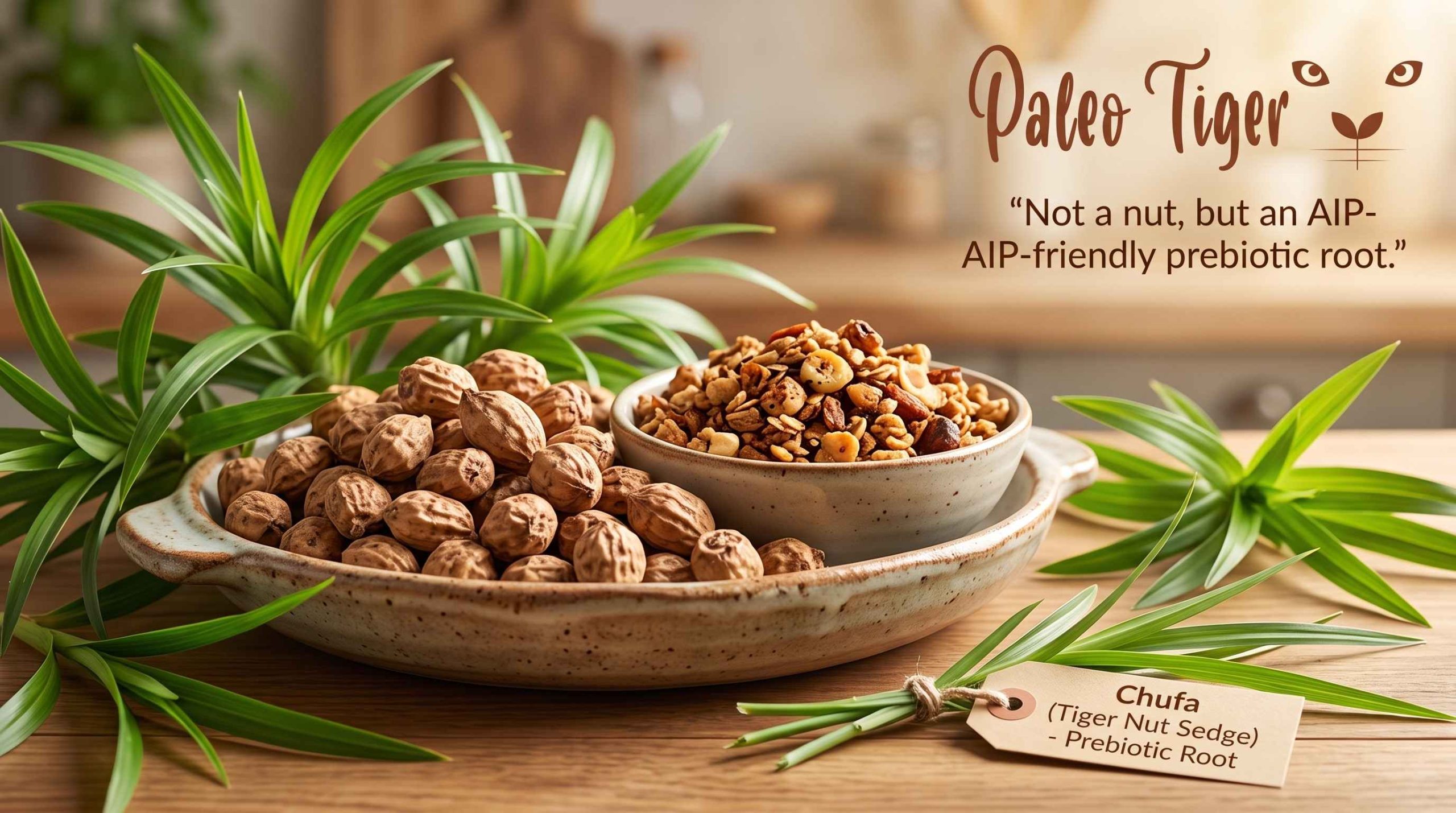
Despite the name, tiger nuts are not nuts at all. They’re small tubers, the edible root of Cyperus esculentus, a plant in the sedge family. That single fact unlocks everything that makes them ideal for a low-calorie granola:
- Naturally sweet. Tiger nuts taste faintly sweet and nutty on their own, so you need far less added sweetener to make granola craveable.
- Rich in prebiotic fiber. Tiger nuts are a well-known source of resistant starch and insoluble fiber, which feed beneficial gut bacteria and contribute to satiety.
- Nutrient-dense. They deliver iron, magnesium, potassium, zinc, and vitamin E alongside monounsaturated fats, the same heart-friendly fat family as olive oil.
- Allergy-friendly. No tree nuts, no peanuts, no gluten, no grains- safe territory for most elimination diets.
This is why tiger nuts are the base of our low-calorie granola: they bring sweetness, crunch, and fiber in one ingredient, so sugar and oil don’t have to do the heavy lifting. Tiger nut flour, finely ground from the same tuber, works the same way in baking: it adds body and prebiotic fiber while letting you cut back on sweetener.
Benefit hook: Sweetness from the ingredient itself, not from the sugar jar, so flavor stays high while added sugar stays at zero.
The AIP Question: Are Tiger Nuts Really AIP-Friendly?
This is the doubt we hear most: “Tiger nuts have ‘nut’ in the name, how can they possibly fit the Autoimmune Protocol?”
It’s a fair question, and the answer is straightforward: the AIP elimination phase removes tree nuts and peanuts because they are seeds with specific gut-irritating proteins, but tiger nuts aren’t nuts at all. They’re tubers, in the same botanical category as sweet potatoes and cassava, both of which are AIP staples.
So yes: tiger nuts are AIP-compliant, and a granola made from tiger nuts, avocado oil, and cinnamon contains zero AIP-excluded ingredients, no grains, no dairy, no eggs, no tree nuts, no peanuts, no nightshades, no refined sugar, no seed-based spices.
For AIP followers searching for a low-calorie granola, this matters enormously. Most “paleo” or “grain-free” granolas still contain almonds, cashews, or sunflower seeds, all excluded during AIP elimination. A tiger-nut-based granola is one of the very few crunchy breakfast options that survives the elimination phase intact.
Benefit hook: The crunch you miss on AIP, without a single elimination-phase violation.
How to Read a Granola Label, The 60-Second Checklist
Use this checklist to judge any granola in under a minute:
- Calories per ¼ cup: aim for under ~170. Anything over 200 is a dessert, not a diet food.
- Added sugar: 0g is ideal; under 4g is acceptable. Watch for honey, agave, brown rice syrup, and “evaporated cane juice”, all added sugar.
- Fiber: 2g+ per serving. Fiber is the main driver of satiety.
- Oil: named oils (avocado, olive, coconut) in small amounts, not “vegetable oil” as a top-three ingredient.
- Ingredient count: if you can’t picture every ingredient, put the bag back. The best granolas have fewer than six.
- Serving honesty: check whether the serving size is realistic (¼ cup) or fantasy (2 tablespoons).
Product Spotlight: Paleo Tiger Tiger Nuts Granola
This is where label-reading pays off. Paleo Tiger Tiger Nuts Granola was built specifically around the checklist above:
- Three ingredients. Tiger nuts, avocado oil, cinnamon. That’s the entire list: no grains, no added sugar, no preservatives, no “natural flavors.”
- AIP-friendly by construction. With tiger nuts as the base instead of almonds or cashews, it fits the AIP elimination phase (see above).
- No added sugar. The sweetness comes from the tiger nuts themselves plus cinnamon, a genuine low-calorie granola approach rather than a “less sugar” compromise.
- Healthy fats, controlled. A light touch of avocado oil (monounsaturated fat) gives crunch without turning the bag into an oil delivery system.
- Naturally gluten-free and grain-free, suitable for vegetarians and vegans, and made without artificial colorings or flavorings.
Benefit hook: Three ingredients you can picture. Zero you have to Google.
Browse the full range, including tiger nut butters, extra-fine flour, cold-pressed oil, and whole tiger nuts, in the Paleo Tiger shop.
Try it: Get Paleo Tiger Tiger Nuts Granola →
DIY Recipe, Low-Calorie Grain-Free Granola
Want full control? This DIY version mirrors the store-bought philosophy: tiger-nut base, light oil, minimal sweetener, with a few pantry additions for variety.
Prep: 10 min · Bake: 22–25 min · Makes: ~3 cups (12 servings of ¼ cup)
Ingredients
- 1 cup sliced or roughly chopped tiger nuts (or whole tiger nuts, chopped)
- ¼ cup tiger nut flour (extra-fine, for coating and fiber)
- ¼ cup raw pumpkin seeds
- 2 tbsp chia seeds
- 1 tbsp avocado oil (or cold-pressed tiger nut oil)
- 1 tbsp maple syrup or 1 tsp monk fruit sweetener (monk fruit keeps it lower-calorie)
- 1 tsp cinnamon, ½ tsp vanilla extract, pinch of sea salt
- Optional: zest of half an orange
Method
- Heat oven to 300°F (150°C). Line a baking sheet with parchment.
- Toss everything except the flour in a bowl until lightly coated.
- Sprinkle over the tiger nut flour and toss again; it creates a light, crisp coating without extra oil.
- Spread thin (crowding = steaming, not crunching). Bake 22–25 minutes, stirring once halfway, until golden and fragrant.
- Cool completely on the tray; it crisps as it cools. Store airtight up to 2 weeks.
Per ¼-cup serving (approximate): ~150–170 calories · 3g protein · 3g fiber · 4–6g carbs · 1–2g sugar (with monk fruit). Values are estimates; weigh your own batch for exact macros.
Honest note: this homemade version adds a small amount of sweetener for cluster and browning, which the store-bought version skips entirely. If your priority is zero added sugar, the ready-made low-calorie granola wins; if you want flavor variety and batch control, homemade wins. More on that trade-off below.
Keeping It Low-Calorie Without Losing Flavor
The trick to big flavor on fewer calories is making spices and technique do the work that sugar and oil usually do:
- High-impact spices (zero calories). Cinnamon, cardamom, ginger, and nutmeg add perceived sweetness with no sugar. Vanilla extract rounds everything out.
- Toast before you sweeten. Dry-toasting tiger nuts and seeds in the oven for 5 minutes before adding oil deepens their natural sweetness; you’ll need less sweetener overall.
- Citrus zest. Orange or lemon zest brightens the whole batch with zero meaningful calories.
- Texture contrast. Mix sliced tiger nuts (chewy-crisp) with pumpkin seeds (snap) and chia (tiny crunch). Varied texture reads as “indulgent” to your brain without extra fat.
Benefit hook: Big bakery flavor from the spice rack, not the sugar jar.
Portion Control: The ¼-Cup Rule
Here’s the uncomfortable truth about granola and weight loss: even the best recipe only works if the portion stays honest. Most people pour ½ to 1 cup straight from the bag, doubling or tripling the calories they think they’re eating.
Why ¼ cup works
- ~130–170 calories, easy to fit into any calorie budget
- Fiber-forward, 2–3g fiber keeps a small serving satisfying
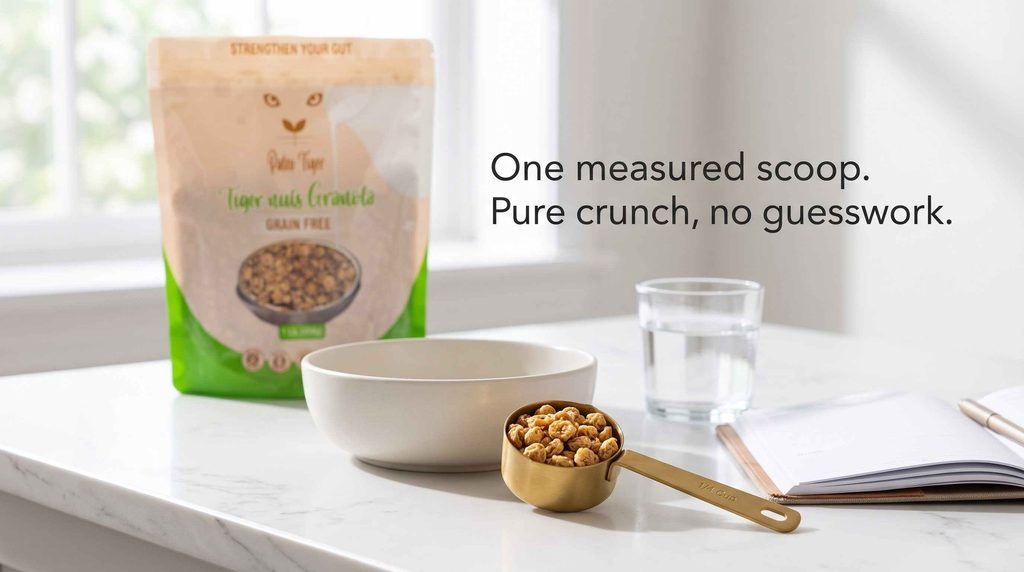
- Trackable, one scoop, no guesswork, consistent macros day to day
- Topping-friendly, works over yogurt or smoothie bowls without hijacking the meal’s calories
Best times to eat it
- Morning: pairs with protein (Greek yogurt, eggs on the side) for appetite control through lunch.
- Pre-workout (60–90 min before): the mix of slow carbs, fiber, and fats gives steady energy without a spike.
- Evening: craving something sweet? Measure 2 tablespoons instead of a full serving, crunch satisfaction at ~70 calories.
Benefit hook: One measured scoop. Zero guesswork. Your food log will thank you.
Homemade vs. Store-Bought: An Honest Comparison
Both paths can work; it depends on what you value most.
| Homemade low calorie granola | Paleo Tiger Tiger Nuts Granola | |
| Ingredients | You choose every one | 3: tiger nuts, avocado oil, cinnamon |
| Added sugar | Small amount (your choice) | Zero |
| Calories per ¼ cup | ~150–170 | Check the label (low, fiber-rich base) |
| AIP-compliant | Yes, if you keep it nut-free | Yes, by formulation |
| Time cost | 35 min + cleanup | Zero, open the bag |
| Consistency | Varies batch to batch | Same crunch every time |
| Cost per serving | Lower (bulk ingredients) | Higher (convenience premium) |
| Best for | Weekend batch-preppers, flavor experimenters | Busy mornings, strict AIP, zero-sugar goals |
The bottom line: bake when you enjoy the process and want variety; buy when you want guaranteed macros, zero added sugar, and AIP compliance without label anxiety. Many readers do both: homemade on weekends, the ready-made bag for weekday mornings.
5 Granola Mistakes That Quietly Stall Weight Loss
Even with the right product in the pantry, habits decide the outcome. These are the five mistakes that undo an otherwise solid plan:
1. Eyeballing the pour. The single biggest granola trap is the free pour. A “splash” from the bag is reliably ½–¾ cup, double or triple the intended serving. Fix it once: measure ¼ cup into your usual bowl, note where it lands, and you’ll never need the scoop again.
2. Treating it as the meal instead of the accent. Granola shines as a component, not a foundation. A bowl that is 80% granola is a 500-calorie breakfast; a bowl that is Greek yogurt or cottage cheese with ¼ cup granola on top is ~300 calories with far more protein. Protein drives satiety harder than any cereal ever will.
3. Pairing it with a sugary base. Granola over sweetened yogurt, juice, or a flavored latte stacks sugar on sugar. Keep the base plain: unsweetened yogurt, unsweetened almond milk, and let the granola (plus cinnamon) supply all the sweetness the bowl needs.
4. Ignoring the rest of the day’s fats. Granola contains healthy fats, which is good, but fats are calorie-dense, so account for them. If granola is your morning fat source, go lighter on oils, dressings, and cheese later. It’s not restriction; it’s budgeting.
5. Buying on claims instead of labels. “Protein-packed,” “all-natural,” “low-fat”- none of these guarantee a granola fits a calorie deficit. The 60-second label checklist above beats every marketing claim on the shelf. Make it a habit once, and you’ll never be fooled again.
Avoid these five and a sensible daily serving becomes one of the easiest habits in your diet to sustain, which, for weight loss, matters more than any single superfood claim.
What About Low Carb and Low Fat Granola?
Two related searches deserve honest answers:
Low carb granola: Tiger-nut granola is lower-carb than oat granola (more fiber, less starch per serving), but tiger nuts aren’t keto; they contain natural carbs and fiber. If your diet is strict keto, count the carbs; if you’re simply reducing refined carbs, this fits easily.
Low fat granola: A low calorie granola doesn’t have to be low-fat, and shouldn’t be. The fats here (monounsaturated from tiger nuts and avocado oil, omega-3s from chia in the DIY version) are the reason a small serving satisfies you. Chasing “low fat” usually just means more sugar, which is the worst trade for weight loss every time.
Benefit hook: Keep the satisfying fats. Lose the sugar. That’s the trade that actually works.
Level Up: Tiger Nut Butters
If you love the granola, the rest of the tiger nut lineup follows the same philosophy: simple ingredients, AIP-friendly, no added sugar:
- Tiger Nut Butter – Original, drizzle a teaspoon over yogurt with granola for a high-satiety breakfast
- Tiger Nut Butter – Cinnamon, warm spice flavor, still no added sugar
- Tiger Nut Butter – Carob, a chocolate-style fix without chocolate (carob is AIP-friendly; cocoa isn’t)
- Tiger Nut Butter – Crunchy and Macaroon, texture and flavor variety
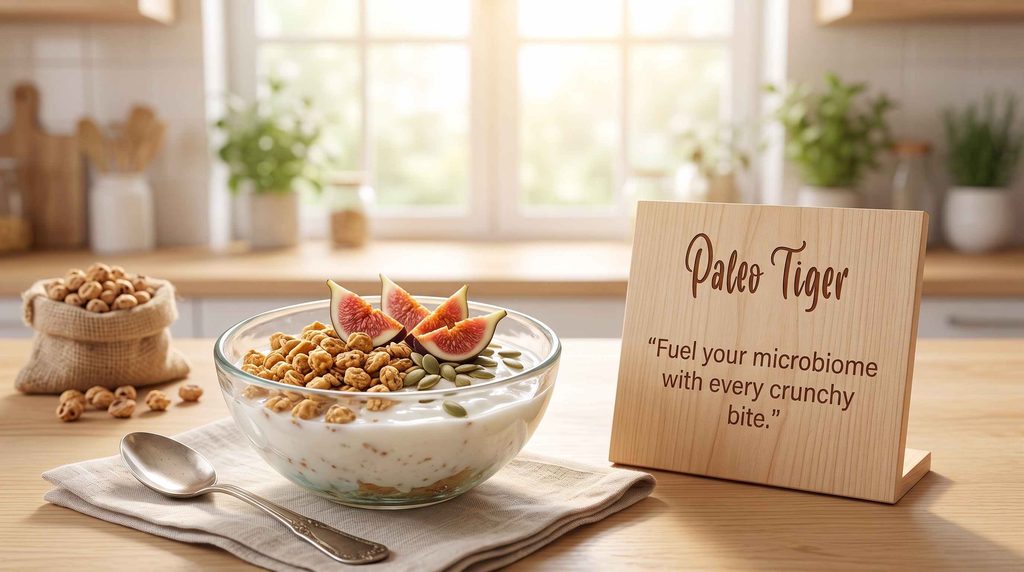
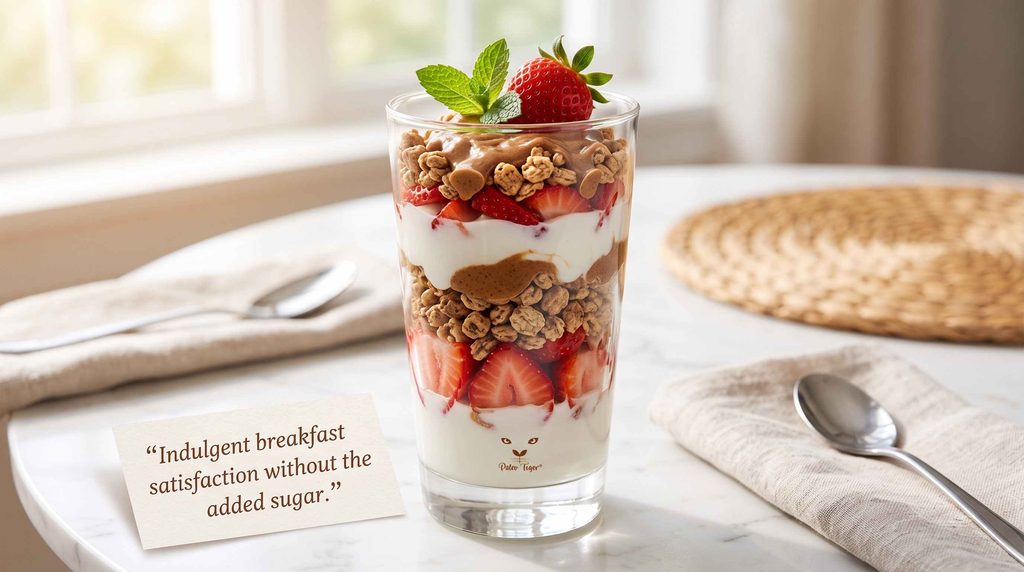
A teaspoon of butter + ¼ cup granola over plain yogurt is a complete, portion-controlled breakfast: protein, fiber, and healthy fats in one bowl.
The Bottom Line

Weight loss doesn’t require giving up crunch, flavor, or breakfast you actually look forward to. It requires a low-calorie granola built on the right foundation: fiber-rich tiger nuts instead of oats, natural sweetness instead of added sugar, a light hand with oil, and a ¼-cup portion you can measure without thinking.
Whether you bake the DIY batch above or grab the ready-made bag, the formula is the same: low-energy density, high satiety, honest labels.
Ready for crunch without the compromise? Shop Paleo Tiger Tiger Nuts Granola →
Sources & further reading
- USDA FoodData Central, tiger nut nutrient profile
- The Autoimmune Protocol, Dr. Sarah Ballantyne (AIP food lists: tubers allowed, tree nuts excluded in elimination)
- Paleo Tiger product pages, ingredient and AIP statements (granola, shop)
FAQs
1. What is the best low calorie granola for weight loss?
The best low-calorie granola for weight loss has under ~170 calories per ¼ cup, zero or minimal added sugar, at least 2g of fiber per serving, and a short ingredient list. Grain-free, tiger-nut-based options like Paleo Tiger Tiger Nuts Granola check all four boxes.
2. How many calories are in ¼ cup of low-calorie granola?
A true low-calorie formula lands around 130–170 calories per ¼ cup. Traditional oat granolas run 200–280 for the same volume; always check the label rather than trusting the front of the bag.
3. Is granola good for losing belly fat?
No single food targets belly fat, but a fiber-rich, low-sugar granola supports the calorie deficit and appetite control that drive overall fat loss. Pair your serving with protein for the best effect.
4. Are tiger nuts really AIP-compliant? It has “nut” in the name.
Yes. Tiger nuts are tubers (Cyperus esculentus), not tree nuts, botanically closer to sweet potatoes than almonds. The AIP elimination phase excludes tree nuts and peanuts, but tubers are allowed, so tiger nuts (and granola made from them) are AIP-friendly.
5. Is Paleo Tiger granola gluten-free and grain-free?
Yes, it’s naturally both, made only from tiger nuts, avocado oil, and cinnamon, with no grains, no gluten-containing ingredients, and no added sugar.
6. What’s the best sweetener for homemade low-calorie granola?
Monk fruit or allulose add sweetness with minimal or zero calories. If you prefer traditional sweeteners, 1 tablespoon of maple syrup for a whole batch keeps added sugar low while helping clusters form.
7. Can I eat granola every day while dieting?
Yes, if portions stay at ¼ cup and the granola is genuinely low-calorie and low-sugar. Daily weigh-ins of your serving for the first two weeks build the habit fast.
8. Is low-fat granola better for weight loss than regular granola?
Usually not. Low-fat granolas typically replace fat with sugar, which spikes hunger. A moderate-fat, high-fiber granola with controlled portions outperforms low-fat versions for satiety and adherence.
9. How should I store homemade granola?
Cool completely, then store airtight at room temperature up to 2 weeks. Any residual warmth creates steam, which kills the crunch.
10. Where can I buy AIP-friendly low calorie granola?
Direct from the source: Paleo Tiger Tiger Nuts Granola (tiger nuts, avocado oil, cinnamon, AIP-friendly, no added sugar), or browse the full tiger nut range in the Paleo Tiger shop.