
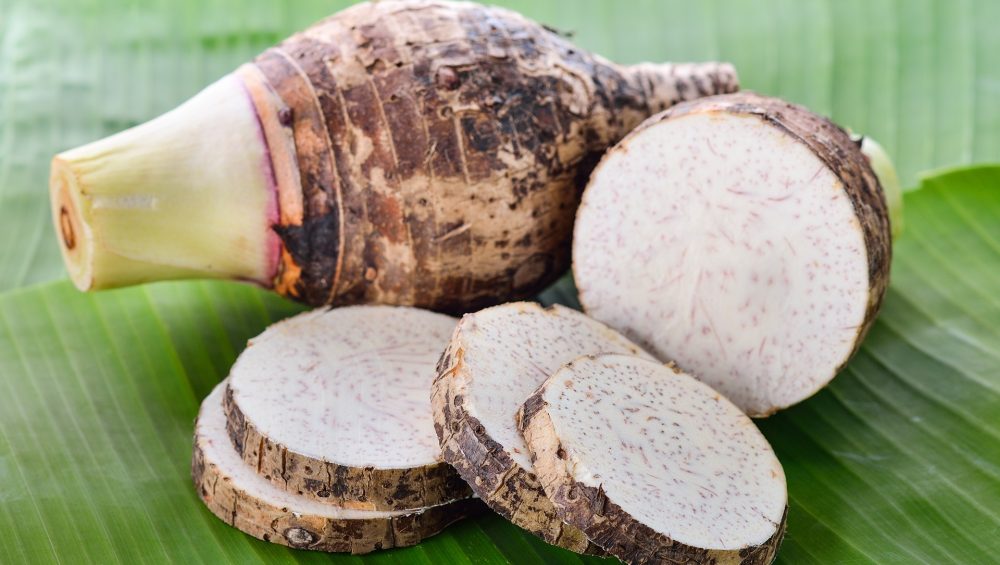
Taro Root: Nutrition, Benefits, AIP Status and How to Cook It
Quick answer: Taro root (*Colocasia esculenta*) is a starchy tropical tuber with brown, hairy skin and white or lilac-flecked flesh. One cup of cooked taro (about 130 g) has roughly 185 calories, 45 g of carbs and nearly 7 g of fiber, plus potassium, vitamin E, vitamin B6 and manganese (USDA FoodData Central). Taro must always be cooked. Raw taro contains calcium oxalate crystals that irritate the mouth and throat. Taro is paleo and AIP-compliant.
What is taro root?
Taro is one of the oldest cultivated crops. It’s a staple in Hawaii (as poi), the Pacific Islands, West Africa, the Caribbean, India, China and Southeast Asia, and is known as dasheen, eddo or arbi in different regions. The corm (root) is what most people cook, but the leaves are also eaten in many cuisines once well cooked.
Taro tastes mild, slightly nutty and sweet, a bit like a cross between potato and chestnut. Cooked, it turns creamy and a little sticky, which makes it great for mashes, soups and desserts. The purple taro used in bubble tea is often colored or flavored; the root itself is usually pale with purple specks.
Taro root nutrition
| Per 1 cup cooked, sliced (~132 g), approx. | Amount |
|---|---|
| Calories | ~187 |
| Carbohydrates | ~46 g |
| Fiber | ~6.7 g |
| Protein | ~0.7 g |
| Fat | ~0.1 g |
| Potassium | ~640 mg |
| Vitamin E | ~3.9 mg |
| Vitamin B6 | ~0.4 mg |
| Manganese | ~0.6 mg |
*Approximate values based on USDA data for cooked taro without salt; check FoodData Central for exact entries.*
Taro vs potato vs sweet potato
| Per 100 g cooked (approx.) | Taro | White potato | Sweet potato |
|---|---|---|---|
| Calories | ~142 | ~87 | ~90 |
| Carbs | ~35 g | ~20 g | ~21 g |
| Fiber | ~5 g | ~1.8 g | ~3.3 g |
| Potassium | ~480 mg | ~380 mg | ~475 mg |
| Vitamin A | Low | Low | Very high |
| AIP | Yes | No (nightshade) | Yes |
Taro is more energy-dense than potato but has much more fiber, and unlike white potato it isn’t a nightshade.
Taro root benefits (what the evidence supports)
1. High in fiber
At nearly 7 g per cup, taro is one of the higher-fiber starchy vegetables. Fiber supports regularity and fullness, and most adults don’t eat enough (Dietary Guidelines).
2. Contains resistant starch
Part of taro’s starch resists digestion and is fermented in the colon, especially after cooking and cooling. Resistant starch is studied for gut and blood sugar effects, though taro-specific human studies are limited. Read more in Why You Need Resistant Starch.
3. Good source of potassium
A cup provides about 14% of the Daily Value. Potassium-rich foods support normal blood pressure as part of an overall healthy pattern (FDA Daily Value guide).
4. Vitamin E and manganese
Taro supplies vitamin E (an antioxidant nutrient) and manganese, which helps normal metabolism.
5. Useful AIP and allergen-friendly starch
Taro is naturally free of gluten, grains, nightshades, nuts, dairy and eggs, so it helps add variety on restrictive diets.
What we won’t claim: you may read that taro “fights cancer” or “cures diabetes.” Those claims come from lab or animal studies and aren’t proven in people. If you manage diabetes, count taro as a starch serving and pair it with protein and vegetables.
Is taro AIP compliant? Is it paleo?
Yes to both. Taro is a whole-food tuber, not a grain, legume or nightshade. It’s widely included on AIP food lists alongside sweet potato, cassava and plantain (Konijeti et al., 2017). Cook it with compliant fats and seasonings: avocado oil, olive oil, coconut oil, salt, garlic, ginger, turmeric and herbs.
Safety: never eat taro raw
Raw taro (root and leaves) contains calcium oxalate crystals that cause itching, burning and swelling in the mouth and throat. Thorough cooking (boiling, steaming, baking) breaks them down.
- Wear gloves when peeling. The sap can make some people’s hands itch.
- Cook until fully tender, at least 20 minutes of boiling for chunks.
- Taro leaves need long cooking (often 45+ minutes).
- People prone to kidney stones may want to discuss high-oxalate foods with their doctor.
How to cook taro root (step by step)
- Choose firm taro with no soft spots, mold or sour smell.
- Wear gloves, then rinse and scrub the outer skin.
- Peel with a sharp knife or sturdy peeler, cutting off the hairy layer.
- Cut into 1–2 inch chunks and put them straight into cold water so they don’t get slimy.
- Boil in salted water for 20–25 minutes, or steam for 25–30 minutes, until a fork slides in easily.
- Drain and use in mashes, soups, fries or desserts.
| Method | Time | Result |
|---|---|---|
| Boil | 20–25 min | Soft, for mash or soup |
| Steam | 25–30 min | Creamy, keeps shape |
| Roast (after par-boiling) | 25–30 min at 425°F | Crispy edges |
| Air-fry (thin, par-boiled) | 12–15 min at 400°F | Fries |
| Pressure cook | 8–10 min | Fast, for mash |
Easy AIP and paleo taro recipes
1. Garlic taro mash
Boil 1 lb taro chunks, then mash with 2 tbsp olive oil, 2 roasted garlic cloves, 1/4 cup bone broth and salt. A creamy, nightshade-free swap for mashed potatoes.
2. Crispy taro fries
Par-boil sticks for 8 minutes, then dry them and toss with avocado oil and salt. Air-fry at 400°F for 12–15 minutes, shaking twice.
3. Taro and chicken coconut soup
Simmer 2 cups taro chunks, 1 lb chicken thighs, 1 can coconut milk, 3 cups broth, ginger, garlic and turmeric for 30 minutes. Finish with lime and cilantro.
4. Taro coconut pudding (dessert)
Simmer 2 cups steamed taro with 1 can coconut milk and 2 tbsp maple syrup, then mash until smooth. Top with Tiger Nut Granola for crunch.
5. Taro and tiger nut flour fritters
Mash 1 cup cooked taro and mix with 1/4 cup Tiger Nut Flour, salt and chopped scallion. Form small patties and pan-fry in avocado oil for 3 minutes per side.
How to store taro
- Whole raw taro: keep it in a cool, dry, ventilated place (not the fridge) for up to 1 week.
- Cooked taro: refrigerate in a sealed container for 3–4 days.
- Freezing: freeze peeled, par-boiled chunks for up to 3 months.
Other AIP-friendly roots to try
If you like taro, also try cassava, sweet potato, plantains (plantain nutrition and recipes) and tiger nuts, which are a small, sweet tuber eaten as a snack or ground into flour. See Whole Tiger Nuts.

Frequently asked questions
What does taro root taste like?
Mild, nutty and slightly sweet, with a creamy texture once it’s cooked.
Is taro healthier than potato?
Taro has more fiber and isn’t a nightshade, but it has more calories per gram. Both can fit a healthy diet.
Can you eat taro raw?
No. Raw taro contains calcium oxalate crystals that irritate the mouth and throat, so always cook it thoroughly.
Is taro AIP?
Yes. Taro is a non-nightshade tuber allowed in the AIP elimination phase.
Is taro keto?
No. It’s high in carbs.
Is taro good for weight loss?
Its fiber helps with fullness, but portions matter because taro is starchy.
Why does taro make my hands itch?
The sap contains irritating compounds. Wear gloves or oil your hands before peeling.
Is taro the same as yam or cassava?
No. They’re different plants, though they’re cooked in similar ways.
What is purple taro in bubble tea?
Usually a taro-flavored powder, often with added sugar and coloring, not plain taro.
This article is for general information and is not medical advice. Talk with your healthcare provider about your individual needs.