
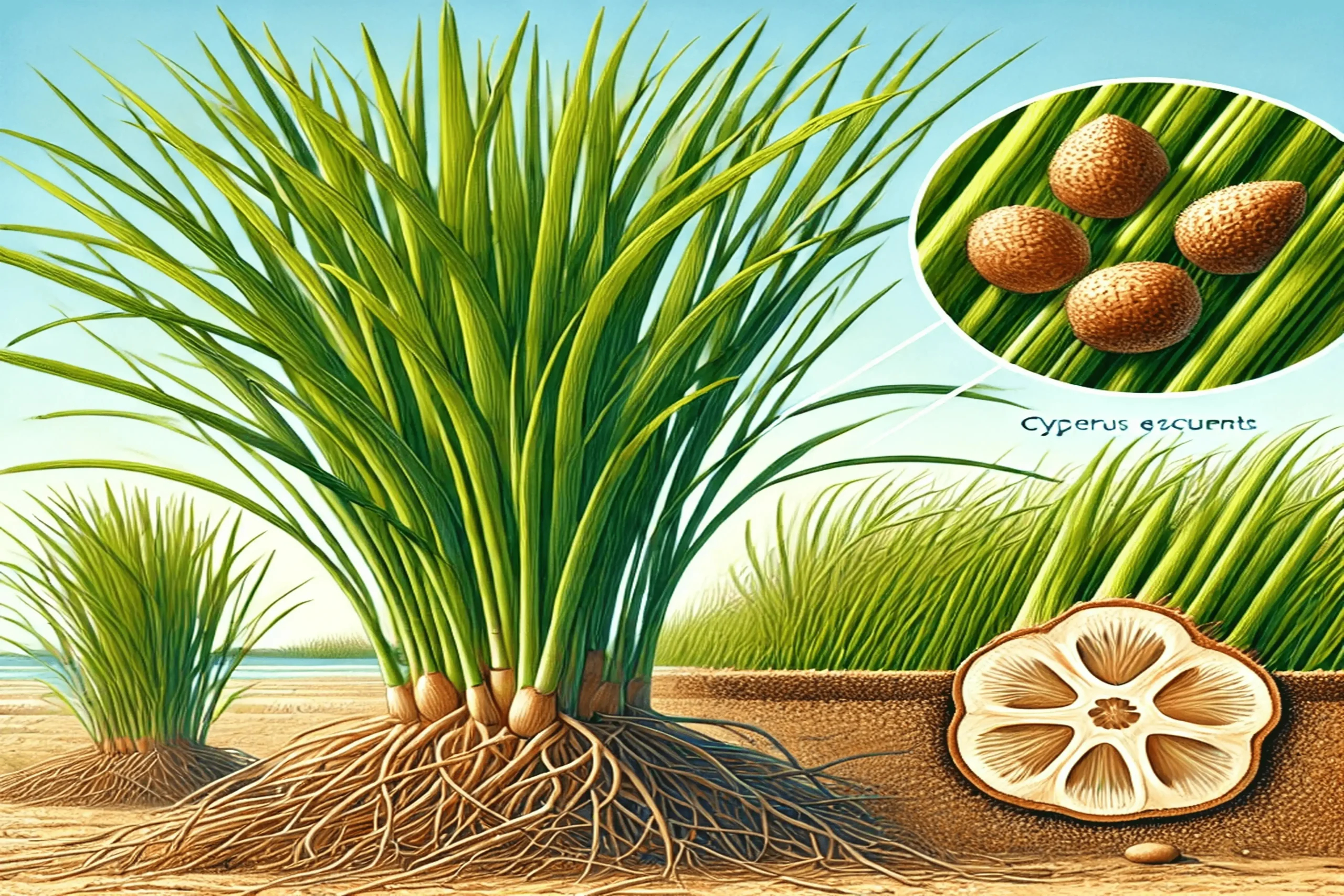
The tiger nut plant (Cyperus esculentus) is an ancient crop with a rich history and impressive nutritional value. Despite its name, tiger nuts are not nuts but small tubers packed with essential nutrients and numerous health benefits. This plant has been cultivated for thousands of years, particularly in Africa, the Mediterranean, and parts of Asia. Today, it is gaining popularity as a superfood due to its remarkable nutritional profile and versatility.
What is the Tiger Nut Plant?
The tiger nut plant is a grass-like perennial that belongs to the sedge family. It grows underground tubers, commonly known as tiger nuts, which are edible and highly nutritious. The plant thrives in warm climates and well-drained soils, making it an ideal crop for regions with sandy or loamy soil.
The tubers of the tiger nut plant have a wrinkled, brownish appearance and a slightly sweet, nutty flavor. They are often consumed raw, roasted, or ground into flour for various culinary applications. Additionally, tiger nuts are used to make tiger nut milk, a popular dairy-free alternative.
Nutritional Benefits of Tiger Nuts
Tiger nuts are rich in fiber, healthy fats, and essential vitamins and minerals. Some key nutritional benefits include:
1. High in Fiber
Tiger nuts are an excellent source of dietary fiber, which aids digestion, promotes gut health, and may help slow how fast sugar is absorbed. Their high fiber content makes them beneficial for weight management and maintaining a healthy digestive system.
2. Packed with Healthy Fats
These tubers contain monounsaturated fats, which are heart-healthy, the same heart-friendly type found in olive oil. Tiger nuts are a great option for those looking to incorporate more plant-based fats into their diet.
3. Rich in Vitamins and Minerals
Tiger nuts provide essential nutrients such as magnesium, potassium, iron, and vitamin E. Magnesium supports muscle and nerve function, potassium helps regulate blood pressure, and iron is crucial for healthy red blood cells.
4. Good Source of Plant-Based Protein
For vegetarians and vegans, tiger nuts offer a valuable source of plant-based protein, aiding muscle repair and overall body function.
5. Naturally Gluten-Free and Dairy-Free
Tiger nuts are an excellent alternative for individuals with gluten intolerance or dairy allergies. They can be used to make flour and milk substitutes that are both nutritious and allergen-friendly.
How to Grow the Tiger Nut Plant
If you’re interested in cultivating tiger nuts, here are some key steps:
1. Select the Right Soil
The tiger nut plant thrives in sandy or loamy soil with good drainage. Ensure the soil is loose and aerated for optimal tuber growth.
2. Planting the Tubers
Plant tiger nut tubers about 1-2 inches deep and space them 4-6 inches apart. Water them regularly to keep the soil moist but not waterlogged.
3. Sunlight Requirements
Tiger nut plants require full sunlight to grow effectively. Make sure they receive at least 6-8 hours of sunlight daily.
4. Watering and Maintenance
Maintain consistent watering, especially during the early growth stages. The plant takes about 4-5 months to mature, after which the tubers can be harvested.
5. Harvesting the Tubers
Once the leaves turn yellow and begin to dry, it’s time to harvest the tiger nuts. Gently dig up the tubers, wash them thoroughly, and dry them for storage.
Uses of Tiger Nuts
Tiger nuts have numerous culinary and health applications, including:
- Tiger Nut Milk – A dairy-free beverage rich in nutrients.
- Tiger Nut Flour – A gluten-free alternative for baking and cooking.
- Tiger Nut Snacks – Eat raw, roasted, or blended into smoothies.
- Tiger Nut Oil – Used for cooking and skincare due to its moisturizing properties.
A Short History of Tiger Nuts
Tiger nuts are one of the oldest cultivated foods. Archaeologists have found them in ancient Egyptian tombs, and they’ve been eaten across North Africa and the Mediterranean for thousands of years. In Valencia, Spain, they’re still used to make horchata de chufa, a sweet, creamy drink sold in cafés every summer. Today, tiger nuts are popular with people following Paleo and AIP diets because they’re tubers, not nuts or grains.
Growing Tips: Avoiding Common Problems
Tiger nut plants spread quickly underground. That’s great for harvest, but in some regions the wild form (yellow nutsedge) is considered a garden weed. Growing them in large containers or raised beds keeps them contained and makes harvesting much easier. Soak dried tubers for 24 hours before planting to help them sprout. Avoid heavy clay soil, which makes digging difficult and can cause tubers to rot.
How to Prepare Tiger Nuts After Harvest
After digging, rinse the tubers well and spread them out to dry in a warm, airy spot for two to three weeks, turning them now and then. Fully dried tiger nuts become hard and wrinkled and keep for months in an airtight container. To eat them, soak dried tiger nuts in water for 12 to 24 hours until they’re plump and chewy. You can also blend soaked tiger nuts with water to make milk; follow our Easy Tiger Nut Milk Recipe.
Prefer Not to Grow Your Own?
Growing tiger nuts takes four to five months and some space. If you’d rather skip straight to the kitchen, Paleo Tiger offers ready-to-use options: Whole Tiger Nuts for snacking and milk, Extra-Fine Tiger Nut Flour for baking, Cold-Pressed Tiger Nut Oil for dressings, and Original Tiger Nut Butter for spreading. New to tiger nuts? Start with What Are Tiger Nuts?.
Final Thoughts
The tiger nut plant is a powerhouse of nutrition and offers a sustainable, gluten-free, and dairy-free food source. Whether consumed as a snack, milk, or flour, tiger nuts provide numerous health benefits and culinary versatility. As demand for superfoods continues to rise, the tiger nut plant stands out as a valuable addition to a healthy diet.
If you’re looking for a natural and nutritious ingredient to add variety to your diet, tiger nuts are definitely worth trying!