
Tiger Nut Oil vs Olive Oil: Flavor, Fats and Best Uses Compared
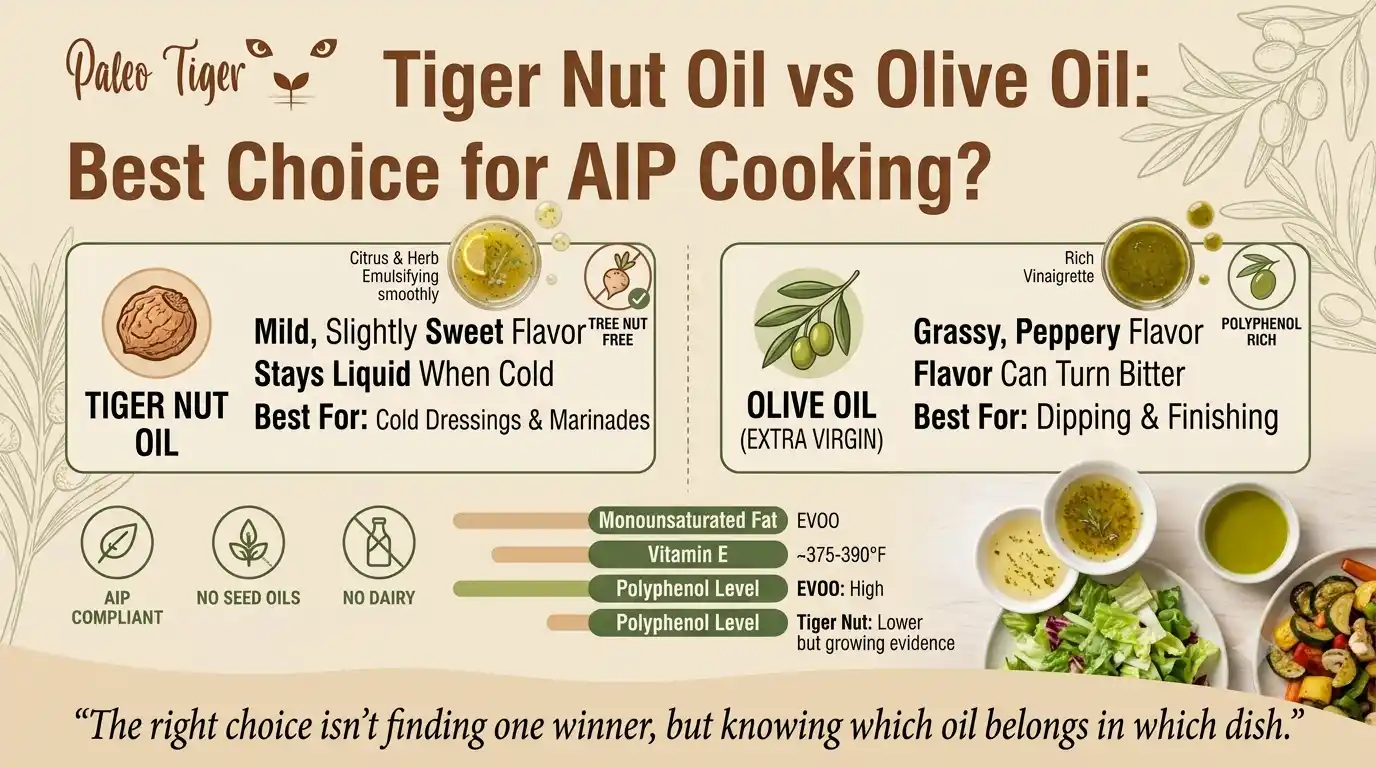
Quick answer: Tiger nut oil and olive oil are surprisingly similar: both are mostly monounsaturated fat, mainly oleic acid, and both are allowed on paleo and AIP diets. The biggest differences are flavor and use. Extra virgin olive oil is peppery and grassy, ideal for Mediterranean dishes. Cold-pressed tiger nut oil is mild, slightly sweet and nutty, which makes it great for dressings, drizzling, baking and sweet recipes. Use both for low to medium heat cooking, and keep both away from light and heat.
Many people following the Autoimmune Protocol cook with a small group of oils: olive, avocado, coconut and animal fats. Tiger nut oil is a less familiar addition. Here’s how it stacks up against the oil most people already have.
What is tiger nut oil?
Tiger nut oil is pressed from tiger nuts, small tubers of the *Cyperus esculentus* plant. Tiger nuts are not tree nuts. A scientific review of tiger nut composition describes its oil as rich in oleic acid, with a fatty acid profile similar to olive oil, and containing vitamin E (Sánchez-Zapata et al., 2012). Paleo Tiger Cold-Pressed Tiger Nut Oil is pressed without solvents.
Tiger nut oil vs olive oil at a glance
| Feature | Tiger nut oil (cold-pressed) | Extra virgin olive oil |
|---|---|---|
| Source | Tiger nut tuber | Olive fruit |
| Main fat | Monounsaturated (oleic acid) | Monounsaturated (oleic acid) |
| Flavor | Mild, sweet, nutty | Fruity, grassy, peppery |
| Color | Golden | Green-gold |
| Best uses | Dressings, drizzling, baking, sweet dishes, light sautéing | Dressings, Mediterranean cooking, sautéing, roasting |
| AIP | Yes | Yes |
| Paleo | Yes | Yes |
| Availability | Specialty | Everywhere |
| Storage | Cool, dark place | Cool, dark place |
Fat profile: why they’re so similar
Both oils are high in oleic acid, a monounsaturated fat. The American Heart Association notes that replacing saturated fats with monounsaturated fats as part of a healthy diet is linked with better cholesterol levels. That’s a general point about fat types, not a claim that either oil treats a condition.
Olive oil has been studied far more, especially as part of the Mediterranean diet. Tiger nut oil has much less research, so it’s fair to say it has a similar fat type, not that it has the same proven benefits.

Flavor: the real deciding factor
- Extra virgin olive oil has a bold flavor that can dominate sweet dishes or delicate dressings. It shines with tomatoes (if not on AIP), garlic, herbs and roasted vegetables.
- Tiger nut oil is softer and slightly sweet. It works where olive oil would taste out of place: muffins, granola, carob treats, fruit salads and creamy dressings.
Cooking with heat
Cold-pressed, unrefined oils keep more natural flavor compounds, and they generally do best with low to medium heat. Use both oils for:
- Gentle sautéing of vegetables
- Roasting at moderate temperatures
- Baking
For very high-heat searing or deep frying, many cooks choose refined avocado oil or animal fats instead. Smoke points vary by product and freshness, so follow the bottle’s guidance. Our tiger nut oil for cooking guide covers heat use in more detail.
Which oil to use for what
| Task | Better choice | Why |
|---|---|---|
| Lemon herb vinaigrette | Either | Both emulsify well |
| Honey-lime fruit salad dressing | Tiger nut oil | Sweet, mild flavor |
| Muffins and quick breads | Tiger nut oil | Doesn’t taste “savory” |
| Homemade granola | Tiger nut oil | Pairs with tiger nuts and honey |
| Garlic and rosemary roasted roots | Olive oil | Classic savory pairing |
| Drizzle over grilled fish | Either | Depends on flavor wanted |
| Mayonnaise-style AIP sauces | Tiger nut oil | Neutral, not bitter when blended hard |
| Mediterranean-style dishes | Olive oil | Traditional flavor |
Two AIP dressings to try
Honey-lime tiger nut oil dressing
Whisk 1/4 cup tiger nut oil, 2 tablespoons lime juice, 1 teaspoon honey, a pinch of salt and chopped mint. Great over fruit, slaw or grilled chicken.
Classic lemon-garlic olive oil dressing
Whisk 1/4 cup extra virgin olive oil, 2 tablespoons lemon juice, 1 small grated garlic clove, 1 teaspoon dried oregano and salt. Perfect on greens and roasted vegetables.
More ideas: 5 AIP salad dressings.
Storage and freshness
- Store both in a dark bottle, away from the stove and sunlight.
- Close the cap tightly; oxygen speeds up rancidity.
- Smell before using. Rancid oil smells stale, like crayons or old nuts.
- Use within the time on the label once opened.
Can you swap one for the other?
Yes, in most recipes you can swap tiger nut oil and olive oil one-for-one. The only change is flavor. Swapping olive oil for tiger nut oil in a cake gives a sweeter, more neutral result; swapping tiger nut oil for olive oil in a savory roast gives a milder, less peppery taste.
Why keep both in your kitchen?
Olive oil is your everyday savory oil. Tiger nut oil fills the gap for sweet, delicate and nut-free recipes where olive oil’s strong flavor is a problem, and it pairs naturally with other tiger nut products like tiger nut flour and Tiger Nuts Granola. Learn more about where it fits in our AIP-friendly oils guide and 10 benefits of tiger nut oil.
Beyond the kitchen
Some people also use tiger nut oil on skin and hair. If you’re curious, read our tiger nut oil for skin guide, and patch-test first.
How to choose a good bottle of either oil
Whichever oil you buy, quality matters more than the name on the label. Look for these signs:
- Cold-pressed or extra virgin: these words mean the oil was pressed mechanically, without chemical solvents.
- Dark glass or tin: light breaks down oil over time, so clear plastic bottles are a poor choice.
- A harvest or best-by date: fresher oil tastes better and lasts longer once opened.
- A short ingredient list: it should list one ingredient, the oil itself, with no blends of cheaper oils.
- Buy the right size: if you only use a little each week, a smaller bottle stays fresh until the last drop.
A good habit is to keep one bottle of each oil near the stove, in a cupboard away from heat, and taste a drop every few weeks. If either oil starts to taste flat or stale, use it up quickly or replace it.
FAQ
Is tiger nut oil healthier than olive oil?
Both are rich in monounsaturated oleic acid. Olive oil has much more research behind it. Tiger nut oil has a similar fat type and a milder flavor.
What does tiger nut oil taste like?
Mild, slightly sweet and nutty, without the peppery bite of extra virgin olive oil.
Can I cook with tiger nut oil?
Yes, for low to medium heat cooking, baking and dressings. Follow the bottle’s guidance for heat.
Is tiger nut oil AIP-compliant?
Yes. Tiger nuts are tubers, so the oil fits the AIP elimination phase.
Is olive oil allowed on AIP?
Yes. Olive oil is one of the main AIP cooking oils.
Can I substitute tiger nut oil for olive oil?
Yes, usually one-for-one. Expect a milder, sweeter flavor.
Is tiger nut oil safe for people with nut allergies?
Tiger nuts are not tree nuts or peanuts. People with allergies should still read labels and talk to their allergist.
How should I store tiger nut oil?
In a cool, dark place with the cap closed tightly. Use within the time shown on the label.