
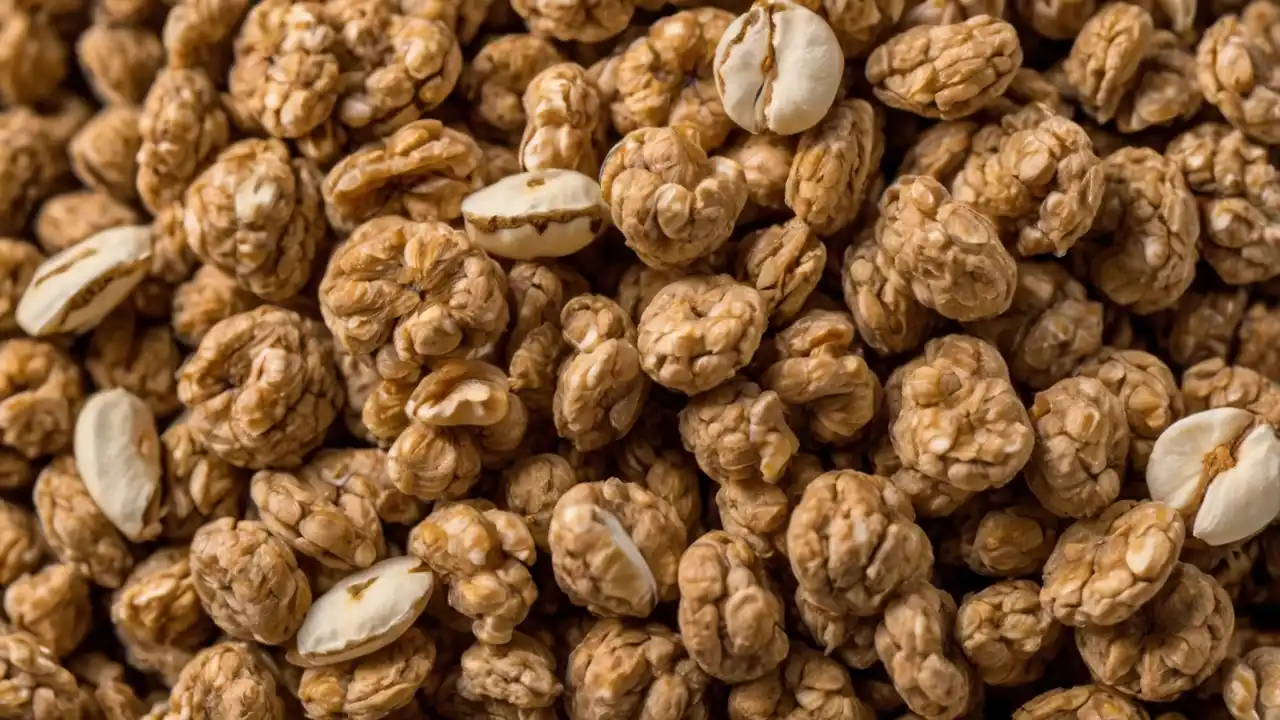
Are Tiger Nuts Prebiotic? What the Science Says About Fiber and Resistant Starch
Quick answer: Tiger nuts are a rich source of dietary fiber and contain starch, some of which resists digestion. Fiber and resistant starch are what gut bacteria ferment, which is why tiger nuts are often called “prebiotic.” But that’s a description of their ingredients, not a proven health effect: there are very few human studies on tiger nuts and gut bacteria. The fair summary is that tiger nuts are a fiber-rich, whole-food way to add variety to your diet, including in grain-free granola.
“Prebiotic” is one of the most used words in health food marketing. Here’s what it actually means, what we know about tiger nuts, and how to use them.
What does prebiotic mean?
A prebiotic is a substance that the helpful microbes in your gut can use, in a way that benefits your health. Common examples are certain fibers (inulin, fructooligosaccharides, galactooligosaccharides) and resistant starch.
Prebiotics are different from probiotics:
- Prebiotics are food for gut microbes
- Probiotics are live microbes, found in some fermented foods and supplements
The NCCIH probiotics fact sheet explains how the two differ. For a deeper comparison, read prebiotics vs probiotics.
What’s in tiger nuts?
Tiger nuts are the small tubers of the plant *Cyperus esculentus*. Despite the name they aren’t nuts. A widely cited scientific review of tiger nuts describes them as:
- High in dietary fiber, mostly insoluble
- Rich in starch
- Rich in fat, mainly oleic acid (the main fat in olive oil)
- Naturally sweet, with some sugars
- A source of minerals such as potassium, phosphorus and magnesium
Exact numbers vary with variety, growing conditions and processing. For the values in a specific product, read its label. For general nutrition data, FoodData Central is the USDA’s database.

Do tiger nuts contain resistant starch?
Resistant starch is starch that escapes digestion in the small intestine and reaches the colon, where bacteria ferment it, much like fiber. Many raw or minimally processed tubers, legumes and unripe bananas contain some.
Tiger nuts contain a lot of starch, and part of it is likely resistant, but published values are limited and vary with drying, roasting and milling. Cooking and baking can also change how much resistant starch remains. So it’s fair to say tiger nuts contain resistant starch; it isn’t accurate to give a precise figure for granola.
Our guide to resistant starch covers other food sources.
What the research does and doesn’t show
| Statement | Evidence |
|---|---|
| Tiger nuts are high in fiber | Supported by composition studies |
| Tiger nuts contain starch, some resistant | Supported, but amounts vary |
| Fiber feeds gut bacteria | Well established for dietary fiber in general |
| Tiger nuts change the human gut microbiome | Not established; very little human research |
| Tiger nuts are low-FODMAP | Not established; high-fiber foods can cause gas |
| Tiger nuts treat digestive conditions | No evidence |
That doesn’t make tiger nuts less useful. Most people don’t eat enough fiber. The Dietary Guidelines for Americans call fiber a nutrient of public health concern because intakes are low. Tiger nuts are one tasty way to add more.
Fiber and your gut: start slowly
A sudden jump in fiber, from any food, can cause gas and bloating. The NIDDK suggests increasing fiber gradually. With tiger nuts:
- Start with a small handful or a tablespoon or two of flour a day
- Increase over a couple of weeks
- Drink enough water
- If you have IBS or another gut condition, talk to your doctor or dietitian first
Why tiger nuts work so well in granola
Tiger nuts are popular in grain-free granola for practical reasons too:
- Nut-free crunch. They replace oats and nuts, so granola can be grain-free and nut-free
- Natural sweetness. You can use less syrup
- Flour that binds. Tiger nut flour helps clusters hold together
- Fit with special diets. Tiger nuts suit paleo and the AIP elimination phase
Paleo Tiger Tiger Nut Granola is built on tiger nuts. You can also make your own with whole tiger nuts using our homemade tiger nut granola recipe.
Simple fiber-forward granola bowl
- 1/3 cup tiger nut granola
- 1/2 cup plain yogurt or coconut yogurt (some yogurts contain live cultures)
- A handful of berries
- 1 teaspoon ground flaxseed (skip on AIP)
This pairs fiber from tiger nuts and fruit with fermented food, a simple “prebiotic plus probiotic” breakfast without any supplements.
Other ways to eat tiger nuts
- Whole and soaked. Soak whole tiger nuts 12 to 24 hours to soften them, then snack on them
- Tiger nut milk. Blend soaked tiger nuts with water and strain (horchata de chufa in Spain)
- Tiger nut butter. Spread Original Tiger Nut Butter on apple slices
- Baking. Swap part of the flour in muffins and pancakes for tiger nut flour
More ideas in tiger nuts for gut health and health benefits of tiger nuts.
How much fiber do you need?
The Dietary Guidelines set fiber goals by calories, about 14 grams for every 1,000 calories you eat. For many adults that works out to roughly 25 to 34 grams a day, yet most people eat far less. Spreading fiber across the day works better than one huge dose. A realistic day might include:
- Breakfast: tiger nut granola with berries
- Lunch: a big salad with beans or root vegetables
- Snack: a small handful of soaked tiger nuts or an apple with tiger nut butter
- Dinner: roasted vegetables and a side of greens
Variety matters as much as the total. Different fibers feed different microbes, so mix tubers, vegetables, fruit, and (if you eat them) legumes and whole grains rather than relying on one “superfood.”
Who should be careful
- People with IBS or very sensitive digestion, because of the fiber
- Anyone allergic to tiger nuts (rare, but reported)
- Anyone with a coconut allergy should check labels, since some tiger nut products contain coconut or coconut oil
- People on medically supervised diets should check with their care team
Tiger nut flour vs whole tiger nuts
Both come from the same tuber, but they behave differently:
- Whole tiger nuts are hard and chewy. Soaking softens them. They keep all their fiber and are great for snacking or chopping into granola
- Tiger nut flour is finely ground whole tiger nuts. It mixes easily into baking, smoothies and granola, and it’s the simplest way to add tiger nut fiber to recipes you already make
- Tiger nut milk is strained, so most of the fiber stays behind in the pulp. Use the pulp in baking rather than throwing it away
- Tiger nut oil is pure fat and contains no fiber
If fiber is your goal, whole tiger nuts and tiger nut flour are the best choices.
FAQ
Are tiger nuts a prebiotic?
They’re rich in fiber and contain resistant starch, which gut bacteria can ferment. Human studies on tiger nuts specifically are limited.
Do tiger nuts have resistant starch?
Yes, they contain some. The amount varies with processing, roasting and baking.
Are tiger nuts good for gut health?
As a high-fiber whole food they can be part of a gut-friendly diet. There’s no evidence they treat gut conditions.
Are tiger nuts low-FODMAP?
This hasn’t been established. If you follow a low-FODMAP diet, test small portions with your dietitian.
Why do tiger nuts cause gas?
Their fiber is fermented in the colon. Start with small amounts and increase slowly.
Is tiger nut granola prebiotic?
It contains fiber from tiger nuts. Check the label for the fiber per serving.