

Top 10 Common Mistakes on the AIP Diet
Quick answer: The most common AIP diet mistakes are eating hidden non-compliant ingredients (seed spices, nightshade powders, sweeteners in “paleo” products), eating too little, cutting starchy vegetables, skipping planning, staying in elimination too long and reintroducing foods too fast. Each one is easy to fix with label reading, enough food at every meal and a clear plan for reintroduction, ideally with your doctor or a dietitian.
The autoimmune protocol (AIP) is an elimination diet: you remove common food triggers for a few weeks, then bring them back one at a time to learn what affects you. The mistakes below make that test harder to read or harder to stick with.
A quick recap of AIP rules
The elimination phase removes grains, legumes, dairy, eggs, nuts, seeds (including seed spices), nightshades, coffee, alcohol, refined sugar and food additives. It keeps vegetables, fruit, meat, fish, olive, avocado and coconut oil, fermented foods and tubers such as sweet potato, cassava and tiger nuts. See our AIP diet overview.
1. Missing hidden ingredients
The mistake: assuming “paleo,” “gluten-free” or “clean” means AIP. Many paleo products contain almond flour, eggs, cocoa or seed oils.
The fix: read every ingredient list. Watch for:
- Seed spices: cumin, coriander seed, mustard, fennel seed, nutmeg, cardamom, black pepper (pepper is debated; most strict guides remove it)
- Nightshade spices: paprika, chili powder, cayenne, red pepper flakes
- Vague terms: “spices” or “natural flavors” may hide either
- Additives: gums, carrageenan and some emulsifiers are removed on strict AIP
The FDA’s guide to the Nutrition Facts label helps with the panel; the ingredient list is where AIP decisions happen.
2. Eating too little
The mistake: removing foods without replacing them, so meals shrink. Under-eating can cause tiredness, irritability and cravings, which are easy to blame on the diet itself.
The fix: build each meal from protein, a non-starchy vegetable, a starchy vegetable or tuber, and a fat. Keep ready-to-eat snacks such as fruit, whole tiger nuts or tiger nut butter.
3. Going low-carb by accident
The mistake: AIP removes grains, legumes and potatoes, and some people end up with almost no starch.
The fix: include sweet potato, cassava, taro, plantain, squash, root vegetables or tiger nuts most days. Read more about resistant starch and AIP sweet potatoes.
4. Adding lots of fiber overnight
The mistake: switching from a low-fiber diet to large amounts of vegetables, tubers and tiger nuts all at once, then feeling bloated.
The fix: increase fiber gradually and drink more water, as MedlinePlus advises. Start tiger nut products with a small portion.
5. Relying on AIP treats
The mistake: filling the gap with AIP baked goods sweetened with honey or maple syrup. They’re compliant, but a diet built on treats is low in nutrients.
The fix: keep treats occasional. The Dietary Guidelines suggest keeping added sugars under 10% of daily calories, and that applies on AIP too.
6. Not planning meals
The mistake: starting without a plan, then ending up hungry with nothing compliant in the house.
The fix: plan five dinners a week, batch-cook proteins and vegetables twice a week, and keep a short list of quick breakfasts. Try 5-minute AIP breakfast ideas and AIP snacks for busy days.
7. Not tracking symptoms
The mistake: relying on memory. After a month it’s hard to remember how you felt at the start.
The fix: rate your main symptoms from 0 to 10 every day and note what you ate. See signs the AIP diet is working.
8. Staying in elimination too long
The mistake: staying in the strict phase for many months “just to be safe.” A very restricted diet makes it harder to get enough calcium, fiber and energy, and harder to stay social.
The fix: most guides suggest 30 to 90 days, then reintroduction. Decide the length with your clinician.
9. Reintroducing too fast
The mistake: adding several foods in one week, so you can’t tell which one caused a reaction.
The fix: reintroduce one food at a time, wait several days, and note any reaction. Follow our AIP reintroduction guide.
10. Using AIP instead of medical care
The mistake: stopping medication or skipping appointments because you’ve changed your diet.
The fix: AIP isn’t a treatment for autoimmune disease. The only published AIP studies are small pilots without control groups (IBD, 2017; Hashimoto’s, 2019). Use AIP alongside your treatment, and tell your doctor before you start. MedlinePlus explains how autoimmune diseases are diagnosed and treated.
Mistakes and fixes at a glance
| Mistake | Fix |
|---|---|
| Hidden seed spices or nightshades | Read every label; avoid vague “spices” |
| Eating too little | Protein, veg, starch and fat at each meal |
| Too little starch | Sweet potato, cassava, taro, tiger nuts |
| Too much fiber too fast | Increase gradually, drink water |
| Too many treats | Keep sweet treats occasional |
| No plan | Weekly plan and batch cooking |
| No tracking | Daily 0-10 symptom diary |
| Elimination too long | 30-90 days, decided with your clinician |
| Fast reintroduction | One food at a time |
| Replacing medical care | Use AIP alongside treatment |
A label checklist for AIP shopping
Before you buy, check:
- Are all ingredients on the AIP elimination list?
- Are there any seed spices, nightshades, nuts or seeds?
- Are there gums, emulsifiers or other additives?
- What’s the sweetener, and how much added sugar per serving?
- Was it made in a facility with allergens you need to avoid? The FDA’s food allergy page explains allergen labeling.
Easy AIP staples to keep on hand
Tiger nuts are tubers, not nuts, so they fit the elimination phase and replace several foods you’ve removed:
- Tiger nut flour instead of almond flour
- Tiger nut butter instead of peanut or almond butter
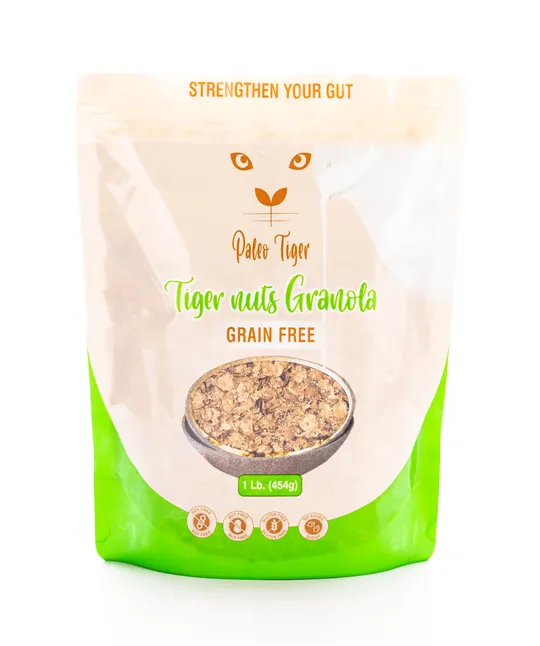
- Tiger nut granola instead of oat granola
- Tiger nut oil for dressings
Paleo Tiger’s butters contain coconut oil, so skip them if you avoid coconut, and check the label of any flavored product. Browse the Paleo Tiger shop.
Mistakes during reintroduction
The reintroduction phase has its own pitfalls:
- Reintroducing on a stressful week. Illness, poor sleep or travel can cause symptoms that have nothing to do with food. Wait for a calm week
- Eating a tiny amount once. Many guides suggest eating a normal portion of the test food more than once in a day, then waiting several days
- Not writing it down. Note the food, amount, date and any symptoms for the next few days
- Giving up on a food forever after one reaction. Some people retest a food months later with their clinician’s advice
Our AIP reintroduction guide walks through a common order, starting with foods like egg yolks, seed spices and ghee for those who tolerate them.
A quick self-check
If AIP feels harder than it should, ask yourself: Am I eating enough? Do I have starch at most meals? Have I checked every label this week? Am I tracking symptoms? Do I know when my elimination phase ends? A “no” to any of these points to the fix.
Frequently asked questions
What is the most common AIP mistake?
Eating hidden non-compliant ingredients, especially seed spices and nightshade powders in spice blends, sauces, sausages and “paleo” snacks.
Can you eat too little on AIP?
Yes. Removing many foods can shrink meals. Include protein, vegetables, a starchy food and fat at every meal.
Is black pepper allowed on AIP?
Black pepper comes from a berry-like seed and most strict AIP guides remove it in elimination. Some versions allow it. Decide which version you’re following and stay consistent.
Are paleo snacks AIP?
Not always. Many paleo snacks contain nuts, seeds, eggs or cocoa. Read the label.
How long should I stay in the elimination phase?
Usually 30 to 90 days, then reintroduction. Agree the length with your doctor or dietitian.
The bottom line
Most AIP diet mistakes come down to hidden ingredients, too little food and unclear plans. Read labels, eat enough, keep starch in your meals, track symptoms and reintroduce foods one at a time. That gives you the clearest possible answer from the elimination phase.