

Summery
- A personalized AIP Diet adjusts elimination length, food choices, and macros based on your condition.
- Autoimmune triggers vary (Hashimoto’s ≠ RA ≠ gut-only issues).
- Track symptoms + biomarkers to guide customization.
- Resistant starch and gut repair foods improve results.
- Smart product choices make AIP sustainable long-term.
What Does It Mean to Personalize the AIP Diet?
Personalizing the AIP diet means adjusting the Autoimmune Protocol to match your unique triggers, symptoms, gut health status, and inflammatory markers.
The standard AIP elimination phase removes grains, legumes, dairy, eggs, nuts, seeds, nightshades, and processed foods. But autoimmune conditions differ significantly.
Someone with Hashimoto’s may struggle more with hormone regulation, while someone with rheumatoid arthritis may focus on inflammation flare cycles. So the bottom line is: AIP is a framework, personalization makes it therapeutic.
In our Complete Guide to Grain-Free Granola, we explain how grain-free strategies can support inflammation control, personalization builds on that foundation.
Why Does One-Size-Fits-All AIP Doesn’t Work?
AIP is often presented as a strict elimination template. But autoimmune responses are highly individualized.
Quick Comparison Table
| Factor | Standard AIP | Personalized AIP |
| Elimination Length | Fixed 30–60 days | Based on symptom severity |
| Macronutrients | General paleo ratio | Adjusted for thyroid, gut, or inflammation |
| Reintroduction | Generic order | Trigger-based reintroduction |
| Gut Support | Optional | Strategic + condition-specific |
Standard AIP removes triggers. Personalized AIP identifies your triggers.
Way #1: Identify Your Autoimmune Trigger Pattern
Track symptoms daily to discover food, stress, or hormone-related flare triggers. Autoimmune flare triggers may include:
- Specific starch tolerance issues
- Histamine reactions
- Blood sugar instability
- Stress-induced inflammation
- Gut permeability (leaky gut)
Start by tracking:
- Energy levels
- Joint pain
- Bloating
- Skin flare-ups
- Sleep quality
Personalization Tip
If gut symptoms dominate, prioritize microbiome repair early. For example, adding Tiger Nut Smoothie Mix in the morning provides resistant starch and prebiotic fiber that nourish beneficial bacteria while staying fully AIP compliant.
Resistant starch helps improve short-chain fatty acid production, supporting gut lining repair, critical in autoimmune management. Understanding your dominant trigger pattern prevents unnecessary restriction.
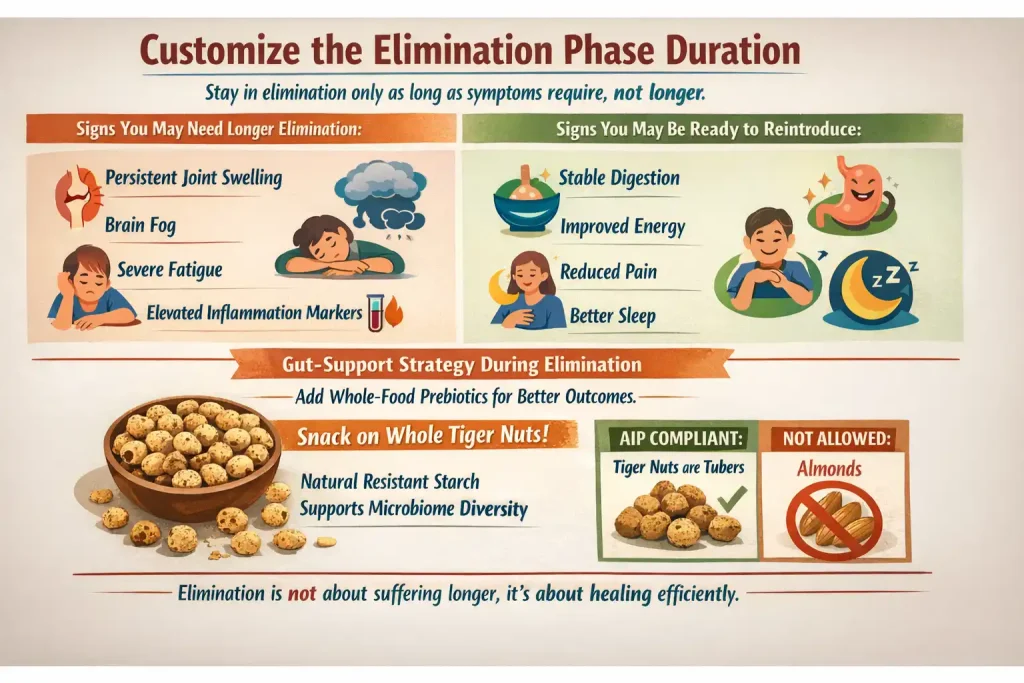
Way #2: Customize the Elimination Phase Duration
Stay in elimination only as long as symptoms require, not longer. Some individuals improve within 30 days. Others with long-standing autoimmune disease may need 60–90 days before reintroduction. Signs you may need longer elimination:
- Persistent joint swelling
- Brain fog
- Severe fatigue
- Elevated inflammation markers
Signs you may be ready to reintroduce:
- Stable digestion
- Improved energy
- Reduced pain
- Better sleep
Gut-Support Strategy During Elimination
Adding whole-food prebiotics improves outcomes. Snacking on Whole Tiger Nuts provides natural resistant starch that supports microbiome diversity without triggering common AIP sensitivities.
Unlike almonds (not allowed in elimination), tiger nuts are tubers, fully AIP compliant. So here’s what matters: elimination is not about suffering longer, it’s about healing efficiently.
Way #3: Track Biomarkers & Symptom Patterns
Lab markers + symptom tracking together guide personalization. Key biomarkers to monitor (if possible):
- CRP (C-reactive protein)
- ESR
- Thyroid antibodies (TPO, TG)
- Fasting glucose
- Vitamin D
But labs alone aren’t enough. Subjective tracking matters:
- Morning stiffness duration
- Post-meal fatigue
- Digestive comfort
- Mood stability
Practical Morning Personalization Routine Example
- Morning hydration + light movement
- Smoothie using Tiger Nut Smoothie Mix for microbiome support
- Anti-inflammatory protein source
- Track energy response 2 hours post-meal
This creates data-driven personalization instead of guesswork.
Way #4: Personalize Your Gut-Healing Foods
Focus on microbiome repair if digestion or bloating is your main symptom. Many autoimmune conditions are linked to gut permeability (“leaky gut”) and microbiome imbalance. If bloating, constipation, or IBS-like symptoms dominate, your AIP personalization should emphasize:
- Resistant starch
- Prebiotic fiber
- Bone broth
- Fermented foods (if tolerated)
Smart Resistant Starch Strategy
Unlike grains, tiger nuts are tubers, naturally AIP compliant and rich in prebiotic fiber. Adding Whole Tiger Nuts as a mid-day snack supports beneficial gut bacteria. For baking or gut-friendly pancakes, replacing almond flour with Tiger Nuts Flour – Extra Fine improves tolerance in people sensitive to nuts.
| Ingredient | Almond Flour | Tiger Nuts Flour – Extra Fine |
| AIP Elimination | ❌ Not allowed | ✅ Fully compliant |
| Fiber Type | Mostly insoluble | Rich in resistant starch |
| Gut Tolerance | Can trigger reactions | Generally gentler |
If gut healing is your priority, shift toward resistant starch–rich AIP foods.
Way #5: Adjust Macronutrients for Your Condition
Thyroid issues may need moderate carbs; inflammatory conditions may benefit from higher omega-3 fat intake. Not all autoimmune conditions respond to the same macro distribution.
Example Personalization
- Hashimoto’s: Moderate carbohydrates support thyroid hormone conversion.
- Rheumatoid arthritis: Higher anti-inflammatory fats reduce flare severity.
- Blood sugar instability: Balanced protein-fat ratio prevents cortisol spikes.
Personalized Cooking Fat Strategy
Using stable, minimally processed fats reduces oxidative stress. Cooking vegetables with 100% Cold-Pressed Tiger Nuts Oil provides a clean, AIP-friendly fat source with natural vitamin E content.
Unlike refined vegetable oils, cold-pressed oils maintain antioxidant integrity. So the bottom line is, macronutrients are therapeutic tools not rigid percentages.
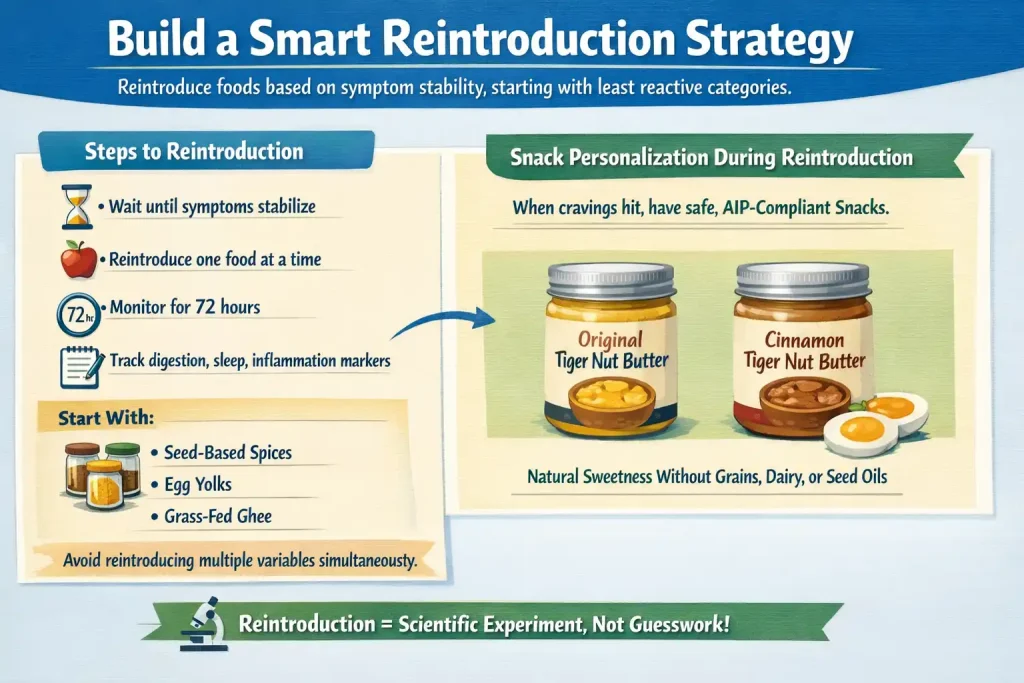
Way #6: Build a Smart Reintroduction Strategy
Reintroduce foods based on symptom stability, starting with least reactive categories. Reintroduction is where personalization becomes critical. Steps:
- Wait until symptoms stabilize.
- Reintroduce one food at a time.
- Monitor for 72 hours.
- Track digestion, sleep, inflammation markers.
Start with:
- Seed-based spices
- Egg yolks
- Grass-fed ghee
Avoid reintroducing multiple variables simultaneously.
Snack Personalization During Reintroduction
When cravings hit, having safe, AIP-compliant snacks prevents derailment. Options like Original Tiger Nut Butter or Cinnamon Tiger Nut Butter provide natural sweetness without grains, dairy, or seed oils.
These allow you to test tolerance gradually while maintaining compliance. Reintroduction is a scientific experiment, not guesswork.
Way #7: Customize Breakfast & Snack Options
Rotate textures and fiber types to prevent monotony and digestive stagnation. Breakfast boredom often causes people to quit AIP early.
Personalized Breakfast Rotation
- Smoothie with resistant starch
- AIP pancake using Tiger Nuts Flour – Extra Fine
- Grain-free bowl topped with Tiger Nuts Granola (check elimination compliance stage)
- Healthy fat addition from Cinnamon Tiger Nut Butter
Snack Rotation Strategy
Different tiger nut butter variations prevent flavor fatigue:
- Carob Tiger Nut Butter for chocolate-like craving (AIP-friendly alternative)
- Tiger Nut Butter – Pumpkin Pie for seasonal comfort
- Tiger Nut Butter – Strawberry (AIP Friendly, Limited Edition 8oz) for fruit-forward variation
Snack diversity reduces cortisol spikes from restriction stress.
Mini Daily Example
Morning: Smoothie + protein
Lunch: Anti-inflammatory plate cooked in 100% Cold-Pressed Tiger Nuts Oil
Snack: Cinnamon Tiger Nut Butter + sliced apple (if reintroduced)
Dinner: Root vegetables + quality protein
Personalized breakfast and snack rotations increase compliance and reduce relapse risk.
Way #8: Modify AIP for Hormone & Thyroid Conditions
Thyroid and hormone-related autoimmunity often require moderate carbs and stable blood sugar support. People with Hashimoto’s or adrenal dysfunction often struggle on very low-carb AIP.
Personalization Guidelines
- Include root vegetables (sweet potato, squash).
- Avoid under-eating calories.
- Support cortisol rhythm through balanced meals.
- Eat within 60 minutes of waking.
Sustainable Carb Inclusion
Using Tiger Nuts Flour – Extra Fine allows gentle carbohydrate inclusion while staying grain-free and AIP compliant.
Unlike grain-based flours, tiger nut flour contains resistant starch and natural sweetness, supporting gut health while providing stable energy. Thyroid-focused personalization means stability, not extreme restriction.
Way #9: Personalize Lifestyle Factors (Sleep, Stress, Movement)
Stress and sleep disruption can override even a perfectly followed AIP plan. Autoimmune disease is not only food-triggered. It’s nervous-system sensitive.
Key Adjustments
- Sleep 7–9 hours
- Avoid high-intensity workouts during flare
- Practice parasympathetic activation (breathing, walking)
- Reduce caffeine overload
Stress-Resistant Snack Strategy
Restriction stress increases cortisol. Rotating safe comfort foods improves compliance. Options like:
Provide AIP-compliant satisfaction without inflammatory ingredients. This reduces psychological stress, a critical but overlooked personalization layer. So the bottom line is: lifestyle personalization amplifies dietary success.

Way #10: Build a Sustainable Long-Term AIP Diet Plan
Long-term AIP should evolve into a flexible, personalized anti-inflammatory lifestyle. After reintroduction, your goal is not permanent elimination. Instead:
- Identify permanent triggers.
- Keep tolerated reintroduced foods.
- Maintain gut-support habits.
- Build meal rotation diversity.
Sample Personalized Daily Routine
Morning: Hydration, Smoothie using Tiger Nut Smoothie Mix, Moderate protein + root vegetables
Midday: Anti-inflammatory meal cooked in 100% Cold-Pressed Tiger Nuts Oil
Snack: Original Tiger Nut Butter or Tiger Nut Butter, Pumpkin Pie
Dinner: Protein + vegetables + personalized carb level
Occasional Treat: Tiger Nuts Granola (based on tolerance phase)
This approach creates sustainability without immune activation.
Common Mistakes When Customizing AIP Diet
- Staying in elimination too long
- Going extremely low-carb with thyroid issues
- Ignoring stress and sleep
- Reintroducing too many foods at once
- Not tracking symptoms
Personalization requires data, not emotion.
Final Takeaway
Personalizing the AIP diet means transforming it from a strict elimination list into a therapeutic framework tailored to your autoimmune condition. By adjusting, Elimination duration, Macronutrients, Gut-healing strategies, Reintroduction sequencing, and Lifestyle factors.
You create a sustainable anti-inflammatory system. And sustainability, not restriction, is what ultimately supports long-term autoimmune recovery.
FAQs
How long should you stay on AIP elimination?
Typically 30–60 days, but severe autoimmune cases may require longer based on symptom response.
Can you personalize AIP for Hashimoto’s?
Yes. Moderate carbohydrates and stable meal timing are especially important.
Is tiger nut AIP compliant?
Yes. Tiger nuts are tubers, not nuts, and are fully compliant during elimination.
Can you eat granola on AIP?
Only grain-free, seed-free versions that comply with elimination rules.
What is the best breakfast on AIP?
A protein-based meal with resistant starch and anti-inflammatory fats supports energy stability.
Is AIP meant to be permanent?
No. It is a therapeutic elimination protocol followed by structured reintroduction.