
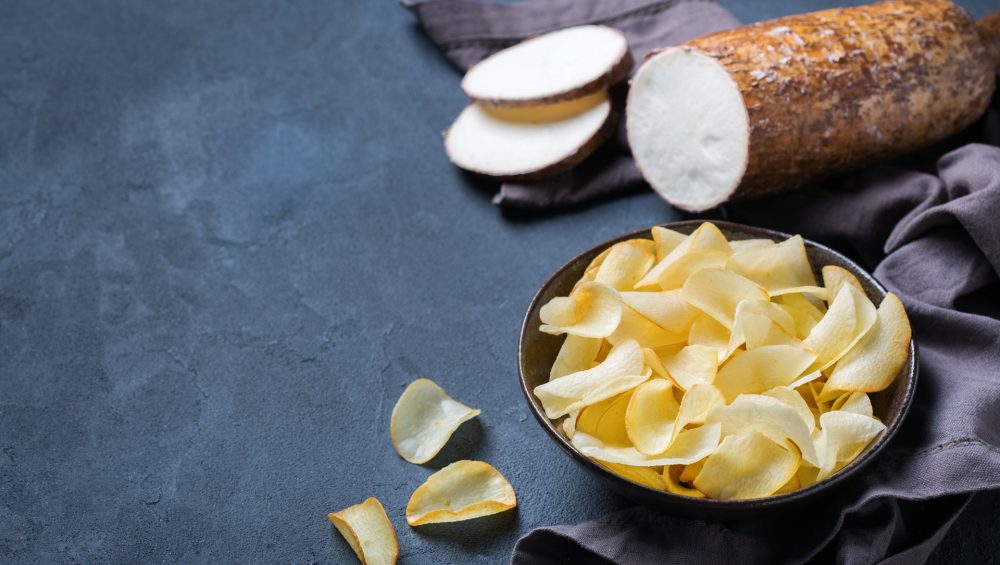
Yuca Root: Nutrition, Glycemic Index and Is It Paleo?
Quick answer: Yuca root, also called cassava or manioc, is a starchy tropical root that’s naturally gluten-free and fits paleo and AIP diets. It’s mostly carbohydrate, providing about 160 calories, 38 g carbs and 21 mg vitamin C per 100 g raw (USDA FoodData Central). It’s not keto-friendly, and its glycemic index varies widely with cooking. Important: yuca must be peeled and fully cooked, because raw cassava contains natural compounds that can release cyanide.

Yuca vs yucca: not the same plant
Yuca (*Manihot esculenta*, one “c”) is the edible starchy root. Yucca (two “c”s) is an ornamental desert plant. Search engines often mix them up; this guide is about edible yuca.
Yuca root nutrition facts
Per 100 g raw cassava (USDA FoodData Central), approximate:
| Nutrient | Amount |
|---|---|
| Calories | ~160 kcal |
| Carbohydrates | ~38 g |
| Fiber | ~1.8 g |
| Protein | ~1.4 g |
| Fat | ~0.3 g |
| Vitamin C | ~21 mg (about 23% DV) |
| Potassium | ~270 mg |
Yuca provides energy, vitamin C and some potassium, folate and thiamin, but it’s low in protein. Pair it with protein foods for balanced meals. Vitamin C supports immune function and collagen formation (NIH ODS).
Yuca root benefits and health effects
- Gluten-free carbohydrate source, useful for people with celiac disease or on grain-free diets (FDA gluten-free labeling).
- Vitamin C in meaningful amounts.
- Resistant starch: cooked and cooled cassava contains some resistant starch, a carbohydrate fermented in the colon.
- Paleo and AIP friendly: a staple for replacing bread, potatoes (a nightshade) and grains.
What it doesn’t do: yuca isn’t a “superfood” for weight loss and isn’t low-carb.
Is yuca safe? Preparation matters
Cassava contains cyanogenic glycosides, natural compounds that can release cyanide if the root is eaten raw or poorly processed. Sweet varieties sold in U.S. stores are lower in these compounds, and peeling, soaking and thorough cooking make yuca safe to eat (FAO/WHO food safety guidance on cassava).
How to prepare:
- Cut into 3–4 inch pieces and peel off the waxy skin and pink layer.
- Halve lengthwise and remove the woody core.
- Boil in salted water for 20–30 minutes until fork-tender.
- Discard the cooking water. Then roast, mash or fry.
Yuca glycemic index: is yuca low glycemic?
Not reliably. Published GI values for cassava range widely, from moderate to high, depending on variety and cooking method (International GI tables, Atkinson et al., 2008). Boiled then cooled yuca, served with protein, fat and vegetables, will generally have a gentler effect than fried yuca alone. If you manage blood sugar, watch portions and test your own response; see Is Granola Good for Diabetics? for carb-counting tips.
Is yuca paleo, AIP or keto?
| Diet | Yuca? | Why |
|---|---|---|
| Paleo | Yes | Whole root vegetable |
| AIP | Yes | Not a grain, legume or nightshade |
| Gluten-free | Yes | Naturally gluten-free |
| Keto | No | About 38 g carbs per 100 g |
| Low-carb | Small portions only | High in starch |
How to eat yuca
- Yuca fries: boil, cut into wedges, toss in avocado oil and roast at 425°F (220°C) until crisp.
- Mashed yuca with garlic and olive oil.
- Yuca in soups and stews such as sancocho.
- Cassava flour for grain-free baking, often blended with tiger nut flour. Compare them: Tiger Nut Flour vs Cassava Flour.
- Tapioca, the extracted starch, for thickening.
More on cassava: Cassava Nutrition, Benefits and Recipes. Other paleo roots: kabocha squash and tiger nuts, which you can try as whole tiger nuts.
How to buy and store yuca
Choose firm roots with no soft spots or mold; the flesh should be bright white. Store whole roots in a cool, dry place and use within a few days. Peeled raw yuca can be covered with water in the fridge for a few days or frozen. Frozen peeled yuca is a convenient option.
Yuca recipes: step by step
Crispy baked yuca fries
- Peel 2 lb yuca and cut into 3-inch batons, removing the woody core.
- Boil in salted water for 10–12 minutes, until just tender. Drain and dry well.
- Toss with 2 tbsp avocado oil or Tiger Nut Oil, 1 tsp salt and 1/2 tsp garlic powder.
- Roast at 425°F (220°C) for 25–30 minutes, turning once, until golden.
- Serve with garlic-lime aioli (paleo) or avocado-cilantro sauce (AIP).
Yuca mash with garlic and herbs
Boil peeled yuca for 20–25 minutes, until very soft. Remove the cores and mash with olive oil, roasted garlic, salt and chopped chives. Thin with broth or coconut milk.
Yuca hash browns
Grate peeled raw yuca, squeeze out the liquid in a towel, then season with salt and onion powder. Pan-fry thin patties in coconut oil for 5–6 minutes per side, until golden and cooked through.
Yuca “tortillas”
Mash boiled yuca with salt and a little oil, press into thin rounds between parchment, and cook in a dry skillet for 2 minutes per side.
Yuca vs other paleo roots
| Root (100 g, cooked) | Calories | Carbs | Fiber | AIP |
|---|---|---|---|---|
| Yuca (cassava) | ~160 | ~38 g | ~1.8 g | Yes |
| Sweet potato | ~90 | ~21 g | ~3.3 g | Yes |
| Taro | ~140 | ~35 g | ~5 g | Yes |
| Plantain (green) | ~120 | ~31 g | ~2 g | Yes |
| White potato | ~87 | ~20 g | ~1.8 g | No (nightshade) |
*Approximate values from USDA FoodData Central.* Yuca is the most energy-dense of the group. More: Cassava Nutrition, Taro, Sweet Potatoes and Plantains.
Frozen yuca vs fresh
Frozen yuca usually comes peeled and cut, saving a lot of prep. It’s safe to boil from frozen; add 5 minutes to the cooking time. Fresh yuca should have firm, unblemished white flesh. Discard any with gray-black streaks.
Yuca flour, cassava flour and tapioca
| Product | What it is | Use |
|---|---|---|
| Cassava (yuca) flour | Whole dried root, ground | Tortillas, baking 1:1 for wheat in many recipes |
| Tapioca starch | Extracted starch | Thickener; chewiness |
| Yuca chips | Fried slices | Snack; check the oil for AIP |
Combine cassava flour with Tiger Nut Flour for a sweeter, higher-fiber baking blend. See Tiger Nut Flour vs Cassava Flour.
Portion tips for blood sugar
Yuca is starchy, so a portion of about 1/2 cup cooked (~100 g) alongside protein, fat and non-starchy vegetables keeps meals balanced. Cooling cooked yuca and reheating it increases resistant starch.
Is yuca good for diabetics?
Yuca is a high-carbohydrate root (about 38 g carbs per 100 g raw, per USDA FoodData Central), and it is low in fiber compared with many vegetables. That means it can raise blood sugar, especially in large portions or when fried. People with diabetes can still eat yuca, but it should be counted as a starch, like potatoes or rice. The NIDDK’s plate method suggests filling about a quarter of the plate with starchy foods (NIDDK).
Practical tips:
- Keep portions to about ½ cup cooked.
- Boil or bake rather than fry.
- Eat it with protein and non-starchy vegetables.
- Cooling cooked yuca before reheating may increase resistant starch, though the effect on blood sugar varies.
- Check your own glucose response if you monitor at home.
Does yuca raise blood sugar?
Yes, like any starchy food. How much depends on the portion, the cooking method and what you eat with it. Published glycemic index values for cassava vary widely by variety and preparation, which is why individual testing is more useful than a single number.
Is yuca anti-inflammatory?
No food on its own is “anti-inflammatory” in a medical sense. Yuca provides vitamin C and potassium, and it fits whole-food eating patterns such as paleo and AIP. There is no good human evidence that yuca reduces inflammation or prevents disease. Claims that yuca “prevents diseases” are not supported.
Yuca effects on the human body
| Effect | What happens | Why |
|---|---|---|
| Energy | Quick, filling energy | Mostly starch |
| Fullness | Moderate | Low fiber; better with protein |
| Digestion | Usually well tolerated cooked | Gluten-free, grain-free |
| Safety risk if raw | Cyanide exposure | Natural cyanogenic compounds; peel and cook fully (FAO) |
Yuca vs yucca and diabetes
Searches for “yucca and diabetes” often mean yuca the food. Yucca (the ornamental plant) is sometimes sold as a supplement extract, which is different and should be discussed with a clinician before use. This guide is about yuca, the edible root.
Yuca nutritional content: the benefits worth knowing
- Vitamin C: a good source in raw form; some is lost in cooking.
- Potassium: supports normal fluid balance.
- Gluten-free carbohydrate: useful on paleo, AIP and gluten-free diets.
For a nut-free, grain-free snack that pairs well with yuca-based meals, try Paleo Tiger whole tiger nuts, another starchy tuber with more fiber.
Is yuca gluten-free?
Yes. Yuca (cassava) is a root vegetable, not a grain, so it is naturally gluten-free. Cassava flour and tapioca made from it are also gluten-free, but if you have celiac disease, choose products labeled gluten-free, because flours can be cross-contaminated in shared facilities.
Yuca cassava health benefits in short
- naturally gluten-free and grain-free energy source
- provides vitamin C, potassium and some fiber
- can contain resistant starch when cooked and cooled, which feeds gut bacteria
- fits paleo and AIP diets
The main cautions are that it is high in carbohydrate and must be peeled and fully cooked, never eaten raw, because raw cassava contains natural compounds that can release cyanide.
Yucca as food: the naming confusion
Searches for “yucca food” and “yucca root” usually mean yuca (cassava). The ornamental yucca plant is a different plant and is not the root sold for cooking. If a recipe or store says “yucca root,” it almost always means cassava.
Paleo alternatives to yuca
If you want a lower-carb or different root, try tiger nuts (also a tuber, eaten as a snack or used as tiger nut flour), sweet potato (see AIP sweet potato), or kabocha squash.
Frequently asked questions
Is yuca the same as cassava?
Yes. Yuca, cassava and manioc are names for the same root, *Manihot esculenta*. It’s different from the ornamental yucca plant.
Is yuca healthy?
It’s a nutritious gluten-free carb source with vitamin C, but it’s low in protein and fiber, so pair it with protein and vegetables.
Is yuca paleo?
Yes. It’s a whole root vegetable, allowed on paleo and AIP.
Is yuca keto-friendly?
No. It’s high in carbohydrates.
Is yuca low glycemic?
Not reliably. Its GI varies by variety and cooking; portions and pairing with protein matter.
Can you eat yuca raw?
No. Always peel and fully cook it, because raw cassava contains compounds that can release cyanide.
What does yuca taste like?
Mild, slightly nutty and starchy, like a denser potato.
Is yuca good for diabetics?
It can fit in small portions, counted as a starch and eaten with protein and vegetables, but it is high in carbohydrate and can raise blood sugar.
Is yuca anti-inflammatory?
There is no good human evidence that yuca reduces inflammation. It is a nutritious whole-food starch when cooked properly.
Does yuca raise blood sugar?
Yes, like other starchy foods. Portion, cooking method and pairing with protein and fiber change how much.
Is yuca gluten-free?
Yes. Yuca is a root vegetable and naturally gluten-free.
Is yucca root the same as yuca?
In grocery stores and recipes, “yucca root” almost always means yuca (cassava).
This article is for general information and is not medical advice.