

TL;DR
- Tiger-nut oil is AIP-friendly because tiger-nuts are not actually nuts; they are tubers.
- It does not have the inflammatory profile commonly associated with seed oils or nut oils
- It is high in monounsaturated fats, making it gut-friendly and heat-stable.
- During the AIP elimination phase, it is a good alternative to olive oil and coconut oil.
- If not properly sourced, its health benefits may be reduced.
Is Tiger-Nut Oil Safe on the Autoimmune Protocol?
Tiger-nut oil is safe for the Autoimmune Protocol when it is cold-pressed, unrefined, and made from pure tiger nuts without additives.
It does not come from seeds or true nuts, which makes it compatible with AIP elimination guidelines.
Starting AIP often feels confusing because foods are removed in layers. Oils create even more confusion because many “healthy” oils are actually inflammatory for autoimmune conditions. Understanding where tiger-nut oil fits helps simplify daily cooking without triggering symptoms.
Why Oils Matter So Much on an Autoimmune Diet
Oils are not neutral calories. They directly affect:
- Gut lining integrity
- Immune signaling pathways
- Inflammation levels
- Hormone production
- Nutrient absorption
On AIP, removing inflammatory foods is only half the equation. Replacing them with oils that support healing is what actually moves the needle.
Many people unknowingly slow progress by continuing to use seed oils that aggravate autoimmune flare-ups.
What Makes an Oil Truly AIP-Friendly?
An oil is considered AIP-friendly when it meets all of these criteria:
- Not derived from seeds, legumes, or true nuts
- Minimal processing and no chemical solvents
- Stable under heat without oxidizing
- Low in inflammatory omega-6 fatty acids
- Gentle on digestion and bile flow
Tiger-nut oil meets these conditions better than most alternatives.
What Are Tiger Nuts, Really?
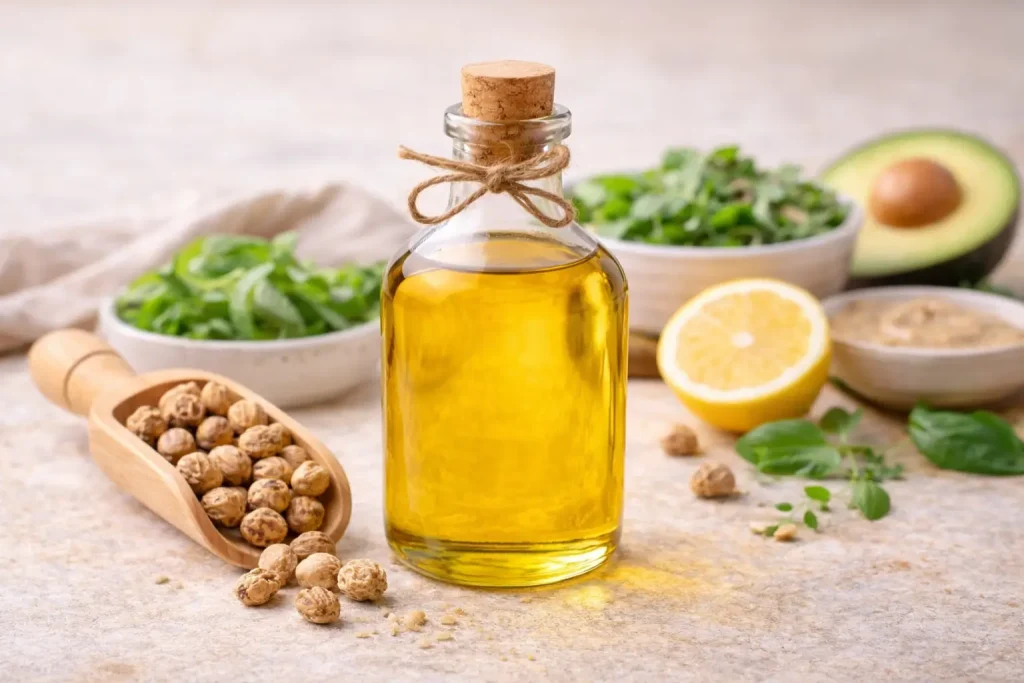
Despite the name, tiger nuts are not nuts. They are small underground tubers, similar to sweet potatoes.
This distinction is critical because:
- Nuts are eliminated on AIP
- Tubers are allowed
Tiger nuts have been consumed for thousands of years in traditional diets, particularly in Africa and the Mediterranean. Their oil carries many of the same benefits without the allergenic properties of nuts.
How Tiger-Nut Oil Is Made
High-quality tiger-nut oil is made by:
- Drying tiger nuts naturally
- Cold-pressing without heat
- Filtering without chemicals
This preserves its fatty acid profile and antioxidant content. Refined versions lose most of these benefits and should be avoided.
Nutritional Breakdown of Tiger-Nut Oil
Tiger-nut oil closely resembles olive oil nutritionally.
Fat Composition
| Fat Type | Approximate Share |
| Monounsaturated | High |
| Saturated | Moderate |
| Polyunsaturated | Low |
This balance makes it ideal for autoimmune healing because:
- Monounsaturated fats reduce inflammatory markers
- Low PUFA reduces oxidation stress
- Moderate saturation supports hormone health
Tiger-Nut Oil vs Common Cooking Oils (AIP Context)
| Oil | AIP-Friendly | Notes |
| Tiger-nut oil | Yes | Tuber-based, gut-friendly |
| Olive oil | Yes | Best raw, limited heat |
| Coconut oil | Yes | Can be heavy for digestion |
| Avocado oil | Yes | Often refined or adulterated |
| Sunflower oil | No | Seed oil, inflammatory |
| Canola oil | No | Industrial processing |
| Grapeseed oil | No | High omega-6 |
Tiger-nut oil fills a gap between olive oil and coconut oil for daily cooking.
Does Tiger-Nut Oil Trigger Inflammation?
Tiger-nut oil does not activate common inflammatory pathways associated with seed oils.
Seed oils are high in linoleic acid, which can:
- Increase gut permeability
- Promote oxidative stress
- Amplify autoimmune inflammation
Tiger-nut oil avoids this problem due to its fatty acid structure.
Gut Health and Tiger-Nut Oil
Gut healing is the foundation of autoimmune recovery.
Tiger-nut oil supports gut health by:
- Avoiding emulsifiers and additives
- Providing gentle fats that don’t irritate bile production
- Supporting mucosal integrity
While the oil itself does not contain fiber, it does not disrupt gut microbiota balance the way processed oils do.
Can Tiger-Nut Oil Help Reduce Autoimmune Flare-Ups?
No oil can “cure” autoimmune disease.
But replacing inflammatory oils with tiger-nut oil often leads to:
- Fewer digestive symptoms
- Reduced bloating
- More stable energy levels
- Better tolerance to meals
Many AIP followers report flare-ups decrease when seed oils are completely eliminated.
Cooking With Tiger-Nut Oil on AIP
Tiger-nut oil is extremely versatile.
You can use it for:
- Sautéing vegetables
- Roasting root vegetables
- Cooking meats at moderate heat
- Homemade AIP dressings
- Sauces and drizzles
It has a mild, slightly sweet flavor that does not overpower food.
Smoke Point and Heat Stability
Tiger-nut oil has a moderate smoke point, making it safer than olive oil for light sautéing but not ideal for deep frying.
Best use cases:
- Medium-heat cooking
- Finishing oil
- Dressings and sauces
For very high heat, animal fats like tallow may be more appropriate.
How Much Tiger-Nut Oil Should You Use?
Even healthy oils should be used intentionally.
A balanced AIP fat rotation might include:
- Tiger-nut oil
- Olive oil
- Coconut oil
- Animal fats
Over-consumption of any single oil can stress digestion, especially during gut healing phases.
Choosing the Best Tiger-Nut Oil
Look for these quality markers:
- Cold-pressed
- Unrefined
- Single-ingredient
- Dark glass bottle
- Clear sourcing
Avoid oils labeled “light,” “refined,” or “heat-processed.”
Common Mistakes When Using Tiger-Nut Oil
- Using refined versions
- Cooking at excessive heat
- Treating it as a seed oil substitute for deep frying
- Ignoring overall fat balance
Used correctly, it supports healing rather than complicating it.
Frequently Asked Questions
Is tiger-nut oil allowed during AIP elimination?
Yes. It is tuber-based and compliant when unrefined.
Is tiger-nut oil considered a nut oil?
No. Tiger nuts are tubers, not nuts.
Can tiger-nut oil replace olive oil completely?
It can partially replace it, especially for cooking.
Does tiger-nut oil affect cholesterol?
Its monounsaturated fats may support a healthy lipid balance.
Is tiger-nut oil good for people with IBS or gut sensitivity?
Many tolerate it well, but individual response always matters.
Final Takeaway
Tiger-nut oil is one of the most underrated AIP-friendly oils available.
It bridges the gap between:
- Gut safety
- Cooking practicality
- Anti-inflammatory nutrition
When chosen carefully and used intentionally, it simplifies AIP cooking and supports long-term autoimmune healing without sacrificing flavor or flexibility.
Know tiger nut butter AIP friendly or not.