
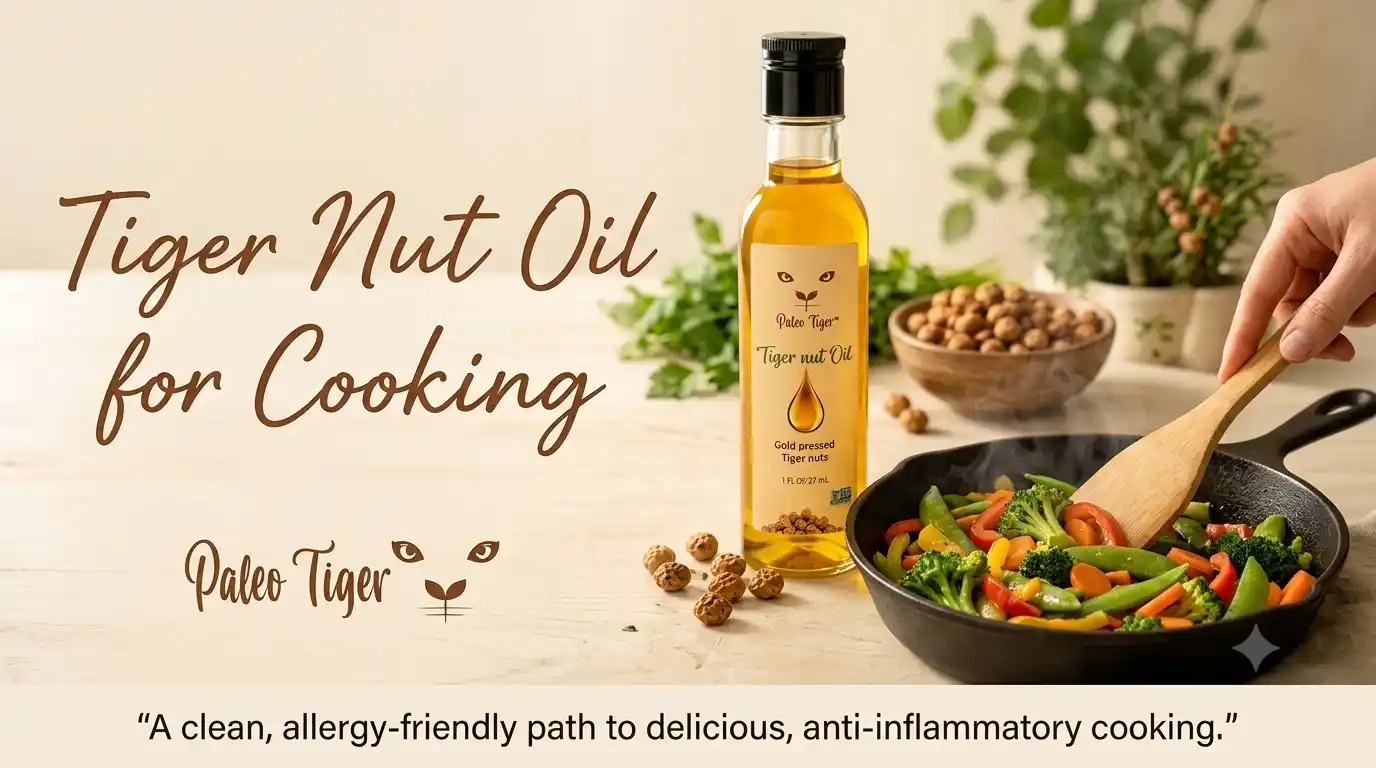
Tiger nut oil for cooking is changing the way home cooks think about healthy fats. This cold-pressed oil comes from a small root tuber with an impressive nutritional profile. It is naturally AIP-friendly, paleo-approved, and nut-free. These qualities make it one of the safest cooking oils for people with food sensitivities. If you’re looking for a clean, flavorful alternative to refined seed oils, tiger nut oil deserves a place in your kitchen.
Unlike many conventional cooking oils, tiger nut oil is not made from seeds, grains, or legumes. Instead, it comes from an edible root tuber. That makes it naturally suitable for paleo, AIP, and nut-free diets. As more people seek cleaner ingredients and allergy-friendly options, this unique oil continues to gain popularity.
At Paleo Tiger, we cold-press premium whole tiger nuts to preserve their natural nutrients, flavor, and purity. We never refine, bleach, or deodorize our oil. Instead, every bottle delivers a golden color, a mild sweetness, and the authentic taste of carefully cold-pressed tiger nuts.
This guide covers everything you need to know about tiger nut oil for cooking. You’ll learn about its smoke point, flavor profile, health benefits, and best culinary uses. We’ll also compare it with other popular cooking oils and explain why Paleo Tiger’s cold-pressed process stands out. By the end, you’ll know exactly how to use this versatile oil in your everyday cooking.
What Is Tiger Nut Oil?
Tiger nut oil is extracted from tiger nuts, which are small edible tubers rather than true nuts. Although the name can be misleading, tiger nuts are not related to tree nuts or peanuts. Because they grow underground like potatoes and yams, the oil is naturally nut-free and suitable for many people with nut allergies.
For centuries, tiger nuts have been cultivated across Africa, the Mediterranean, and parts of Spain. They have long been valued for both their nutritional qualities and their role in traditional recipes.
How Is Tiger Nut Oil Made?
The oil is produced through a cold-pressing process that avoids excessive heat and chemical solvents. This gentle extraction method helps preserve the tuber’s naturally occurring vitamins, antioxidants, and beneficial fats.
As a result, cold-pressed tiger nut oil retains its light golden color, mild sweetness, and delicate nutty aroma. It also preserves more of its natural nutritional value than heavily refined oils.
A Traditional Oil With Modern Appeal
Tiger nuts have been used for generations in Mediterranean and West African cuisine. In Spain, they are best known for horchata de chufa, a refreshing beverage made from tiger nuts. The same tubers are also used to produce a versatile cooking oil with a naturally smooth flavor.
Today, many people following paleo and AIP lifestyles choose tiger nut oil for cooking. They see it as a healthier alternative to refined seed oils like canola, soybean, and sunflower oil.
Why Tiger Nuts Stand Out
Despite their small size, tiger nuts are naturally rich in healthy fats, resistant starch, and dietary fiber. Researchers have renewed interest in this ancient tuber because it combines several unique qualities in one ingredient. It offers the nutritional benefits often associated with nuts while remaining naturally gluten-free, dairy-free, and nut-free.
Archaeologists have found evidence of tiger nuts in ancient Egyptian tombs. These discoveries highlight their long history as both a food source and a valued natural ingredient.
Want to learn more about the plant behind this oil? Read our complete guide to discover what tiger nuts are and how they differ from common tree nuts.
Why This Oil Is a Smart Choice

Choosing the right cooking oil affects flavor, nutrition, and how your body reacts to a meal. Tiger nut oil for cooking checks nearly every box for people following clean-eating, paleo, or autoimmune protocols. It contains healthy monounsaturated fats, similar to olive oil, along with vitamin E and key minerals like magnesium and potassium. These nutrients support heart health, skin health, and steady energy throughout the day.
Unlike many seed oils, this product does not carry common allergens, so it works for nut-free and AIP-compliant kitchens alike. That is a meaningful advantage. Seed oils such as soybean, canola, and sunflower oil have come under increasing scrutiny in recent years for their omega-6 content and industrial processing methods. Tiger nut oil offers a genuine alternative that sidesteps both concerns.
Our 100% cold-pressed tiger nut oil is unfiltered and free from additives, preservatives, or artificial processing. That purity is exactly why so many of our customers switch to tiger nut oil for cooking and never look back. Once you taste the difference between a cold-pressed artisan oil and a mass-produced refined oil, the choice becomes obvious.
There is also a practical, everyday reason to make the switch: versatility. A single bottle can handle dressings, light sautéing, baking, and finishing touches, which means fewer bottles cluttering your pantry and less decision fatigue when you cook. You can buy our cold-pressed tiger nut oil here and taste the difference real cold-pressing makes for yourself.
Understanding the Smoke Point
Smoke point matters because it determines how an oil performs under heat. Cooking oil past its smoke point breaks down nutrients, releases harmful compounds, and creates an unpleasant burnt flavor. Understanding smoke point is one of the most practical things a home cook can learn, and it directly affects how you should use tiger nut oil for cooking.
Tiger nut oil sits in the medium-to-high smoke point range, generally estimated between 320°F and 400°F depending on the refinement level and how it was pressed. Cold-pressed, unfiltered oils like ours tend to sit toward the lower end of that range because they retain more natural compounds, while heavily refined versions sit higher.
That smoke point range makes this oil ideal for sautéing, light frying, baking, and roasting at moderate temperatures. For high-heat searing or deep frying, we still recommend a more heat-stable oil such as avocado oil. But for the vast majority of everyday meals, tiger nut oil for cooking performs reliably and safely without any special precautions.
Here is a simple way to think about heat levels in the kitchen:
High heat (375°F+): Suitable for deep frying, stir-frying, and hard searing.
Low heat (under 300°F): Best for gentle simmering, warming sauces, and light poaching.
Medium heat (300–375°F): Ideal for sautéing vegetables, pan-searing proteins, roasting, and baking.
Tiger nut oil performs best in the low-to-medium range, which covers the majority of home cooking tasks anyway. Because our oil is cold-pressed and unfiltered, it retains more natural compounds than refined oils. As a result, its heat tolerance is slightly lower. However, it delivers better flavor and preserves more nutrients. We recommend using medium heat to maintain its quality and nutritional benefits.
A practical tip many of our customers find useful: heat your pan first on medium, then add the oil right before the food goes in. This shortens the time the oil itself spends exposed to direct heat, which helps preserve both flavor and nutritional value. It is a small habit, but it makes a noticeable difference over weeks and months of regular use.
Want to understand more about how the tiger nut plant produces such a versatile oil? Read about the tiger nut plant and its nutrient profile for the full picture of how this humble root became a kitchen staple.
Flavor Profile: What to Expect
Flavor is where this oil truly stands out from the crowded cooking oil aisle. The taste is mild, slightly sweet, and nutty, with a smooth finish that does not overpower other ingredients. Many home cooks compare it to a lighter, less bitter cousin of almond oil, minus the allergen concerns that come with actual tree nuts.
That gentle, nutty profile makes tiger nut oil for cooking incredibly versatile across both savory and sweet dishes. Drizzle it over roasted vegetables for a subtle finishing touch, whisk it into a salad dressing for body and richness, or fold it into a paleo baked good for natural moisture and a hint of sweetness.
Because the flavor is subtle rather than dominant, this oil blends easily without clashing with spices, herbs, or other fats already in your dish. It plays well with garlic, lemon, fresh herbs, and warming spices like cinnamon or nutmeg. This is one of the reasons we consistently recommend it as a starter oil for anyone transitioning to a paleo or AIP lifestyle, since it rarely conflicts with other flavors a recipe calls for.
Some tasters also pick up a faint earthiness, similar to a very light sesame oil but without the intensity. That earthy undertone fades quickly, leaving mostly sweetness and a clean mouthfeel behind. It is this balance of subtlety and character that makes tiger nut oil for cooking such a forgiving ingredient for beginners and experienced cooks alike.
Curious how tiger nuts compare nutritionally to actual tree nuts? Check out our comparison of tiger nuts versus almonds to see which superfood wins on nutrition, allergen safety, and overall value.
Best Ways to Use This Oil

This oil fits naturally into almost any meal plan, from quick weekday dinners to weekend baking projects. Below are some of the most popular ways to enjoy it in your everyday cooking.
Everyday Cooking Ideas
- Drizzle it over fresh salads for a light, flavorful dressing.
- Use it for low- to medium-heat sautéing with vegetables, chicken, fish, or other proteins.
- Add it to baked goods for extra moisture and a naturally subtle sweetness.
- Blend it into smoothies to boost healthy fats without changing the flavor.
- Finish soups, roasted vegetables, or grilled dishes with a light drizzle before serving.
- Mix it into homemade mayonnaise or AIP-friendly sauces for a richer texture.
- Whisk it into marinades for chicken, seafood, or vegetables.
- Brush it lightly over flatbreads or root vegetables before roasting for added flavor and a beautiful golden finish.
Why It Works So Well
These simple uses show why tiger nut oil for cooking has become a favorite in many paleo and AIP kitchens. Its mild flavor complements other ingredients instead of overpowering them, making it suitable for both savory and sweet recipes.
Pairing this oil with nutrient-dense whole foods adds even more value to everyday meals. For example, roasted vegetables finished with a drizzle of tiger nut oil, sea salt, and fresh herbs create a simple, anti-inflammatory side dish. You can also whisk it with apple cider vinegar, mustard, and herbs to make a flavorful homemade vinaigrette that fits perfectly into paleo and AIP meal plans.
If you’re looking for more healthy meal ideas, explore our guide to nutrient-dense paleo foods. It pairs well with the cooking techniques and recipes mentioned above.
Meal Prep Tip
If you meal-prep regularly, keep a small pouring bottle of tiger nut oil within easy reach while cooking. Having it readily available makes it easier to drizzle over finished dishes, prepare quick dressings, or use it in everyday recipes. This simple habit encourages consistent use instead of letting the bottle sit unused in the pantry.
Tiger Nut Oil vs Other Cooking Oils
Choosing the right cooking oil can feel overwhelming. With so many options available, it’s not always easy to know which one best fits your needs. The comparison below shows how tiger nut oil performs against popular alternatives based on smoke point, allergen safety, diet compatibility, and flavor.
| Oil Type | Smoke Point | Allergen Risk | AIP-Friendly | Flavor |
| Tiger Nut Oil | ~320-400°F | Nut-free, allergy-safe | Yes | Mild, nutty, sweet |
| Olive Oil | ~375-410°F | Low risk | Yes | Bold, grassy |
| Almond Oil | ~420°F | High (tree nut) | No | Nutty, rich |
| Sunflower Oil | ~440°F | Low risk | No (seed oil) | Neutral |
| Coconut Oil | ~350°F | Low risk | Yes | Sweet, tropical |
This comparison shows why tiger nut oil for cooking is a popular choice for paleo and AIP lifestyles. It is naturally nut-free and completely free from seed oils. Unlike almond and other tree nut oils, it is suitable for many people with nut allergies.
Who Benefits Most From This Oil?
Food allergies, especially tree nut allergies, affect millions of people worldwide. At the same time, more consumers are choosing to reduce or avoid refined seed oils as part of paleo, AIP, and clean-eating lifestyles. As a result, demand for a nut-free, minimally processed cooking oil continues to grow.
Tiger nut oil meets those needs by offering a clean, allergy-friendly alternative that works well for everyday cooking without relying on common allergens or heavily refined ingredients.
How It Compares to Popular Cooking Oils
Olive oil remains an excellent choice for many kitchens, and it continues to be one of the healthiest cooking oils available. However, tiger nut oil offers a milder flavor that complements delicate dishes without overpowering them.
Unlike almond oil, tiger nut oil is naturally nut-free because it comes from an edible tuber rather than a true nut. This makes it a suitable choice for many people with tree nut allergies. It also fits well with AIP and clean-eating lifestyles because it is cold-pressed and free from industrial refining.
If you want a deeper look at which oils are considered safe on an autoimmune protocol, our guide on AIP-friendly oils and whether tiger nut oil qualifies covers the topic in much greater detail.
Health Benefits That Make This Oil Worth Cooking With
Tiger nut oil for cooking offers more than great flavor and versatility. It is packed with nutrients that support overall health, making it a valuable addition to everyday meals.
Rich in Essential Nutrients
This oil is naturally rich in vitamin E, a powerful antioxidant that helps protect cells from oxidative stress while supporting healthy skin and tissue repair. Since vitamin E can be difficult to obtain consistently through diet alone, cooking with tiger nut oil is an easy way to include more of this important nutrient in your routine.
It also contains oleic acid, the same heart-healthy monounsaturated fat found in olive oil. Research suggests that oleic acid may help support healthy cholesterol levels and overall cardiovascular health. In addition, tiger nut oil provides magnesium and potassium, two minerals that contribute to muscle function, nerve signaling, and steady energy production.
A Great Choice for Paleo and AIP Diets
Many people following paleo or AIP lifestyles choose tiger nut oil because it is naturally nut-free, minimally processed, and easy to digest. Its gentle anti-inflammatory properties also make it a popular option for those looking to reduce their intake of highly refined seed oils.
Some people with sensitive digestive systems find that this oil feels lighter than heavier cooking oils. Although individual experiences vary, cold-pressed tiger nut oil is often a practical choice during elimination diets or when gradually reintroducing healthy fats.
More Than Just a Cooking Oil
One of the biggest advantages of choosing a high-quality cold-pressed oil is knowing exactly what you’re using. Paleo Tiger’s tiger nut oil contains no fillers, chemical solvents, or unnecessary additives. That level of transparency gives many health-conscious shoppers greater confidence in the ingredients they use every day.
If you’d like to learn more about its nutritional value, explore our detailed guide to the health benefits of tiger nut oil, where we cover everything from heart health and antioxidant support to skincare and overall wellness.
Why Choose Paleo Tiger’s Cold-Pressed Tiger Nut Oil?

Not all bottles labeled “tiger nut oil” are created equal, and that is exactly where Paleo Tiger stands apart from the competition. Our oil is 100% cold-pressed and unfiltered, meaning nothing is stripped away during processing and nothing artificial is added afterward. We start with carefully selected whole tiger nuts, press them without heat or chemical solvents, and bottle the result exactly as nature made it.
This process is precisely why so many paleo and AIP households trust Paleo Tiger when they choose an oil for daily cooking. We are not just selling an ingredient; we are sharing years of accumulated knowledge about clean, allergy-safe nutrition, distilled into a single bottle that does the work other oils cannot.
We built our entire business around the AIP and paleo communities, not as an afterthought but as our founding purpose. Every product we sell, from our tiger nut butters to our granola to this very oil, goes through the same standard: clean ingredients, transparent sourcing, and zero compromise on quality. When you choose tiger nut oil for cooking from Paleo Tiger, you are choosing a team that genuinely understands the elimination-diet journey, the allergy-label reading, and the frustration of finding yet another product with hidden additives.
Customers consistently tell us the difference is noticeable from the first use, both in flavor and in how the oil performs in the kitchen. That feedback drives every batch we produce. We test sourcing partners carefully, track quality across harvests, and adjust our pressing process whenever it can be improved, rather than locking into a single method just because it is cheaper at scale.
Our whole tiger nuts are the same premium source we use across every product line, so quality never varies from bottle to bottle or batch to batch. Whether you are buying our oil, our butter, or our granola, you are getting tubers sourced and handled to the same exacting standard every single time.
How to Store Tiger Nut Oil for Maximum Freshness?
Because this oil is cold-pressed and unfiltered, proper storage matters more than it would with heavily processed, chemically stabilized oils. Store the bottle in a cool, dark cupboard away from direct sunlight and heat sources such as the stove or oven. Light and heat both accelerate oxidation, which can shorten the useful life of any natural oil.
Once opened, refrigeration can extend shelf life noticeably, though the oil may thicken slightly when chilled. This is completely normal and simply means the oil has retained its natural fat structure rather than being heavily processed to stay liquid at all temperatures. Let it sit at room temperature for a few minutes before using if it has thickened in the fridge.
Always reseal the cap tightly after each use to limit oxygen exposure, which is the primary driver of rancidity in unrefined oils. A loosely capped bottle left out for weeks will degrade far faster than one stored properly. Following these simple steps keeps tiger nut oil for cooking fresh, flavorful, and nutritionally intact for many months after opening.
Good storage habits matter just as much on a strict elimination diet as good ingredient choices do in the first place. Spending money on a premium, cold-pressed oil only to let it spoil from poor storage defeats the entire purpose of choosing quality over convenience. A simple rule of thumb: if the oil smells sharp, bitter, or noticeably different from when you first opened it, it has likely turned and should be replaced rather than used.
Buying a smaller bottle size if you cook with the oil infrequently is another practical way to avoid waste. It is better to finish a smaller bottle while it is fresh than to let a large one sit half-used for months past its prime. If you are new to the elimination protocol entirely, our guide on what the AIP diet actually involves is a great starting point for understanding why oil quality matters so much during the early phases.
Pros and Cons of Cooking With Tiger Nut Oil
Like any ingredient, this oil has tradeoffs worth knowing before you buy, and we believe in giving you the full picture rather than only the highlights.
| Pros | Cons |
| Naturally nut-free and allergy-safe | Not ideal for very high-heat searing |
| AIP and paleo compliant | Pricier than refined seed oils |
| Mild flavor blends into any dish | Limited availability compared to olive oil |
| Rich in vitamin E and minerals | Can solidify slightly when refrigerated |
| Doubles as a skin and hair oil | Smaller bottle sizes than mainstream oils |
| Cold-pressed with no additives | Shorter shelf life than refined oils |
Even with a short list of cons, the pros make this oil an easy choice for anyone prioritizing clean ingredients over raw convenience or rock-bottom price. The tradeoffs are mostly about cost and availability rather than performance, flavor, or safety, which is an encouraging sign for a relatively specialty product.
The same oil that works beautifully in your skillet also works wonders outside the kitchen entirely. Many customers buy one bottle and use it for both cooking and topical skin care, which actually offsets some of the higher upfront cost compared to a single-purpose seed oil. Our article on adding tiger nut oil to your skincare routine shows just how multi-purpose this single bottle really is, from moisturizing dry skin to nourishing damaged hair.
Simple Ways to Start Cooking With Tiger Nut Oil Today

Getting started with this oil is easy. You don’t need to change your entire pantry or follow a complicated plan. Simply replace your usual cooking oil in one recipe this week. Try it in a salad dressing, a stir-fry, or a tray of roasted vegetables. Notice how its mild, nutty flavor enhances your food without overpowering the other ingredients.
As you become more familiar with the oil, experiment with different cooking methods. Use it in paleo baking recipes, brush it over roasted chicken before serving, or whisk it into a quick homemade pan sauce. Its versatility makes it easy to incorporate into everyday meals.
Many home cooks who try tiger nut oil for cooking quickly make it their everyday oil. Its clean flavor, smooth texture, and reliable performance make it a practical choice for a wide variety of recipes.
At Paleo Tiger, we make that transition simple. We provide clear guidance, transparent sourcing, and a product we proudly stand behind. Our goal goes beyond selling a bottle of oil. We want to help people enjoy clean, flavorful food that fits naturally into paleo, AIP, and other healthy lifestyles.
Conclusion
Tiger nut oil for cooking combines clean nutrition, a gentle flavor, and genuine versatility in one bottle, which is a rare combination among specialty cooking oils. It is nut-free, AIP-friendly, and paleo-approved, making it one of the safest oils available for sensitive diets and elimination protocols. Whether you are sautéing vegetables, finishing a soup, baking a paleo treat, or even moisturizing your skin, this oil adapts to the job without complaint.
Paleo Tiger’s cold-pressed, unfiltered process ensures every bottle delivers the purity and flavor that clean cooking deserves, batch after batch. We built our reputation on understanding exactly what AIP and paleo households need, and this oil reflects that commitment in every drop. Make the switch and discover why so many households are quickly making this oil a pantry essential for daily cooking and beyond.
FAQs
Is tiger nut oil good for cooking at high heat?
This oil works best at low to medium heat. Its smoke point is moderate, so reserve very high-heat searing or deep frying for more heat-stable oils instead.
Does tiger nut oil taste like real nuts?
Yes, it has a mild, sweet, nutty flavor profile. It is gentler than almond oil and blends easily into both savory and sweet recipes without overpowering them.
Is tiger nut oil safe for nut allergies?
Yes. Tiger nuts are tubers, not tree nuts, making this oil naturally nut-free and generally safe for most tree nut and peanut allergy sufferers.
How should I store tiger nut oil properly?
Keep it in a cool, dark place and reseal the cap tightly after each use. Refrigeration extends freshness but may cause slight thickening over time.
Why choose Paleo Tiger’s tiger nut oil over other brands?
Our oil is 100% cold-pressed, unfiltered, and completely additive-free. We source premium whole tiger nuts for consistent purity, flavor, and nutrition in every single bottle.