

A good peanut butter alternative should work with the food you enjoy—whether that is a sandwich, apple slices or a favorite baking recipe. Tiger nut butter, sunflower seed butter and soy butter are a few options, but they offer different flavors and ingredients.
The best nut-free butter for your kitchen depends on what you need to avoid and how you plan to use it. Here is how to compare the options before buying a jar.
We make tiger nut butter at Paleo Tiger. This guide includes our product alongside other types of spreads so you can choose what fits your needs.
Start with the ingredients and allergen information
“Nut-free” does not mean free of every allergen. Soy butter contains soy, and tahini contains sesame. Both soy and sesame are major food allergens in the United States. People can also be allergic to foods outside that list. FDA food-allergy information.
If you are shopping for someone with a food allergy, read the full ingredient list and allergen information every time. Recipes and manufacturing processes can change. Ask the manufacturer about anything unclear, including shared equipment, and follow your allergist’s advice about suitable foods. FARE’s guide to reading food labels explains what to look for.
Statements such as “may contain” are voluntary in the U.S. Their absence does not establish that a product was made without allergen cross-contact. FDA guidance on advisory statements.
Peanut butter alternatives at a glance
Use this table to compare flavors and kitchen uses. It is not an allergy-safety rating; check the specific product you are considering.
| Type of spread | Flavor and character | Ways to use it | What to check |
|---|---|---|---|
| Tiger nut butter | At Paleo Tiger, we describe tiger nuts as having a coconut-and-almond-like flavor. | Toast, apple slices and smoothies | Added oils and other ingredients; our Original contains coconut oil. |
| Sunflower seed butter | A roasted seed flavor; sweetness varies by recipe. | Sandwiches, fruit dips and recipes written for seed butter | Added sugar, salt, oils and the manufacturer’s allergen information |
| Soy butter | Often made to resemble peanut butter’s flavor and spreadable texture | Sandwiches and crackers | Contains soy |
| Pumpkin seed butter | Roasted seed flavor; available in sweetened and unsweetened versions | Smoothies, sauces and sandwiches | The full recipe, including added oils or sweeteners |
| Tahini | Sesame flavor suited to sweet or savory dishes | Dressings, dips and tahini baking recipes | Contains sesame |
| Coconut butter | A thick spread with a distinct coconut flavor | Coconut-flavored toppings and recipes | Contains coconut; some brands also use equipment that processes tree nuts. |
1. Tiger nut butter for a coconut-and-almond-like flavor
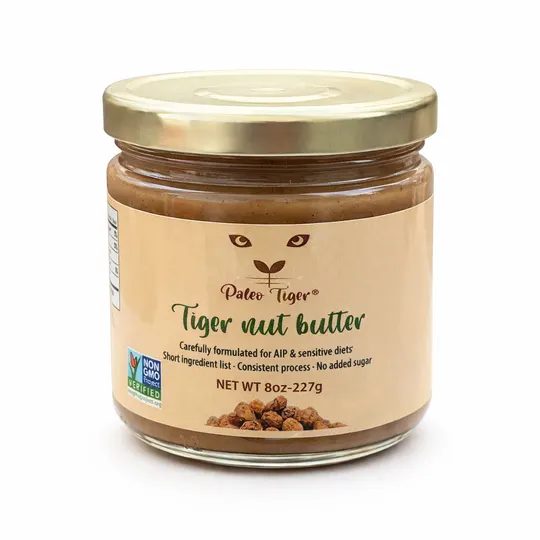
Tiger nuts are small tubers. They are not almonds or another type of tree nut. If you are new to them, our way of describing their taste is a mix of coconut and almond notes.
Paleo Tiger Original Tiger Nut Butter is made with tiger nuts, avocado oil and coconut oil. It comes in an 8 oz jar. The almond comparison describes the flavor; almonds are not in that ingredient list.
Original is a starting point if you want to explore the flavor of tiger nuts. Spread it on toast, serve it with sliced apples or stir a spoonful into a smoothie. If oil separates, stir it back in and follow the storage instructions on your jar.
For a closer look at the ingredient itself, read what tiger nut butter is. Check the current package label and contact us if you need more information about ingredients or production before ordering.
2. Sunflower seed butter for an everyday sandwich spread
Sunflower seed butter is worth comparing if you want a roasted flavor for sandwiches or fruit dips. Choose the version that suits your taste: a sweetened spread and an unsweetened one can give you a different result.
For example, Creamy SunButter lists roasted sunflower seeds, sugar, mono and diglycerides, and salt. Other products use different recipes, so compare the actual jars rather than assuming all sunflower spreads contain the same ingredients.
3. Soy butter for a peanut-butter-style option
Soy butter is another spread to consider when soy is suitable for your diet. WOWBUTTER, for example, is made with toasted soy, soy oil, cane sugar, palm oil and sea salt. The brand describes its flavor and texture as similar to peanut butter.
That makes it an option to compare for sandwiches and crackers, but it is not suitable for someone with a soy allergy. A peanut-free product can still contain another ingredient you need to avoid.
4. Pumpkin seed butter for sweet or savory uses
Pumpkin seed butter gives you another roasted-seed option. The recipe matters: an unsweetened version may be useful in sauces, while a lightly sweetened one may suit a sandwich or smoothie.
88 Acres Unsweetened Pumpkin Seed Butter is one example to compare. Check its complete ingredient information, including added oil, when deciding whether it fits your needs.
5. Tahini for dressings, dips and baking
Tahini is a sesame seed paste. It is useful when you want sesame flavor in a dressing, dip or recipe designed for tahini. Soom Premium Tahini, for example, lists sesame seeds as its ingredient.
Because it contains sesame, tahini is not a suitable alternative for someone avoiding sesame. For cookies or other baked goods, start with a recipe written for tahini rather than expecting it to behave exactly like peanut butter.
6. Coconut butter when you want a coconut spread
Coconut butter is made from coconut flesh, giving it a thicker texture than coconut oil. It may appeal if coconut is the flavor you want in a topping or recipe.
Do not assume a coconut-only ingredient list makes the finished product suitable for a tree-nut allergy. Artisana’s coconut butter page, for example, states that it uses machinery that also processes tree nuts and seeds. Check both ingredients and production information for the jar you are considering.
How to choose a spread you will actually use
Choose the job first. For sandwiches and fruit, look for a spread with a consistency and flavor you enjoy. For sauces, an unsweetened option may suit the recipe better. For baking, use a recipe developed for the alternative you choose; different spreads can change the result.
Compare equivalent amounts. Jar prices can be misleading when package sizes differ. Divide the price by the number of ounces to compare cost, then account for shipping. If you are comparing nutrition, check that the serving sizes match.
Start with one jar. Once you have confirmed that a product fits your dietary needs, a smaller purchase lets you decide whether you like its flavor before buying several. Taste preferences are personal, and the best spread for toast may not be your favorite in a sauce.
Common questions about nut-free butter alternatives
What can I use instead of peanut butter?
Tiger nut, sunflower seed, soy and pumpkin seed spreads are options to compare for everyday spreading. Tahini and coconut butter offer different flavors for particular dishes. Choose by ingredients, allergen requirements and the recipe you want to make.
Can I send any nut-free spread to school?
Check the school’s food policy before packing it. The school may restrict ingredients beyond peanuts and tree nuts or have requirements for packaged foods. Keep the original label available and follow any individual allergy plan.
Are all of these alternatives suitable for an AIP diet?
No. This is a general comparison, and the options include soy and seed-based spreads. For that separate question, see our guide to peanut butter alternatives for the AIP diet and check the requirements of the protocol you follow.
Explore tiger nut butter from Paleo Tiger
If the coconut-and-almond-like flavor sounds appealing, take a look at Original Tiger Nut Butter. You can review the ingredients, jar size and current price before deciding, or browse the tiger nut butter range to compare flavors.