
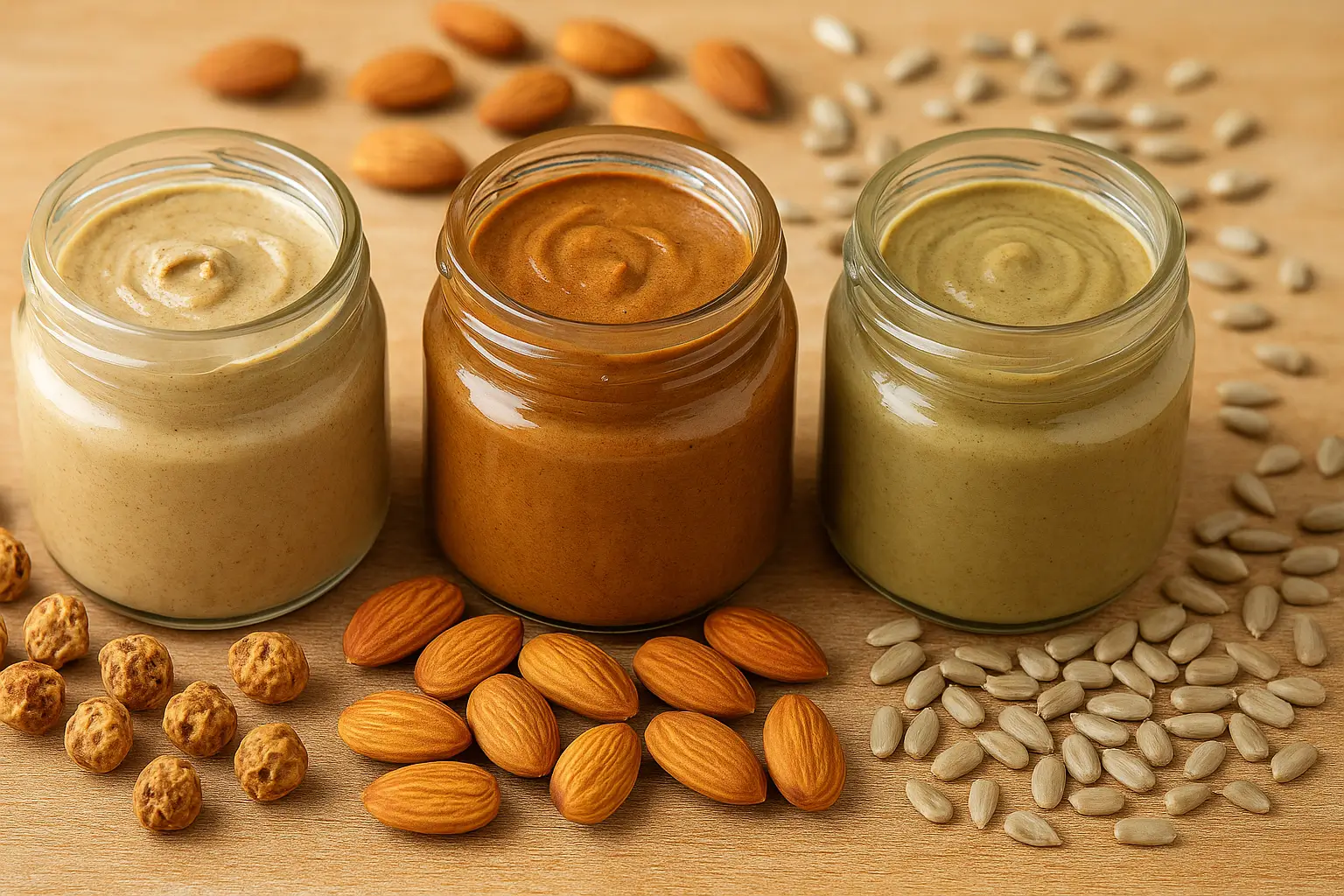
In the world of plant-based spreads, “tiger nut butter vs. almond butter vs. sunflower butter” is a comparison that health-conscious consumers are starting to explore more deeply. Each of these butter alternatives offers a unique flavor, texture, and set of nutritional benefits. But which one is best for your lifestyle, dietary needs, and taste preferences?
Let’s dive into the nutritional breakdown, health benefits, and uses of these three popular nut and seed butters — and see which one comes out on top.
1. What Is Tiger Nut Butter?
Tiger nut butter is made from tiger nuts — which are not actual nuts but small tubers. Naturally sweet and nutty in flavor, tiger nuts are packed with resistant starch, a type of fiber that supports gut health. The butter made from these tubers is creamy, slightly gritty in texture, and naturally sweet — often needing no added sugars.
Key Benefits:
- Allergy-Friendly: Nut-free, dairy-free, and gluten-free.
- Gut-Healthy: High in prebiotic fiber.
- Naturally Sweet: Great for those reducing sugar intake.
- Good Fat Source: Contains monounsaturated fats and some iron, potassium, and magnesium.
2. What Is Almond Butter?
Almond butter has become a staple in many kitchens, especially among those seeking high-protein, low-carb options. Made from roasted almonds, it boasts a rich, earthy flavor and smooth or crunchy textures depending on the grind.
Key Benefits:
- High in Protein: One of the highest protein nut butters.
- Heart-Healthy Fats: Rich in monounsaturated fats and vitamin E.
- Great for Keto or Low-Carb Diets.
- Versatile: Works well in smoothies, on toast, or as a dip.
3. What Is Sunflower Seed Butter?
Made from roasted sunflower seeds, sunflower butter is a nut-free alternative that’s especially popular among those with peanut or tree nut allergies. It has a mild, earthy flavor and is often used in school-safe recipes.
Key Benefits:
- Nut-Free: Safe for those with peanut and tree nut allergies.
- Rich in Vitamin E: One of the highest sources among seed butters.
- Affordable & Accessible.
- Mild Taste: Great for kids and picky eaters.
Nutritional Comparison (per 2 tbsp serving)
| Nutrient | Tiger Nut Butter | Almond Butter | Sunflower Butter |
| Calories | ~160 | ~190 | ~200 |
| Protein | ~2g | ~6g | ~5g |
| Carbohydrates | ~18g | ~6g | ~7g |
| Fiber | ~5g | ~3g | ~3g |
| Sugar (natural) | ~6g | ~1g | ~1g |
| Fat (total) | ~9g | ~17g | ~18g |
| Monounsaturated Fat | Moderate | High | Moderate |
| Vitamin E | Low | High | Very High |
Tiger Nut Butter vs. Almond Butter vs. Sunflower Butter: Key Differences
1. Allergens & Diet Compatibility
- Tiger Nut Butter: Safe for nut-free, gluten-free, vegan, and paleo diets.
- Almond Butter: Not suitable for nut allergies but fits paleo, keto, and gluten-free diets.
- Sunflower Butter: Excellent for nut allergies; fits vegan, gluten-free, and paleo diets (watch for added sugar or oils).
2. Taste & Texture
- Tiger Nut: Naturally sweet, slightly gritty texture.
- Almond: Rich, earthy, and creamy with a roasted flavor.
- Sunflower: Mild, creamy, sometimes with a slightly bitter undertone.
3. Nutritional Goals
- Choose tiger nut butter if you want gut-friendly fiber and natural sweetness.
- Pick almond butter for a protein boost and healthy fats.
- Go for sunflower butter if you’re seeking vitamin E and allergy-safe nutrition.
Which Butter Should You Choose?
It depends on your goals:
- For Gut Health & Fiber → Tiger Nut Butter
- For Muscle Building & Protein → Almond Butter
- For Allergies & Vitamin E → Sunflower Butter
Each butter has its place depending on your dietary needs and health priorities. “Tiger nut butter vs. almond butter vs. sunflower butter” is not about finding the ultimate winner, but discovering which one supports your individual lifestyle best.
How They Taste in Real Recipes
Toast and Fruit
Almond butter is rich and roasted; sunflower butter is earthy with a slightly bitter edge. Tiger nut butter is naturally sweet and mild, with a taste many people compare to a blend of almond butter and coconut. It pairs especially well with apples, bananas and pears.
Smoothies
All three blend well. Tiger nut butter adds sweetness, so you may skip the honey or dates. Try one tablespoon of Paleo Tiger Original Tiger Nut Butter with frozen banana, cinnamon and coconut milk.
Baking
Almond butter and sunflower butter are softer and oilier, so they spread more in cookies. Tiger nut butter has a slightly gritty, fiber-rich texture that gives bars and energy bites a nice chew. One tip: sunflower butter can turn green in baked goods when it reacts with baking soda. It’s harmless, but surprising.
Allergies and School Lunches
Almond butter is a tree nut, so it’s off-limits for anyone with a tree nut allergy and in most nut-free schools. Sunflower butter and tiger nut butter are both nut-free. Tiger nuts are tubers, which is why tiger nut butter is also allowed on the AIP elimination phase, while seed butters like sunflower are not. Always check the package label for current allergen information. See our school lunch guide for ideas.
What to Look For on the Label
Whatever you choose, keep the ingredient list short. Watch for added sugars, palm oil, hydrogenated oils and emulsifiers. Paleo Tiger Original Tiger Nut Butter contains just tiger nuts, avocado oil and coconut oil. If oil separates, simply stir it back in.
Our Pick for AIP and Nut-Free Kitchens
If you need a spread that is nut-free, seed-free and AIP-friendly, tiger nut butter is the most flexible choice. Want variety? Try Cinnamon Tiger Nut Butter on pancakes or Carob Tiger Nut Butter as a chocolate-style dip. For a deeper two-way comparison, read Tiger Nut Butter vs Almond Butter: Key Differences.
FAQs
1. Is tiger nut butter healthier than almond butter?
It depends. Tiger nut butter has more fiber and natural sweetness, while almond butter provides more protein and healthy fats. They’re both nutritious in different ways.
2. Can I eat sunflower butter on a paleo diet?
Yes, as long as it’s made without added sugar or processed oils, sunflower butter can be paleo-friendly.
3. Which is best for weight loss?
No single spread causes weight loss; tiger nut butter’s fiber can help you feel full, so enjoy 1–2 tablespoons as part of a balanced diet.
4. Can kids eat tiger nut butter?
Yes! Tiger nut butter is naturally sweet and allergy-friendly, making it a great choice for kids’ snacks or school lunches.
5. Are there any additives in store-bought versions?
Some commercial versions may contain added oils or sweeteners, so always check the label or opt for homemade or clean-label brands.