
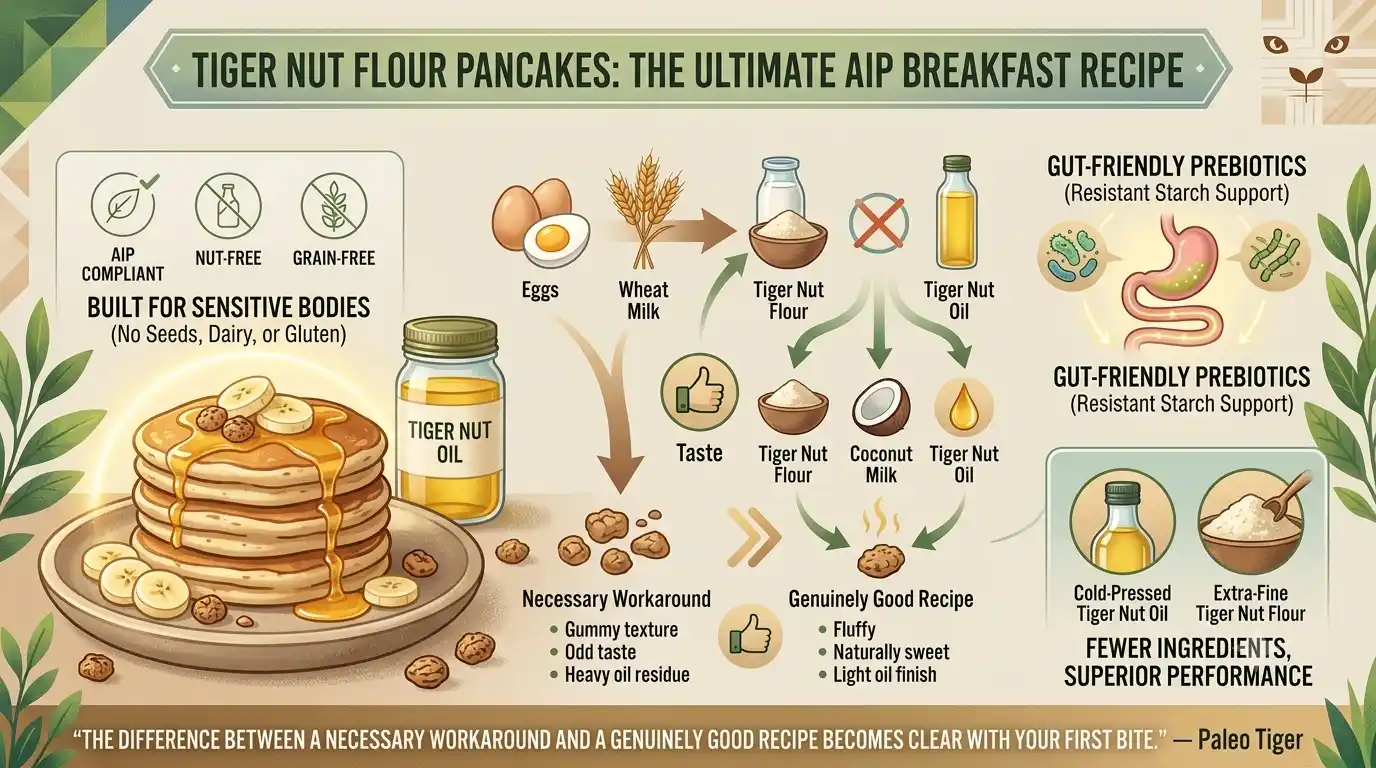
Breakfast trips up most people who are new to AIP. Eggs are excluded. Grains are excluded. Dairy is excluded too. That rules out the entire cereal aisle, and most of what a normal pancake recipe depends on.
Luckily, Tiger Nut Flour Pancakes solve that problem in one pan. Instead of stacking substitute on top of substitute, this recipe uses a single AIP-compliant flour to do all the work.
This guide walks through everything you need to make Tiger Nut Flour Pancakes that actually hold together, brown properly, and taste like something worth getting out of bed for. It covers the ingredient itself, a full recipe, several flavor variations, common mistakes, storage tips, and how this flour compares to other AIP-friendly options. For background on the ingredient driving all of this, check out our full tiger nuts guide, which covers where it comes from and why it behaves so differently from a true nut.
Pancakes are usually one of the first things people miss once grains, dairy, and eggs come off the table. A normal recipe depends on all three: wheat flour for structure, milk for moisture, and eggs to bind everything together. Pull out even one of those, and most recipes fall apart, literally.
Tiger Nut Flour Pancakes rebuild that structure from a completely different set of ingredients. That’s part of why this has become one of the most dependable breakfast options in our own kitchen, and one of the recipes readers ask about most often.
What Is Tiger Nut Flour, and Why Does It Work for Pancakes?
Tiger nut flour comes from dried, ground tiger nuts. These are small root tubers, not nuts at all, despite the name. That distinction matters for pancakes specifically.
Most grain-free pancake recipes lean on almond flour or coconut flour, and both come with trade-offs. Almond flour is a tree nut, which knocks it out for anyone with a nut allergy or anyone strictly following AIP elimination. Coconut flour, on the other hand, absorbs liquid aggressively. Get the ratio off by even a tablespoon, and the pancake turns dense or gummy.
Tiger nut flour sits in a more forgiving middle ground. It’s naturally sweet, finely textured, and starchy enough to bind a batter without needing eggs or a grain-based flour to hold it together.
That natural sweetness also means these pancakes need very little added sugar. The flour itself carries a mild caramel-like flavor that standard almond flour simply doesn’t have. In fact, this is one reason the recipe has become so popular in our kitchen. The flavor reads closer to a lightly toasted oat than anything nut-like, which makes sense once you remember it isn’t a nut to begin with.
There’s a textural reason this flour performs so well in pancakes too, as opposed to, say, bread. Pancakes don’t need much rise or chew. They need a batter that spreads evenly, sets quickly, and browns on contact with a hot pan. Tiger nut flour’s fine, slightly starchy texture does exactly that, without the gumminess that heavier grain-free flours can produce.
Want a deeper look at how this flour performs across other AIP baking applications? Our tiger nut flour benefits guide breaks that down in more detail.
The Nutrition Profile Behind Tiger Nut Flour Pancakes
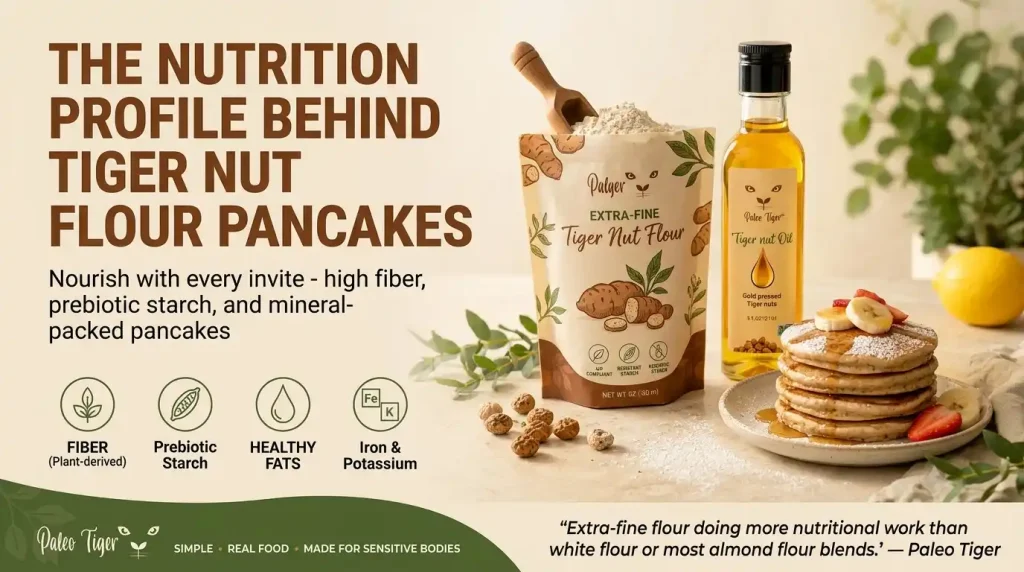
A quick note on what’s actually in the flour. Pancakes are usually treated as an indulgence, not something with real nutritional value behind it. This one is different.
Tiger nut flour is naturally high in resistant starch and fiber. That’s part of why a batch of these pancakes feels more satisfying than a typical grain-based stack. The flour also contains a meaningful amount of iron and potassium, along with the same monounsaturated fat profile found in tiger nut oil. None of that makes a pancake a health food on its own. Still, the base ingredient does more nutritional work than white flour, or even most almond flour blends.
For a closer look at the fuller nutrient breakdown, our health benefits of tiger nuts page covers the full picture beyond just baking.
The resistant starch angle is worth sitting with for a moment. It’s one of the more distinctive things about this flour compared to other grain-free options. Resistant starch behaves more like a prebiotic fiber than a typical starch. It passes through digestion largely intact, and feeds bacteria further down the gut, rather than spiking blood sugar the way refined flour does.
That’s a meaningful difference for anyone managing AIP specifically for gut-related symptoms. In that case, the goal usually extends past “is this allowed” into “does this actually support what I’m trying to fix.”
| Nutrient (per 1/4 cup) | Tiger Nut Flour | All-Purpose Flour | Almond Flour |
|---|---|---|---|
| Fiber | ~10g | ~1g | ~3g |
| Resistant Starch | High | None | None |
| Net Carbs | Moderate | High | Low |
| Tree Nut Allergen | No | No | Yes |
| AIP-Compliant | Yes | No | No |
Numbers will vary slightly by brand and grind. Still, the pattern holds across most tiger nut flour products: more fiber, more resistant starch, and none of the allergen concerns that come with almond flour. That combination is rare. It’s worth stocking on its own, separate from whatever else is in an AIP pantry.
The Recipe: Classic Tiger Nut Flour Pancakes
This is the base version. It’s built to be reliable enough to make on a weekday morning, without pulling out a scale or measuring spoon for every ingredient. It uses simple pantry staples, and nothing here requires a specialty order or a trip to more than one store.
A quick note on a few of the less obvious ingredients before we get into the method. Arrowroot starch isn’t strictly necessary, but it noticeably improves the texture. It gives the pancakes a slightly springier bite, instead of the denser crumb tiger nut flour produces on its own.
Full-fat coconut milk, rather than a lighter coconut beverage, keeps the batter rich enough to brown properly. A thinner liquid tends to produce a paler, flatter pancake. And the tiger nut oil isn’t interchangeable with just any neutral oil here. It’s mild enough not to fight with the flour’s natural sweetness, the same quality that makes it work so well in AIP salad dressings.
Ingredients
- 1 cup tiger nut flour
- 1/4 cup arrowroot starch
- 1 tsp baking soda (or 1 tbsp gelatin egg substitute, for a stricter elimination version)
- 1/4 tsp sea salt
- 1 cup full-fat coconut milk
- 1 tbsp tiger nut oil, plus more for the pan
- 1 tbsp raw honey or maple syrup
- 1/2 tsp vanilla extract (optional, check for AIP-compliant brands)
Instructions
- Whisk the tiger nut flour, arrowroot starch, baking soda, and salt together in a large bowl.
- In a separate bowl, combine the coconut milk, tiger nut oil, honey, and vanilla.
- Pour the wet ingredients into the dry, and whisk until just combined. The batter should be thick but pourable. Thin with a splash of water if needed.
- Let the batter rest for 5 minutes. Tiger nut flour absorbs liquid as it sits, so don’t skip this step.
- Heat a lightly oiled skillet over medium-low heat. Pour 1/4 cup of batter per pancake.
- Cook for 2-3 minutes per side, until the edges look set and the bottom turns golden.
- Repeat with the remaining batter, adding more oil to the pan as needed.
This batter comes together with the same straightforward, real-food approach we built the rest of our tiger nut flour pantry lineup around. In fact, the same bag of flour used here works just as well in muffins or quick breads later in the week. Our tiger nut flour, extra-fine, is ground specifically to avoid the grittiness that shows up in some store-bought versions. That makes a noticeable difference in how smooth the batter turns out.
Flavor Variations on the Base Recipe
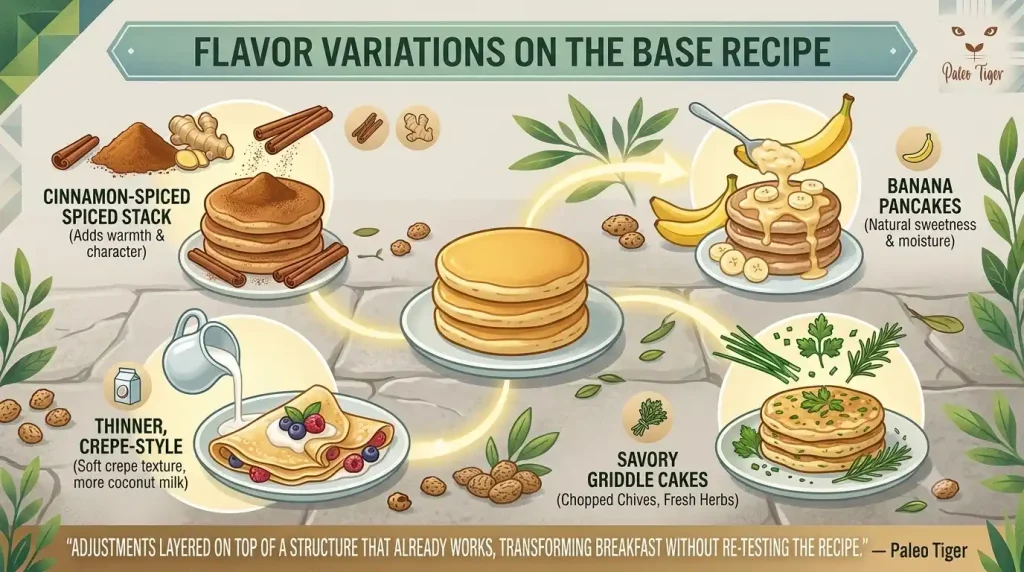
Once the base recipe feels familiar, it’s worth building out a few variations. That way, breakfast doesn’t feel like the same pancake every single morning.
Cinnamon-spiced version. Add 1 teaspoon of ground cinnamon and a pinch of ground ginger to the dry ingredients. The warmth pairs naturally with the flour’s existing caramel-like sweetness, and makes the pancakes taste more like a fall breakfast than a strict elimination-phase meal.
Banana tiger nut flour pancakes. Mash half a ripe banana into the wet ingredients before combining with the dry mixture. This adds natural sweetness and moisture. As a result, you can usually cut the added honey or maple syrup in the base recipe by half.
Savory version. Drop the honey and vanilla entirely. Add a pinch more salt, then fold in a tablespoon of chopped chives or fresh herbs. This version pairs well alongside eggs (if reintroduced) or a simple protein, rather than being served as a sweet stack on its own.
Thinner, crepe-style version. Add an extra 2-3 tablespoons of coconut milk to thin the batter. Then cook in a wider, thinner layer over slightly higher heat, for about 90 seconds per side. This produces something closer to a soft crepe than a thick pancake, which works well wrapped around fruit or a savory filling.
Each of these variations keeps the same base ratio of tiger nut flour to liquid. So, none of them require re-testing the recipe from scratch. They’re simply adjustments layered on top of a structure that already works, the same way our carob tiger nut butter recipes build out variations from one core base ingredient.
Toppings and Pairings That Keep These Pancakes AIP-Compliant
A pancake recipe is only as compliant as what gets poured over it. Maple syrup is the simplest topping, and it stays well within AIP guidelines. Still, a few other options are worth keeping in rotation.
Mashed banana or a quick stovetop berry compote both work well, without introducing anything excluded. A spoonful of tiger nut butter, warmed slightly and drizzled over the top, adds a richer, more breakfast-appropriate finish than syrup alone. Plus, it brings the same nut-free profile as the pancakes themselves, which matters for anyone serving a mixed table of allergy needs. Coconut cream, whipped briefly, works as a dairy-free stand-in for whipped cream on weekend versions of this recipe.
For a more textured finish, scatter a small handful of whole tiger nuts, roughly chopped, over the top. This adds crunch without introducing anything outside AIP boundaries. It’s a small touch, but it turns a flat stack of pancakes into something that feels a bit more composed, especially for a weekend breakfast where presentation matters slightly more.
What should you skip? Chocolate chips (seed-derived in most AIP frameworks once processed), most store-bought pancake syrups with corn-derived ingredients, and any nut-based topping if the goal is keeping the meal genuinely nut-free for the table. Our original tiger nut butter is the version we reach for most often here, since it’s mild enough not to compete with the pancake’s own flavor.
Tiger Nut Flour vs. Other AIP Pancake Flours
It’s worth comparing tiger nut flour directly against the other flours people reach for once almond and wheat are off the table. After all, “AIP-compliant” isn’t the same as “works well in a pancake.”
Pros of tiger nut flour:
- Naturally sweet, reducing the need for added sugar
- Light texture that browns rather than steams
- Nut-free, making it shareable across allergy-mixed households
- Mild flavor that doesn’t compete with toppings
Cons of tiger nut flour:
- Slightly more expensive per cup than cassava or arrowroot alone
- Less widely stocked in standard grocery stores than almond flour
- Needs a binder (arrowroot, gelatin) for the best texture, similar to most grain-free flours
Cassava flour produces a more elastic, almost crepe-like pancake. That works for some preferences, but it doesn’t have the same natural sweetness. Coconut flour requires careful liquid ratios, and tends to punish small measuring errors more than tiger nut flour does. Arrowroot alone is too starchy to use as a primary flour. It works best as a supporting ingredient, the way it’s used in the recipe above.
For a side-by-side breakdown of how tiger nut flour holds up across more recipes than just pancakes, our tiger nut flour recipe guide covers several other applications.
There’s a cost consideration worth being honest about, too. Tiger nut flour tends to sit at a similar price point to almond flour, sometimes slightly higher per bag, since it’s a less commonly farmed crop than the cereals or legumes most flours come from. That cost is part of why we’ve focused on sourcing it consistently, and keeping the extra-fine grind in steady supply, rather than treating it as a rotating specialty item. After all, a pantry staple only works as a staple if it’s actually available when someone needs to restock.
Why This Recipe Is Built Around a Single, Trustworthy Ingredient
Most AIP recipe development ends up solving one problem by introducing three more. Replace the wheat flour, and suddenly the recipe needs an egg substitute, a sugar substitute, and a binder that wasn’t necessary in the original version. Tiger Nut Flour Pancakes sidestep a lot of that stacking, by leaning on one ingredient that does most of the structural work on its own.
That’s the same philosophy behind the rest of what we make. Instead of asking someone to track down five specialty ingredients for one recipe, our goal is to build a small set of pantry staples, like tiger nut flour, tiger nut oil, and tiger nut butter, that each pull their weight across multiple recipes. A bag of tiger nut flour bought for pancakes on Monday is the same bag used for a quick bread later in the week. That’s what makes the cost and effort of stocking it actually worth it.
This matters more during the first few weeks of AIP than it might seem from the outside. Elimination-phase cooking already asks for a lot of label-reading, substitution math, and trial and error. A recipe that works reliably, with ingredients that show up again in other recipes, removes some of that mental load rather than adding to it. That’s the standard we hold every recipe on this site to. And Tiger Nut Flour Pancakes happen to be one of the clearest examples of it working as intended.
Common Mistakes When Making Tiger Nut Flour Pancakes
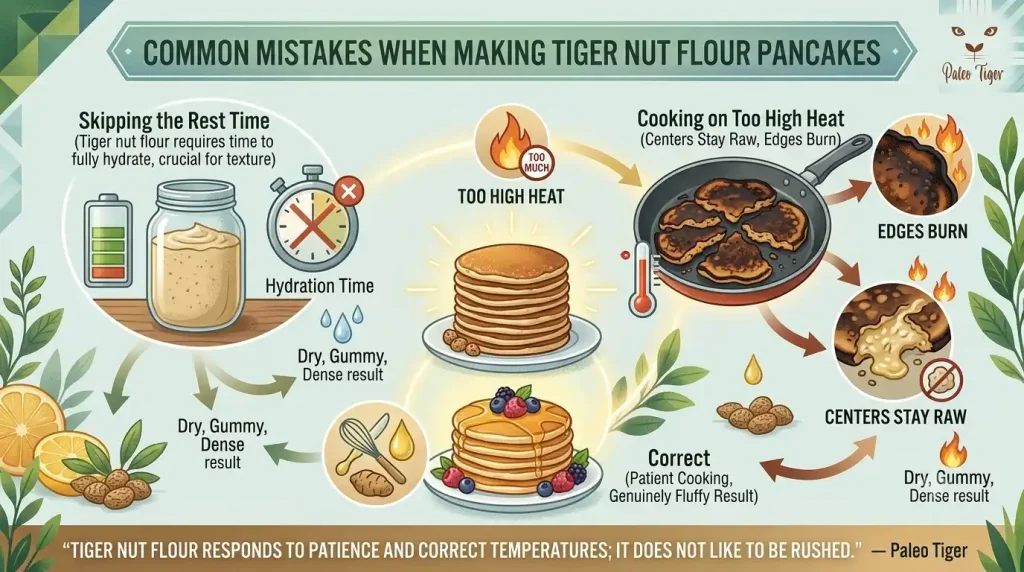
A few issues come up often enough with this flour that they’re worth addressing before your first batch hits the pan. Most of them come down to treating tiger nut flour exactly like wheat flour. In reality, it behaves closer to a starch-heavy, grain-free flour that needs slightly different handling.
Skipping the rest time. Tiger nut flour keeps absorbing liquid for a few minutes after mixing. A batter that looks right immediately can turn too thick five minutes later. That’s why the rest step in the recipe above isn’t optional. In fact, this single step solves more texture complaints than any other adjustment to the recipe.
Cooking on too high heat. Because there’s no gluten structure, these pancakes can brown on the outside before the inside fully sets, if the heat is too aggressive. Medium-low heat and a little patience produces a better result than rushing it on medium-high.
Using old or improperly stored flour. Tiger nut flour can pick up a slightly rancid taste if it sits open in a warm pantry for too long. Keeping it sealed and reasonably cool extends its usable life considerably. For more on what else belongs in a well-stocked elimination-phase pantry, our essential AIP foods guide covers the basics.
Not adjusting for a stricter elimination phase. Some versions of AIP exclude baking soda during the strictest window. The gelatin-egg substitute listed in the recipe above is the workaround for that phase. It’s worth using if there’s any question about where someone is in their elimination protocol.
A quick troubleshooting reference makes it easier to fix a batch mid-cook, rather than starting over:
| Problem | Likely Cause | Fix |
|---|---|---|
| Pancakes fall apart when flipping | Not enough rest time, or pan too cold | Rest batter 5 minutes, preheat pan fully |
| Centers stay raw, edges burn | Heat too high | Drop to medium-low, cook longer per side |
| Batter too thick to pour | Flour absorbed extra liquid while resting | Thin with 1 tbsp water at a time |
| Pancakes taste flat | Skipped honey, vanilla, or salt | Add a small pinch of salt; salt sharpens sweetness |
| Pancakes stick to the pan | Not enough oil, or pan not fully heated | Re-oil between each pancake, not just at the start |
Building a Week of AIP Breakfasts Around This Recipe
A single recipe becomes far more useful once it’s part of a rotation, rather than something made once and forgotten. Here’s a simple structure for the week:
Monday: A double batch of the base recipe, made the night before and reheated, since Mondays rarely allow time for a from-scratch breakfast.
Wednesday: The banana variation, paired with a soft-cooked side of roasted sweet potato for something heartier mid-week.
Friday: The cinnamon-spiced version with tiger nut butter drizzled on top, treated as something closer to a weekend breakfast even though it’s still a weekday.
Saturday: The thinner, crepe-style version, served with a quick berry compote for a slower, more composed morning.
Sunday: The savory version, alongside a simple protein, as a transition into a more standard breakfast format for anyone reintroducing foods slowly.
None of this needs to be followed exactly. Swapping days, repeating a favorite twice, or skipping a day entirely all work just as well. The point is having a default plan, rather than deciding from scratch every single morning what an AIP-compliant breakfast is even supposed to look like.
Storing and Reheating Tiger Nut Flour Pancakes
These pancakes hold up well enough to batch-cook on a weekend and reheat through the week. That matters most for anyone trying to keep breakfast simple during the early, stricter stretch of AIP.
Cooked pancakes keep in the fridge for up to 4 days in a sealed container. For longer storage, let them cool completely, then freeze in a single layer before transferring to a freezer bag. This keeps them from sticking together into one solid block. Reheat directly from frozen in a toaster or a low oven, rather than the microwave, which tends to make the texture slightly rubbery.
Batter itself doesn’t store as well as the cooked pancakes do. Tiger nut flour continues absorbing liquid over time, and the texture changes noticeably after a day or two in the fridge. So, it’s generally better to cook the full batch and store the finished pancakes, rather than holding raw batter for later use.
Keeping a bag of tiger nut flour, along with a bottle of tiger nut oil for the pan, on hand makes this kind of batch-cooking realistic on a normal week. Both are available, along with the rest of the pantry lineup used across this recipe, on our shop page.
Who Gets the Most Out of This Recipe?

Not every AIP recipe fits every situation equally well. So, it’s worth being specific about where Tiger Nut Flour Pancakes make the most sense.
Anyone in the early weeks of elimination benefits the most directly. That stretch of AIP is usually the hardest, since almost nothing in a normal kitchen routine still applies. Having one reliable breakfast that doesn’t require relearning a new technique every morning makes the adjustment noticeably easier. In fact, this recipe was written with exactly that window in mind.
Households managing a tree-nut allergy alongside AIP, or alongside any other dietary restriction, also get more out of this recipe than most. Because tiger nut flour isn’t a tree nut, it sidesteps the most common allergy conflict in grain-free baking. That means one batch of pancakes can serve an entire table, instead of requiring a separate nut-free version for some family members. This kind of shared meal matters more than it sounds like on paper, especially for kids who notice when their food looks different from everyone else’s.
Anyone reintroducing foods slowly after the elimination phase also has a use for this recipe, specifically the savory variation. It’s a useful bridge meal: AIP-compliant on its own, but flexible enough to add a reintroduced egg or a small amount of dairy on top, once those foods have been tested and cleared individually.
And realistically, anyone who simply wants a pancake that tastes good, without needing a dietary reason to make it, falls into this category too. The natural sweetness and light texture of tiger nut flour hold up on their own merits, independent of any AIP context. That’s part of why this recipe has stuck around in regular rotation, rather than being treated as a once-in-a-while substitution.
Final Thoughts
Tiger Nut Flour Pancakes are proof that AIP breakfast doesn’t have to mean giving something up every morning. One flour, a short ingredient list, and a recipe that holds together without eggs or grains gets a normal-looking stack of pancakes back onto the table.
What makes this recipe worth keeping in permanent rotation isn’t just that it’s compliant. It’s that it actually tastes like a pancake, rather than a workaround. That distinction is easy to overlook when every other part of an elimination diet feels like a substitution. But it’s the difference between a recipe people make once out of necessity, and one they keep making because it’s genuinely good.
Start with the base recipe above, then adjust the sweetness, toppings, or thickness once the technique feels familiar. For more on why this particular ingredient has become such a reliable building block across AIP baking, our guide to the ultimate AIP-compliant snack is a good next read.
Frequently Asked Questions
Is tiger nut flour the same as nut flour? No. Tiger nuts are root tubers, not tree nuts. So, tiger nut flour is naturally nut-free and safe for most tree nut allergies, while still working like a traditional baking flour.
Can I make these pancakes without arrowroot starch? Arrowroot helps bind the batter and lighten the texture. Tapioca starch works as a close substitute, though the pancakes may turn out slightly denser without a starch added.
Why did my tiger nut flour pancakes turn out gummy? This usually means the batter wasn’t rested long enough, or too much liquid was added. Let the batter sit for 5 minutes, and thin it gradually rather than all at once.
Can I make this recipe egg-free and still get pancakes that hold together? Yes. The recipe above is already egg-free. It uses arrowroot and baking soda (or gelatin during stricter elimination) to bind the batter instead.
How long does tiger nut flour last once opened? Stored sealed in a cool, dry pantry, tiger nut flour typically stays fresh for several months. Refrigeration can extend that further if it won’t be used quickly.