
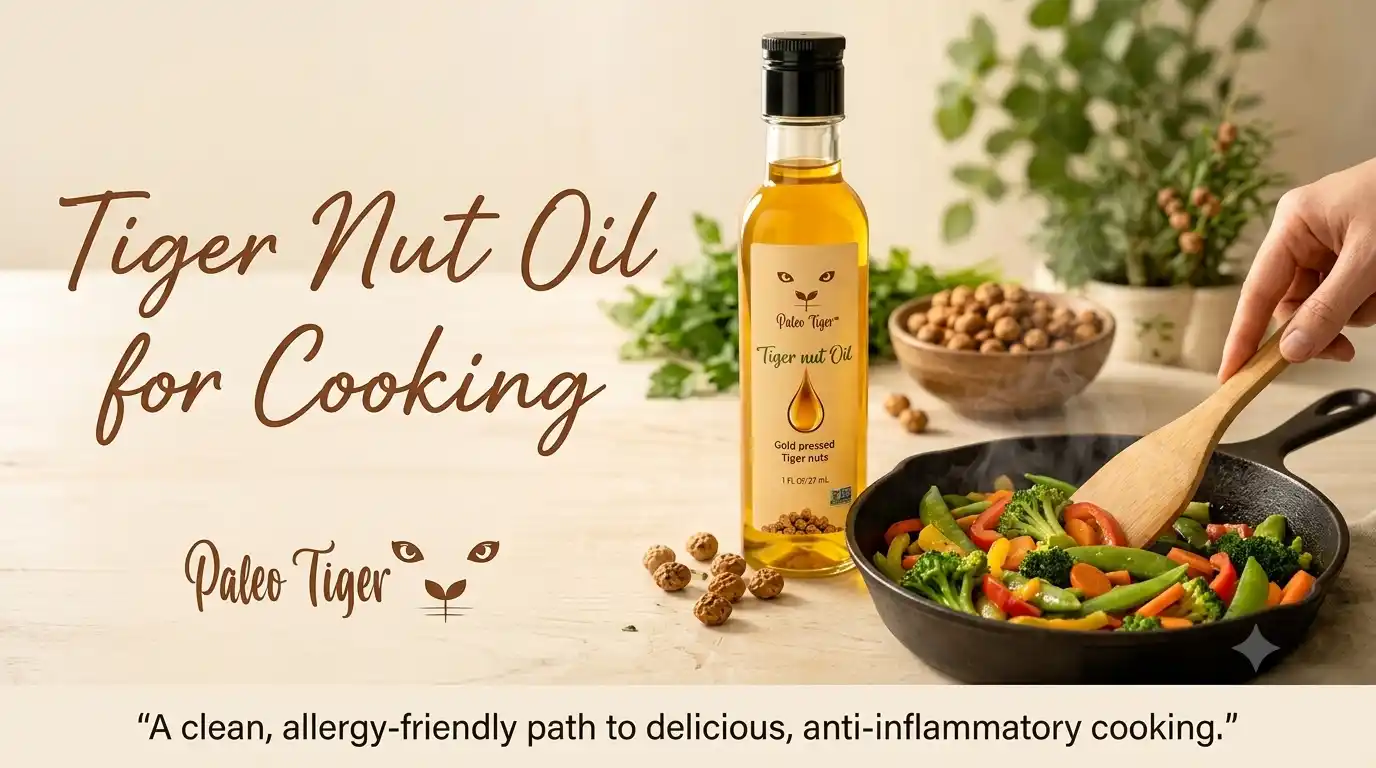
Tiger Nut Oil for Cooking: Flavor, Heat Use and Best Recipes
Quick answer: Tiger nut oil for cooking works best at low to medium heat. Cold-pressed tiger nut oil is mild, slightly sweet and nutty, and its fats are mostly monounsaturated oleic acid, similar to olive oil. Use it for dressings, drizzling, baking, gentle sautéing and roasting vegetables at moderate temperatures. For deep frying or very high-heat searing, choose a fat that is sold for high heat and follow the label on your bottle.
Tiger nut oil is still new to most kitchens. If you follow a paleo or Autoimmune Protocol (AIP) diet, it gives you one more option beside olive, avocado and coconut oil. This guide explains how to use it well, without the hype.
What is tiger nut oil?
Tiger nut oil is pressed from tiger nuts, the small tubers of the *Cyperus esculentus* plant. Despite the name, tiger nuts are not tree nuts or peanuts. They grow underground, a bit like tiny potatoes.
A scientific review of tiger nut composition describes the oil as rich in oleic acid, with a fatty acid profile close to olive oil, and a source of vitamin E (Sánchez-Zapata et al., 2012). Paleo Tiger 100% Cold-Pressed Tiger Nut Oil is pressed from whole tiger nuts without solvents.

What does tiger nut oil taste like?
Cold-pressed tiger nut oil has a golden color and a soft, sweet, nutty flavor. It is gentler than extra virgin olive oil, which can be grassy and peppery. That mild flavor is the main reason cooks like it: it supports sweet and savory dishes without taking over.
Good matches include:
- Roasted root vegetables such as carrots, sweet potato and parsnip
- Leafy salads with citrus or apple cider vinegar
- Grain-free baking, such as muffins made with tiger nut flour
- Drizzled over soups, fish or grilled chicken just before serving
- Homemade granola, where it adds a toasty note
Can you cook with tiger nut oil? Heat guide
Yes. The question is how hot. Cold-pressed (unrefined) oils usually keep more of their flavor and natural compounds, and they are generally better suited to gentle and moderate heat than to deep frying. Smoke point varies by batch, processing and storage, so we do not publish a single number here. Follow the guidance on your bottle, and if an oil starts to smoke, lower the heat or start again.
| Cooking method | Use tiger nut oil? | Tips |
|---|---|---|
| Dressings and drizzling | Yes, best use | Flavor is at its fullest when raw |
| Baking (up to typical oven temps) | Yes | Swap 1:1 for melted coconut oil or other neutral oils |
| Gentle sautéing | Yes | Medium heat, add food once the oil shimmers |
| Roasting vegetables | Yes, at moderate temps | Toss vegetables in oil; avoid letting the pan smoke |
| Stir-frying at very high heat | Use a high-heat fat instead | Or finish the dish with tiger nut oil |
| Deep frying | Not recommended | Expensive and wasteful for this use |
Tiger nut oil vs other AIP cooking oils
On AIP, seed oils are removed during the elimination phase, so the usual fats are olive oil, avocado oil, coconut oil and animal fats. Tiger nut oil sits well beside them.
| Oil | Main fat type | Flavor | Best for |
|---|---|---|---|
| Tiger nut oil (cold-pressed) | Monounsaturated (oleic) | Mild, sweet, nutty | Dressings, baking, gentle cooking |
| Extra virgin olive oil | Monounsaturated (oleic) | Grassy, peppery | Dressings, Mediterranean cooking |
| Avocado oil | Monounsaturated (oleic) | Neutral, buttery | General cooking |
| Coconut oil | Saturated | Coconut or neutral (refined) | Baking, curries |
For a deeper comparison, read tiger nut oil vs olive oil and AIP-friendly oils explained.
Is tiger nut oil healthy?
Here is what we can say with a source behind it:
- Fat profile: Most of its fat is monounsaturated oleic acid (Sánchez-Zapata et al., 2012). The Dietary Guidelines for Americans recommend choosing oils high in unsaturated fats instead of solid fats high in saturated fat.
- Vitamin E: The same review lists tiger nut oil as a source of tocopherols (vitamin E). The NIH Office of Dietary Supplements explains vitamin E’s role as an antioxidant.
- It is still a fat: Like every oil, it has about the same calories per tablespoon as other oils. Use it as part of an overall balanced diet.
We are not making claims that tiger nut oil prevents or treats disease. If you have a heart condition or a special diet, ask your doctor or dietitian how oils fit into your plan.
Is tiger nut oil safe for nut allergies?
Tiger nuts are tubers, not tree nuts or peanuts. Many people with nut allergies use tiger nut products, but every allergy is individual. Read the label for facility and cross-contact information and check with your allergist before trying a new food. The FDA’s food allergy guidance explains which allergens must be labeled.
5 easy ways to cook with tiger nut oil
1. Simple AIP lemon dressing
Whisk 3 tablespoons tiger nut oil, 1 tablespoon lemon juice, a pinch of sea salt and chopped fresh herbs. Pour over greens, cucumber and avocado. More ideas are in our AIP salad dressings post.
2. Roasted carrots and parsnips
Toss 500 g sliced root vegetables with 2 tablespoons tiger nut oil, salt and thyme. Roast at a moderate oven temperature until tender and golden, turning once.
3. Tiger nut flour muffins
Replace the melted fat in your favorite grain-free muffin recipe with the same amount of tiger nut oil. It pairs well with banana, apple and cinnamon. See our tiger nut flour recipe for a base.
4. Gentle sauté of greens
Warm 1 tablespoon oil over medium heat, add garlic for 30 seconds, then add spinach or kale and a pinch of salt. Cook just until wilted.
5. Finishing drizzle
Drizzle a teaspoon over pureed butternut soup, grilled fish or a bowl of roasted sweet potato right before serving. This is where the nutty flavor shines most.
How to substitute tiger nut oil
- For olive oil: 1:1 in dressings and gentle cooking. Expect a sweeter, softer taste.
- For melted coconut oil or butter in baking: 1:1 by volume. Baked goods may be a little more tender.
- For seed oils: 1:1 at low to medium heat.
How to store tiger nut oil
Light, heat and air break down oils over time. Keep the bottle tightly closed in a cool, dark cupboard, away from the stove. Use it within the date on the label. If it smells sharp, bitter or like old crayons, it has gone rancid and should be thrown out. See our full guide to storing tiger nut products.
Building an AIP pantry around tiger nuts
Tiger nut oil works best alongside other tiger nut staples:
- Whole tiger nuts for snacking and making milk
- Tiger nut flour for grain-free baking
- Original tiger nut butter for spreads and sauces
- Tiger nut granola for quick breakfasts
New to the ingredient? Start with what tiger nuts are and how to use them.
Common mistakes when cooking with tiger nut oil
- Overheating it. If the oil smokes, it is too hot. Turn the heat down.
- Saving it for “special” use only. Oils lose freshness once opened. Use it regularly.
- Storing it near the stove. Heat speeds up rancidity.
- Using it for deep frying. You lose the flavor and waste a premium oil.
Frequently asked questions
Can you cook with tiger nut oil?
Yes. Cold-pressed tiger nut oil is best for dressings, baking, gentle sautéing and roasting at moderate temperatures.
What is the smoke point of tiger nut oil?
It varies by processing and batch. Follow the guidance on your bottle and lower the heat if the oil begins to smoke.
Can you fry with tiger nut oil?
Shallow, gentle pan cooking is fine. Deep frying and very high-heat searing are better done with a fat sold for high heat.
Is tiger nut oil AIP-friendly?
Yes. Tiger nuts are tubers, so the oil fits the AIP elimination phase.
What does tiger nut oil taste like?
Mild, slightly sweet and nutty, softer than extra virgin olive oil.
Can I use tiger nut oil in baking?
Yes. Swap it 1:1 for melted coconut oil, butter or other neutral oils.
Is tiger nut oil safe for people with nut allergies?
Tiger nuts are not tree nuts or peanuts, but check the label and talk to your allergist first.
How long does tiger nut oil last?
Keep it sealed in a cool, dark place and use it within the date on the label. Discard it if it smells rancid.