
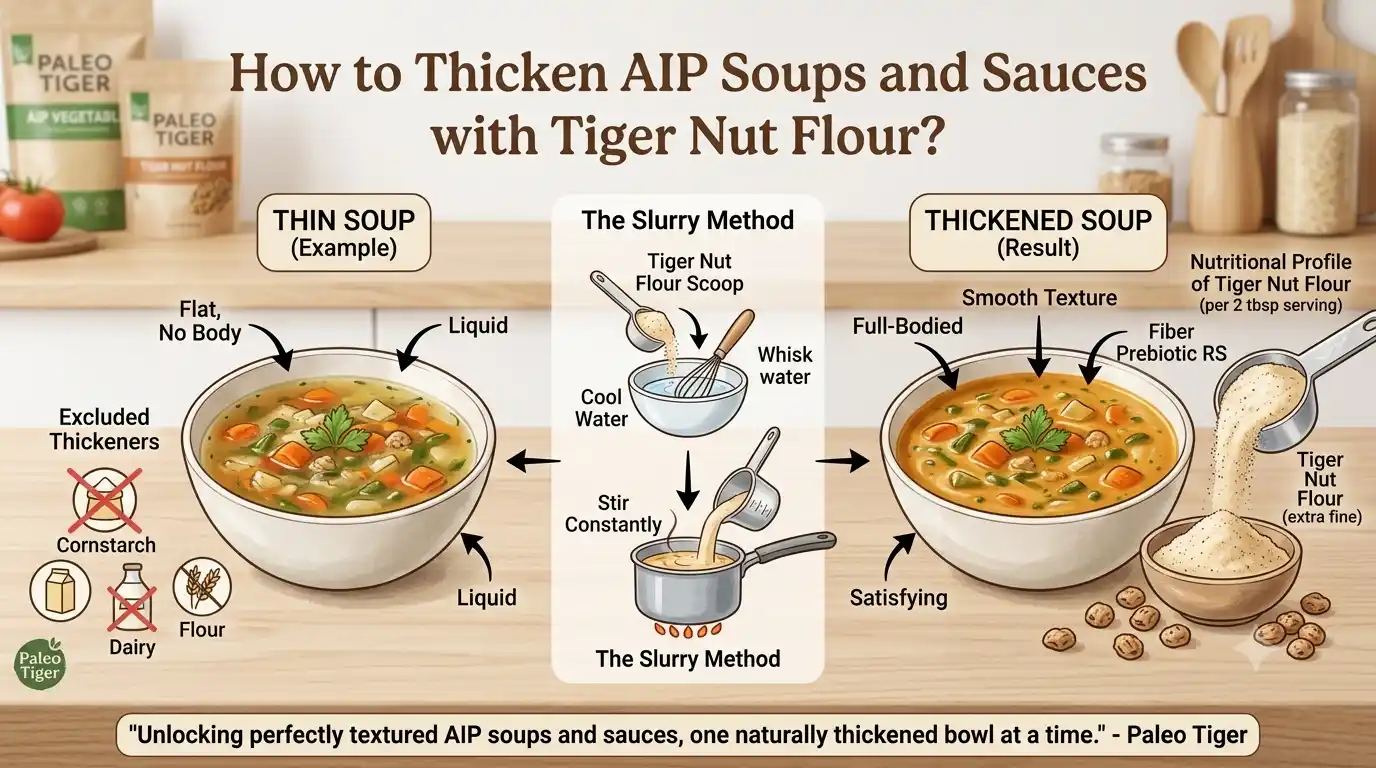
Most people starting the Autoimmune Protocol hit the same wall quickly. They master the protein and the vegetables, stock the pantry with compliant oils, and then stare at a bowl of watery AIP soups and sauces that taste flat and thin. The usual thickeners, cornstarch, flour, arrowroot in some applications, roux made with butter, are either excluded or unreliable during the elimination phase. What’s left feels like a compromise.
Tiger nut flour solves this problem cleanly. It’s a fine, slightly sweet flour made from ground tiger nuts, a small root vegetable with no connection to tree nuts or grains. It thickens soups and sauces the way a conventional flour would, adds a subtle warmth to flavor without overpowering the dish, and stays fully compliant with AIP elimination-phase rules. That’s the kind of practical, working solution that Paleo Tiger was built to deliver.
This guide walks through exactly how to use tiger nut flour as a thickener, which AIP soups and sauces benefit most, how it compares to other AIP-compliant thickening options, and five ready-to-use recipes that put the method into practice. Every ingredient in every recipe stays inside AIP elimination-phase boundaries.
Why Thickening Is Harder on AIP Than It Should Be?
The Autoimmune Protocol removes a long list of ingredients that most cooks rely on without thinking. For AIP soups and sauces, the removal of grains, legumes, dairy, eggs, and nightshades wipes out the majority of standard thickening approaches in one move.
| Thickener | Standard Use | AIP Status | Reason Excluded |
| All-purpose flour | Roux, gravies | Excluded | Grain-derived |
| Cornstarch | Sauces, stir-fries | Excluded | Grain-derived |
| Butter/cream roux | Classic sauces | Excluded | Dairy |
| Arrowroot | Some sauces | Limited | Can cause issues for some |
| Tapioca starch | Puddings, sauces | Caution | High glycemic, moderate use |
| Tiger nut flour | Soups, stews, sauces | Fully AIP-compliant | Root vegetable, not a nut or grain |
The table above shows why tiger nut flour stands out. It’s not a workaround or a “close enough” substitute, it’s a genuinely compliant, genuinely effective thickener that happens to taste good in the process. For anyone building a reliable AIP soups and sauces routine, it’s one of the most useful ingredients to have stocked.
If you want to understand more about how tiger nuts fit into the broader AIP framework, our complete guide on the Autoimmune Protocol diet covers the full picture in detail.
What Tiger Nut Flour Is and Why It Works as a Thickener?
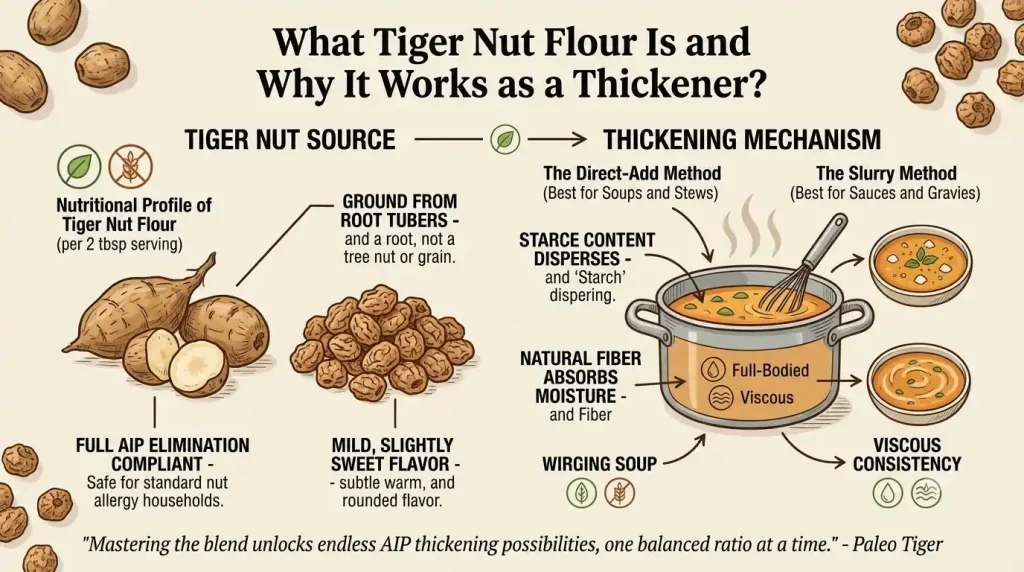
Tiger nuts are not nuts. They’re small, wrinkled tubers, root vegetables, that have been eaten as food for thousands of years. Tiger nut flour is made by drying these tubers and grinding them to a fine powder. The result is a light, slightly sweet flour with a mild earthiness that blends into savory dishes without fighting the other flavors.
As a thickener, tiger nut flour works because of its starch content combined with natural fiber. When it’s added to a warm liquid and stirred, it absorbs moisture and creates a fuller, more viscous consistency. It doesn’t create the same perfectly clear gel that arrowroot does, and it won’t produce the heavy, opaque thickness of a cornstarch slurry, but for most AIP soups and sauces, that in-between texture is exactly right. It reads as homemade and full-bodied rather than gluey or over-thickened.
Nutritional Profile of Tiger Nut Flour (per 2 tbsp serving)
| Nutrient | Amount | Why It Matters on AIP |
| Calories | ~60 kcal | Moderate — won’t skew macros |
| Total Fat | ~2g | Mostly monounsaturated |
| Dietary Fiber | ~2g | Supports gut health |
| Resistant Starch | High | Prebiotic benefit for microbiome |
| Vitamin E | Present | Antioxidant; often low on AIP |
| Iron | Present | Important on restrictive diets |
| Magnesium | Present | Supports inflammation response |
None of this makes tiger nut flour a supplement. But when a thickener also brings fiber, resistant starch, and micronutrients to the bowl, it does more than just fix the texture of your AIP soups and sauces. It earns its place in the pantry on multiple levels.
For a deeper look at the nutritional case for tiger nuts, our health benefits of tiger nuts guide covers the research in full.
How to Use Tiger Nut Flour to Thicken AIP Soups and Sauces?
The method is straightforward, but a few technical details make the difference between a smooth, well-thickened result and a lumpy or starchy-tasting one. Here’s the process that works consistently across different types of AIP soups and sauces.
The Slurry Method (Best for Sauces and Gravies)
1. Measure the flour. Start with 1 tablespoon of tiger nut flour per cup of liquid. Add more in small increments if needed.
2. Make a slurry first. Whisk the flour with 2–3 tablespoons of cool water or cool broth before adding to the hot liquid. This prevents lumps.
3. Add to the hot liquid. Pour the slurry into the simmering sauce while stirring constantly.
4. Cook for 3–5 minutes. The flour needs a few minutes of heat to fully activate. Taste before deciding whether to add more.
5. Adjust consistency. Too thick? Add a splash of broth. Still thin? Repeat with a small additional slurry.
The Direct-Add Method (Best for Soups and Stews)
6. Sprinkle directly into the pot. For chunky soups and stews, you can sift tiger nut flour directly over the surface while stirring.
7. Stir immediately and consistently. Avoid letting it sit on the surface, it will clump.
8. Simmer for at least 10 minutes. Longer cook times let the flour integrate fully into the broth.
Both methods work for AIP soups and sauces. The slurry method gives more control and is better for anything where texture matters a lot, like a gravy or pan sauce. The direct-add method is faster and suits long-simmering soups where there’s time to cook out any raw flour taste.
You can also make the slurry using 100% cold-pressed tiger nut oil instead of water for richer sauces, the oil acts as a carrier that helps the flour disperse even more smoothly.
Tiger Nut Flour vs Other AIP-Compliant Thickeners
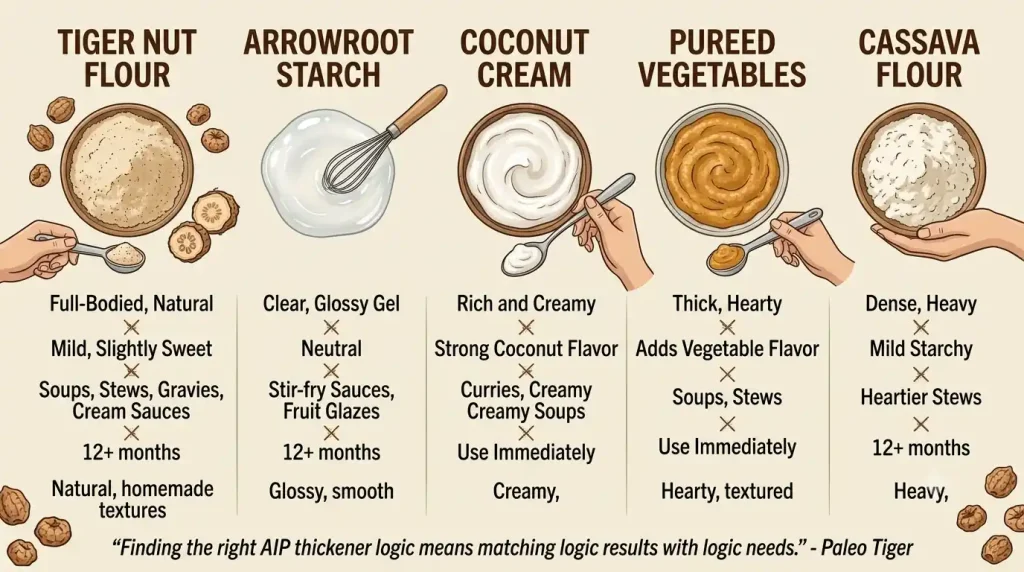
It helps to see how tiger nut flour performs against the other thickeners AIP allows, rather than simply taking compliance at face value.
| Thickener | Texture Result | Flavor Impact | Best For | Shelf Life |
| Tiger nut flour | Full-bodied, natural | Mild, slightly sweet | Soups, stews, gravies, cream sauces | 12+ months |
| Arrowroot starch | Clear, glossy gel | Neutral | Stir-fry sauces, fruit glazes | 12+ months |
| Coconut cream | Rich and creamy | Strong coconut flavor | Curries, creamy soups | Use immediately |
| Pureed vegetables | Thick, hearty | Adds vegetable flavor | Soups, stews | Use immediately |
| Cassava flour | Dense, heavy | Mild starchy | Heartier stews | 12+ months |
Tiger nut flour’s main advantage is versatility. It doesn’t lock you into a specific flavor profile the way coconut cream does, and it doesn’t create the clear gel that makes arrowroot look odd in a rustic soup. For everyday AIP soups and sauces, it’s the most naturally blending option on the list.
For anyone curious about cassava as a broader AIP staple, our cassava nutrition and benefits guide covers how it fits into AIP cooking alongside tiger nut products.
Pros and Cons of Tiger Nut Flour as an AIP Thickener
| Pros | Cons |
| Fully AIP elimination-phase compliant | Adds slight sweetness (not always desired) |
| Works in both hot and cold applications | Requires a slurry step for best results |
| Adds fiber and resistant starch | Thicker than arrowroot — needs adjustment for delicate sauces |
| Mild flavor that blends with most dishes | Less widely available than cornstarch or flour |
| Safe for tree nut allergies | Takes 3–5 minutes of cooking to fully activate |
| Long shelf life in a cool pantry | Higher cost per ounce than conventional flours |
The cons here are minor and manageable. The sweetness is subtle enough that it doesn’t register as a problem in most savory AIP soups and sauces, it rounds out the flavor more than it sweetens it. The cooking-time requirement is standard for any starch-based thickener. And the tree-nut-allergy safety is a genuine advantage in households managing multiple dietary needs at once.
You can order tiger nut flour (extra fine) directly from Paleo Tiger, it’s milled to a consistency that disperses well in liquids without clumping.
5 AIP-Compliant Soups and Sauces Thickened with Tiger Nut Flour
Every recipe below uses tiger nut flour as the primary thickener. All ingredients fall within AIP elimination-phase guidelines. Each one can be made in under 45 minutes, and most keep well for several days in the fridge.
1. AIP Bone Broth Gravy
This is the sauce to have on rotation during the first weeks of AIP. It works over roasted vegetables, grilled chicken, or alongside almost any simple protein — making it the most versatile of the five AIP soups and sauces in this guide.
| Ingredient | Amount |
| Bone broth (chicken or beef) | 2 cups |
| Tiger nut flour | 2 tbsp |
| Water (for slurry) | 4 tbsp |
| Garlic, minced | 2 cloves |
| Fresh thyme | 1 tsp |
| Sea salt | To taste |
| Tiger nut oil | 1 tbsp |
Instructions: Heat tiger nut oil in a saucepan over medium heat. Add garlic and cook for 1 minute. Pour in bone broth and bring to a simmer. Whisk tiger nut flour with water to form a slurry. Add slurry to the simmering broth while stirring. Add thyme and cook for 5 minutes until thickened. Season with sea salt.
2. Creamy Sweet Potato and Leek Soup
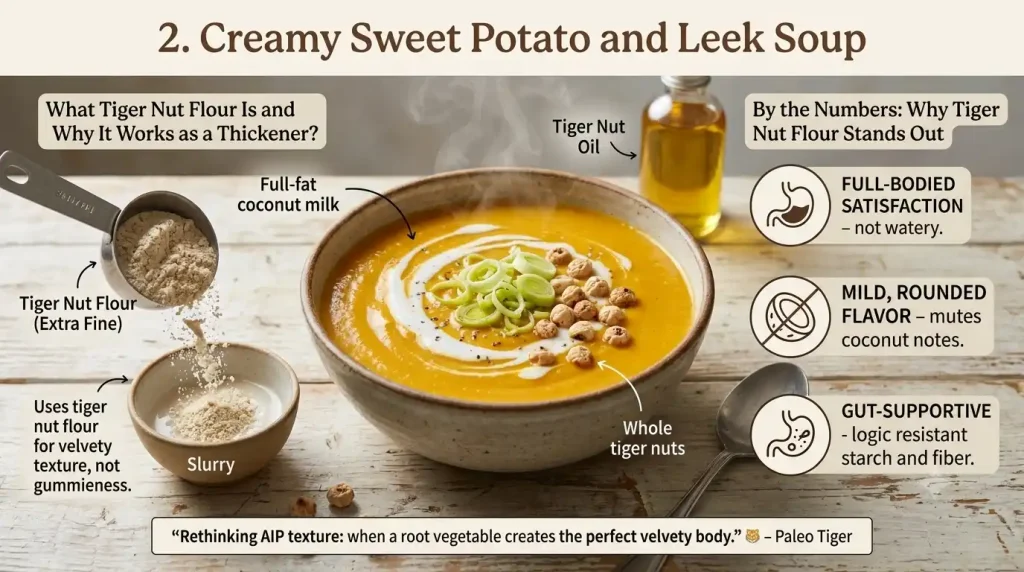
Sweet potatoes and leeks make a natural pair in AIP cooking. Tiger nut flour thickens this without muting the sweetness of the potato, which is what makes this one of the more crowd-pleasing AIP soups and sauces for family meals.
| Ingredient | Amount |
| Sweet potatoes, peeled and cubed | 3 medium |
| Leeks, sliced | 2 large |
| Coconut milk (full-fat) | 1 cup |
| Bone broth | 3 cups |
| Tiger nut flour | 2 tbsp |
| Garlic | 3 cloves |
| Sea salt | To taste |
| Tiger nut oil | 1 tbsp |
Instructions: Sauté leeks and garlic in tiger nut oil until soft. Add sweet potatoes and broth. Simmer 20 minutes until potatoes are tender. Blend until smooth. Return to heat, whisk in tiger nut flour slurry, stir in coconut milk, and simmer 5 minutes. Season to taste.
3. Garlic and Herb Pan Sauce
Most pan sauces rely on butter and flour to emulsify and thicken. This AIP version uses tiger nut flour and tiger nut oil instead, and holds together cleanly without either. It’s one of the faster AIP soups and sauces to make — done in under 10 minutes.
| Ingredient | Amount |
| Pan drippings or bone broth | 1/2 cup |
| Tiger nut flour | 1 tbsp |
| Water | 2 tbsp |
| Garlic, minced | 2 cloves |
| Fresh rosemary | 1 tsp |
| Apple cider vinegar | 1 tsp |
| Sea salt | To taste |
Instructions: After removing protein from pan, add garlic to drippings and cook 30 seconds. Add broth and bring to a simmer. Whisk tiger nut flour with water, add to pan while stirring. Add rosemary and vinegar. Cook 3–4 minutes until slightly thickened. Season with sea salt.
4. AIP Carrot and Ginger Bisque
Ginger and carrot is a classic warming combination. Adding tiger nut flour after blending gives this bisque a velvety texture that holds up well in the fridge — making it one of the better batch-prep AIP soups and sauces for busy weeks.
| Ingredient | Amount |
| Carrots, chopped | 6 large |
| Fresh ginger, grated | 2 tbsp |
| Coconut milk | 1 cup |
| Bone broth | 3 cups |
| Tiger nut flour | 2 tbsp |
| Water (slurry) | 4 tbsp |
| Sea salt | To taste |
| Tiger nut oil | 1 tbsp |
Instructions: Sauté ginger in tiger nut oil for 1 minute. Add carrots and broth. Simmer 25 minutes until carrots are fully soft. Blend until smooth. Return to heat, add tiger nut flour slurry, stir in coconut milk, and cook 5 more minutes. Season with sea salt.
For more ideas on using carrots in AIP cooking, our guide on the benefits of carrots is a helpful companion.
5. AIP Mushroom and Herb Gravy
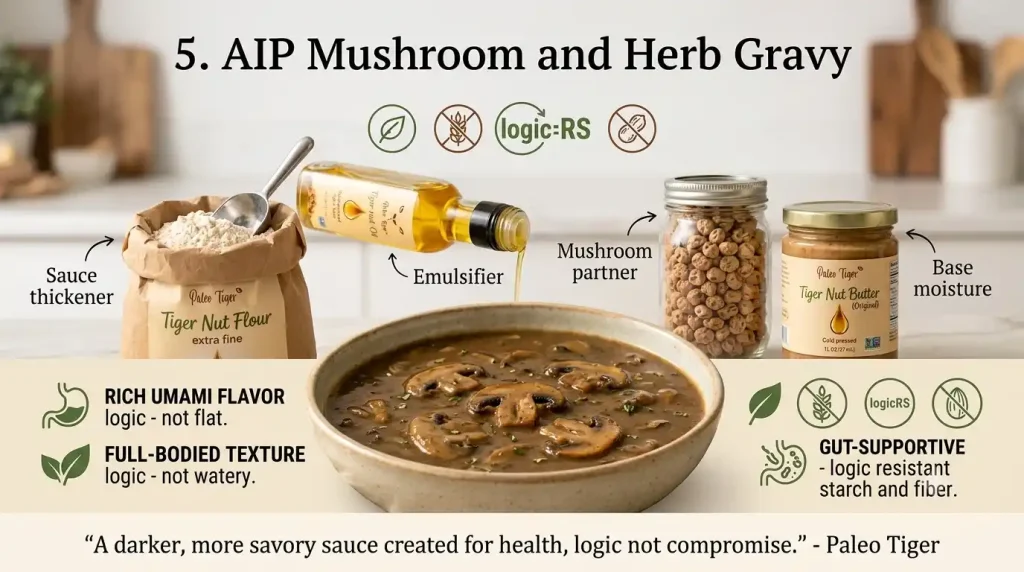
This is the richest-tasting of the five AIP soups and sauces in this guide. It works well over cauliflower mash, roasted root vegetables, or any protein that benefits from a darker, more savory sauce. Mushrooms provide umami depth that compensates for the absence of dairy or wine.
| Ingredient | Amount |
| Mushrooms (cremini or shiitake), sliced | 2 cups |
| Bone broth | 2 cups |
| Tiger nut flour | 2 tbsp |
| Water (slurry) | 4 tbsp |
| Coconut aminos | 1 tbsp |
| Fresh thyme | 1 tsp |
| Garlic, minced | 2 cloves |
| Sea salt | To taste |
| Tiger nut oil | 1 tbsp |
Instructions: Sauté mushrooms in tiger nut oil until browned, about 8 minutes. Add garlic, cook 1 minute. Add broth, coconut aminos, and thyme. Bring to simmer. Add tiger nut flour slurry while stirring. Cook 5 minutes until thickened. Season with sea salt.
By the Numbers: Why Tiger Nut Flour Stands Out
For anyone who wants to see the practical case for tiger nut flour made concrete, here’s how it performs against benchmarks that matter for anyone cooking AIP soups and sauces regularly.
| Metric | Tiger Nut Flour | Cornstarch | Cassava Flour |
| AIP Elimination Compliant | Yes | No (grain) | Yes |
| Tree Nut Allergy Safe | Yes | Yes | Yes |
| Fiber per 2 tbsp | ~2g | 0g | ~1g |
| Resistant Starch | High | Low | Moderate |
| Flavor Neutrality | Mild/sweet | Neutral | Mild starchy |
| Works Cold | Yes (slurry) | Yes (slurry) | Limited |
| Gluten Free | Yes | Yes | Yes |
| Grain Free | Yes | No | Yes |
According to research on resistant starch, diets higher in resistant starch are associated with improved gut microbiome diversity, better blood glucose regulation, and reduced markers of systemic inflammation — all outcomes relevant to people following the Autoimmune Protocol. Tiger nut flour is one of the better food-based sources of resistant starch available within AIP guidelines.
You can explore the full science behind resistant starch in AIP eating in our guide on why you need resistant starch.
Storing, Batch-Cooking, and Meal-Prepping AIP Soups and Sauces
One of the practical advantages of tiger nut flour-thickened AIP soups and sauces is that they store and reheat well. Here’s what you need to know to build a realistic weekly prep routine.
| Sauce/Soup | Fridge (days) | Freezer (months) | Reheat Method |
| Bone Broth Gravy | 5 days | 3 months | Low heat, stir frequently |
| Sweet Potato Leek Soup | 5 days | 3 months | Medium heat, add splash of broth |
| Garlic Herb Pan Sauce | 3 days | 2 months | Low heat |
| Carrot Ginger Bisque | 5 days | 3 months | Medium heat, stir well |
| Mushroom Herb Gravy | 5 days | 3 months | Low-medium heat |
A batch-cooking approach works well: make the two gravies and the bisque on a Sunday, and you cover most of the week’s AIP soups and sauces needs without standing at the stove every evening. The pan sauce is better made fresh since it’s quick and built on whatever protein you’ve just cooked.
Keeping tiger nut flour (extra fine) from the Paleo Tiger shop stocked in the pantry makes this kind of prep realistic on short notice, it’s the one ingredient all five recipes share.
Common Mistakes When Thickening AIP Soups and Sauces
• Adding flour directly to hot liquid without a slurry. It lumps immediately. Always whisk tiger nut flour with cool water first.
• Not cooking long enough. Three to five minutes minimum gives the starch time to activate fully. Pulling it off heat too early leaves a slightly raw, grainy taste.
• Over-thickening all at once. Start with less than you think you need. Tiger nut flour continues to thicken slightly as the dish cools.
• Using boiling liquid. A vigorous boil can break the thickening structure. Simmer is the right heat level for AIP soups and sauces thickened this way.
• Forgetting to season after thickening. Adding a thickener changes the flavor balance slightly. Always taste and adjust salt after the flour has cooked in.
Building Your AIP Kitchen with Paleo Tiger Products
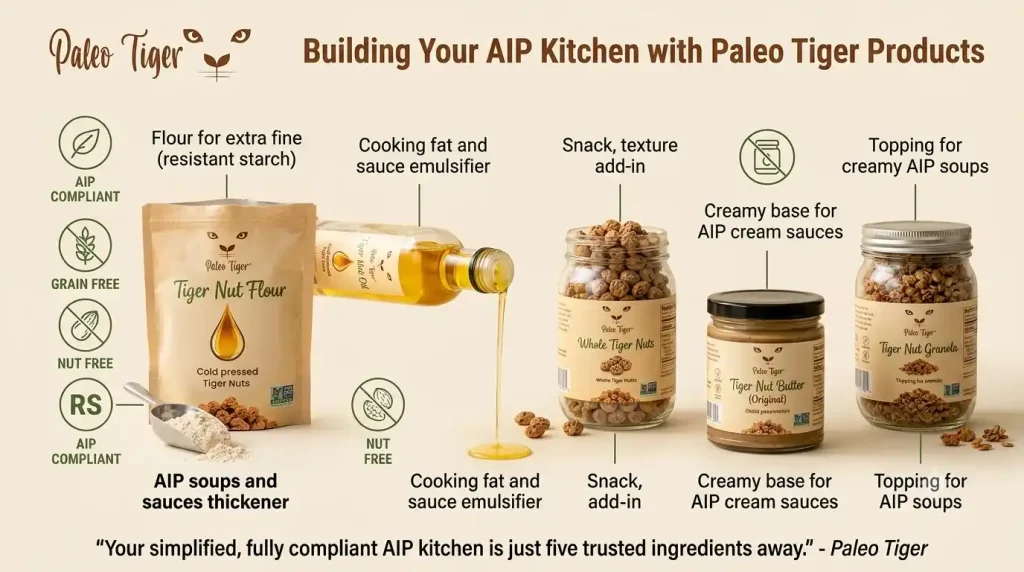
Every recipe in this guide is built on ingredients you can source reliably. Paleo Tiger focuses on exactly this kind of practical, working AIP product, ingredients that do their job without requiring you to check a label twice or wonder if something slipped past the rules.
| Product | Role in AIP Cooking |
| Tiger Nut Flour (Extra Fine) | Primary thickener for soups, sauces, gravies |
| Cold-Pressed Tiger Nut Oil | Cooking fat, slurry carrier, flavor base |
| Whole Tiger Nuts | Snack, texture add-in for soups |
| Tiger Nut Butter (Original) | Creamy base for AIP cream sauces |
| Tiger Nut Granola | Topping for creamy AIP soups |
Paleo Tiger’s products are designed to work together across an AIP kitchen, from breakfast to dinner, from snacks to the kinds of AIP soups and sauces that make the elimination phase feel like a real, sustainable way of eating rather than a temporary restriction.
You can browse the full product lineup at the Paleo Tiger shop, including the extra-fine tiger nut flour and cold-pressed tiger nut oil used across all five recipes above.
Conclusion
Thin, watery AIP soups and sauces are one of the quiet frustrations of the elimination phase, a problem that doesn’t get talked about as much as ingredient substitutions or meal planning, but one that affects how satisfying and sustainable the protocol actually feels day to day.
Tiger nut flour solves it without compromise. It thickens reliably, stays within AIP guidelines, adds nutritional value in the process, and works across the full range of soups, gravies, and sauces you’re likely to cook on a weekly basis. It’s not a workaround, it’s a better tool for the job.
Start with the bone broth gravy if you want a quick first test. It comes together in under 10 minutes and demonstrates exactly how tiger nut flour behaves in a hot liquid. Work through the other recipes as your routine settles. Once you’ve cooked with it a few times, thickening AIP soups and sauces becomes one less thing to think about, which is exactly where you want to be during elimination.
The full Paleo Tiger pantry lineup, including the extra-fine tiger nut flour that makes all of this possible, is available at paleotiger.com/shop.
Frequently Asked Questions
1. Is tiger nut flour safe to use during the AIP elimination phase?
Yes. Tiger nut flour is made from a root vegetable, not a nut, grain, or legume. It is fully compliant with AIP elimination-phase guidelines and safe for tree nut allergies.
2. How much tiger nut flour do I need to thicken AIP soups and sauces?
Start with 1 tablespoon per cup of liquid. Make a slurry first with cool water. Add more in small increments if needed after cooking for 3–5 minutes.
3. Can I use tiger nut flour to thicken cold sauces and dressings?
It works best in warm or hot AIP soups and sauces. For cold applications, whisk it into the liquid and allow it to rest for several minutes, it will thicken, though less dramatically than when heated.
4. Does tiger nut flour change the taste of soups and sauces?
It adds a mild, slightly sweet earthiness. In most savory AIP soups and sauces, this blends in naturally and rounds out the flavor rather than competing with herbs or spices.
5. Where can I buy extra-fine tiger nut flour for AIP cooking?
Paleo Tiger offers extra-fine tiger nut flour specifically milled for smooth integration into AIP soups and sauces, available at paleotiger.com/shop.